

WETLANDS & COAST / WILLIAM EDWARDS
Where land meets water.
Willets on the shoreline, herons in the marsh, and the changing light across the water. Explore birds and wildlife at the water’s edge.
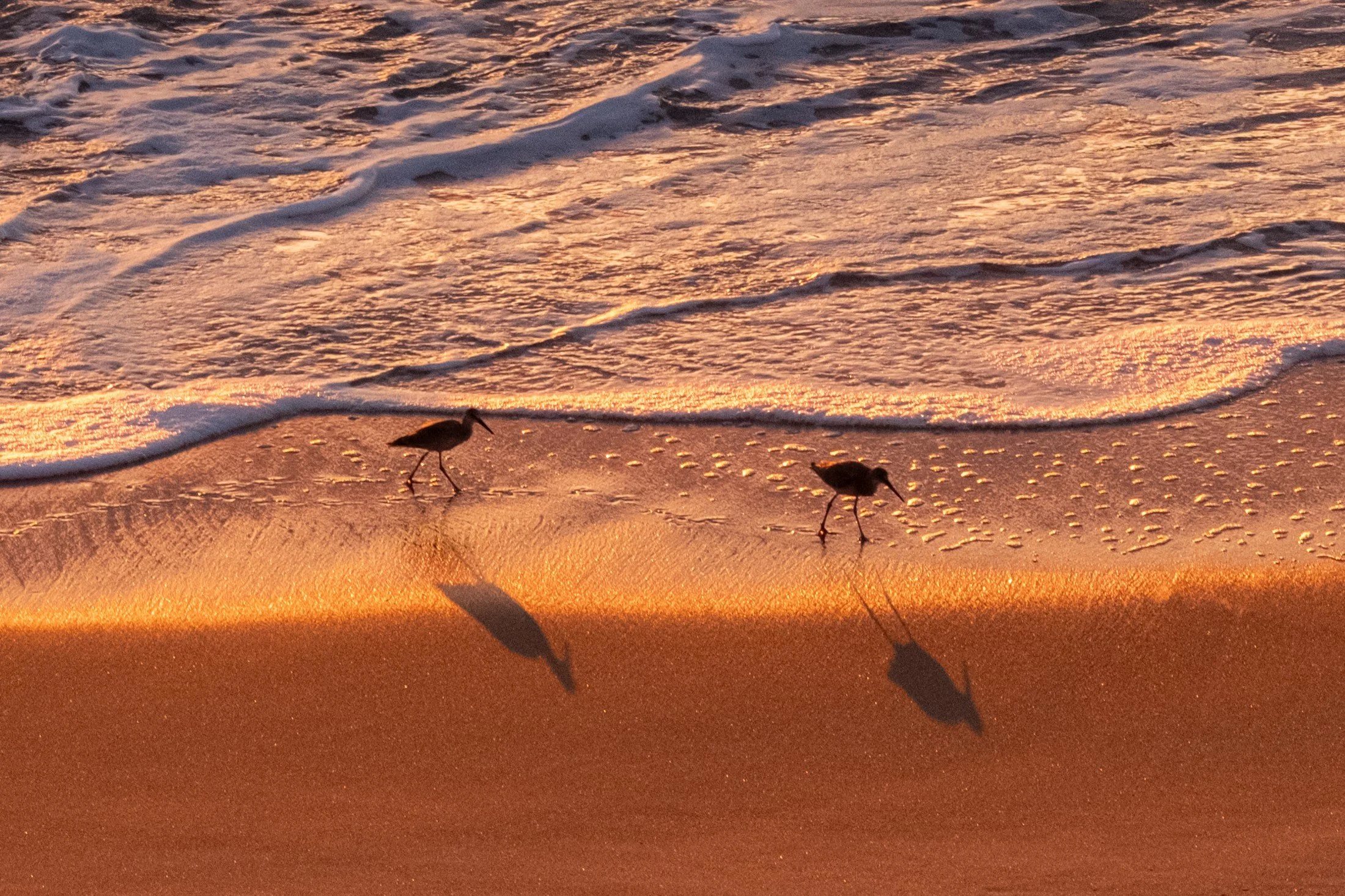
Willet
Tringa semipalmataTwo Willets and their long shadows share golden surf at Virginia Beach. Audubon 2026 Top 100, entry No. 44.
Did you know? Sensitive bill tips help Willets find food after dark as well as in daylight.
Species notes ↗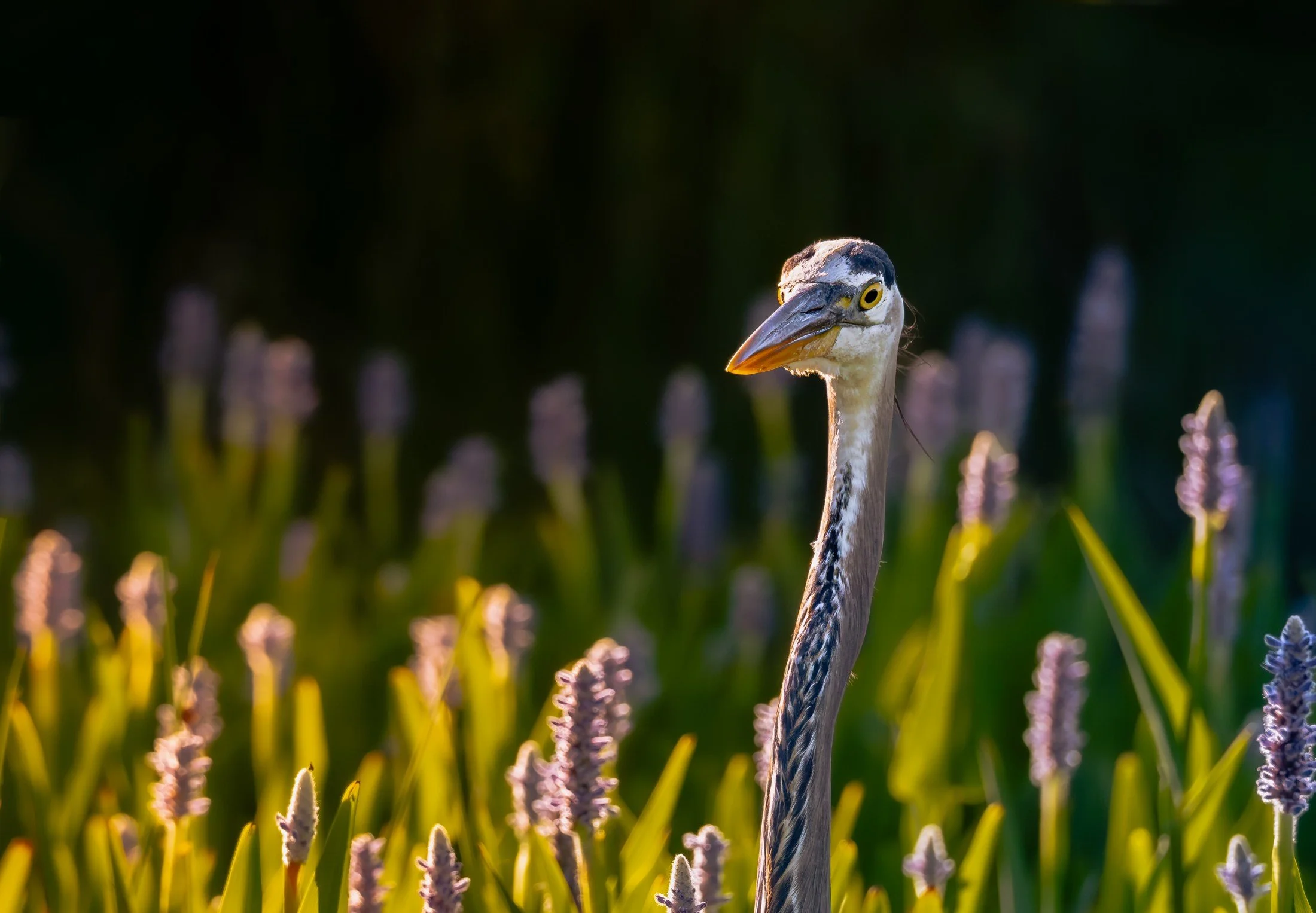
Great Blue Heron
Ardea herodiasA heron rises above marsh flowers, surrounded by bands of sunlit color.
Did you know? Beaver-created wetlands can provide excellent places for herons to feed and nest.
Species notes ↗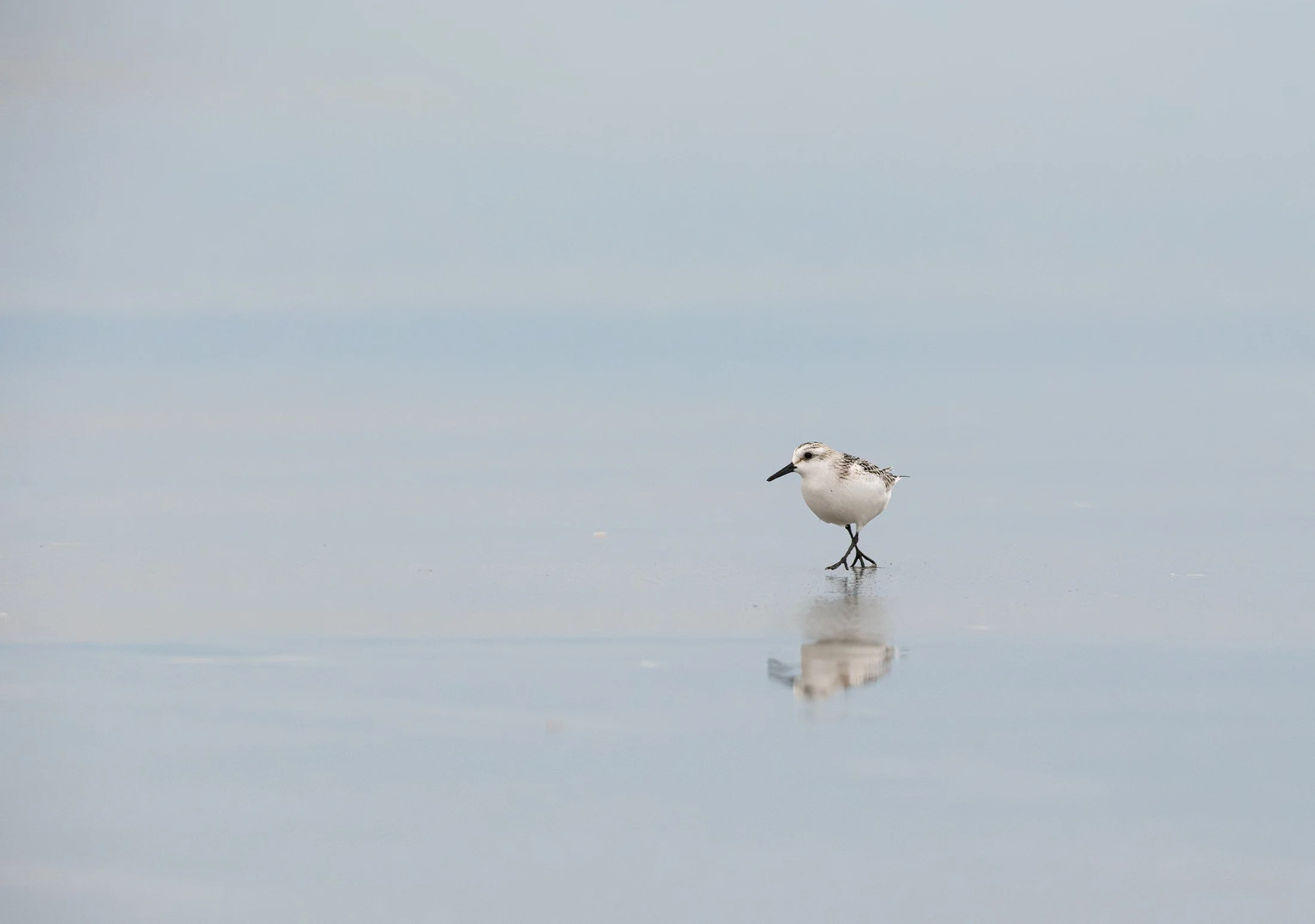
Sanderling
Calidris albaA small shorebird and its reflection occupy a quiet expanse of pale water.
Did you know? Some nonbreeding birds skip the long summer journey to Arctic nesting grounds.
Species notes ↗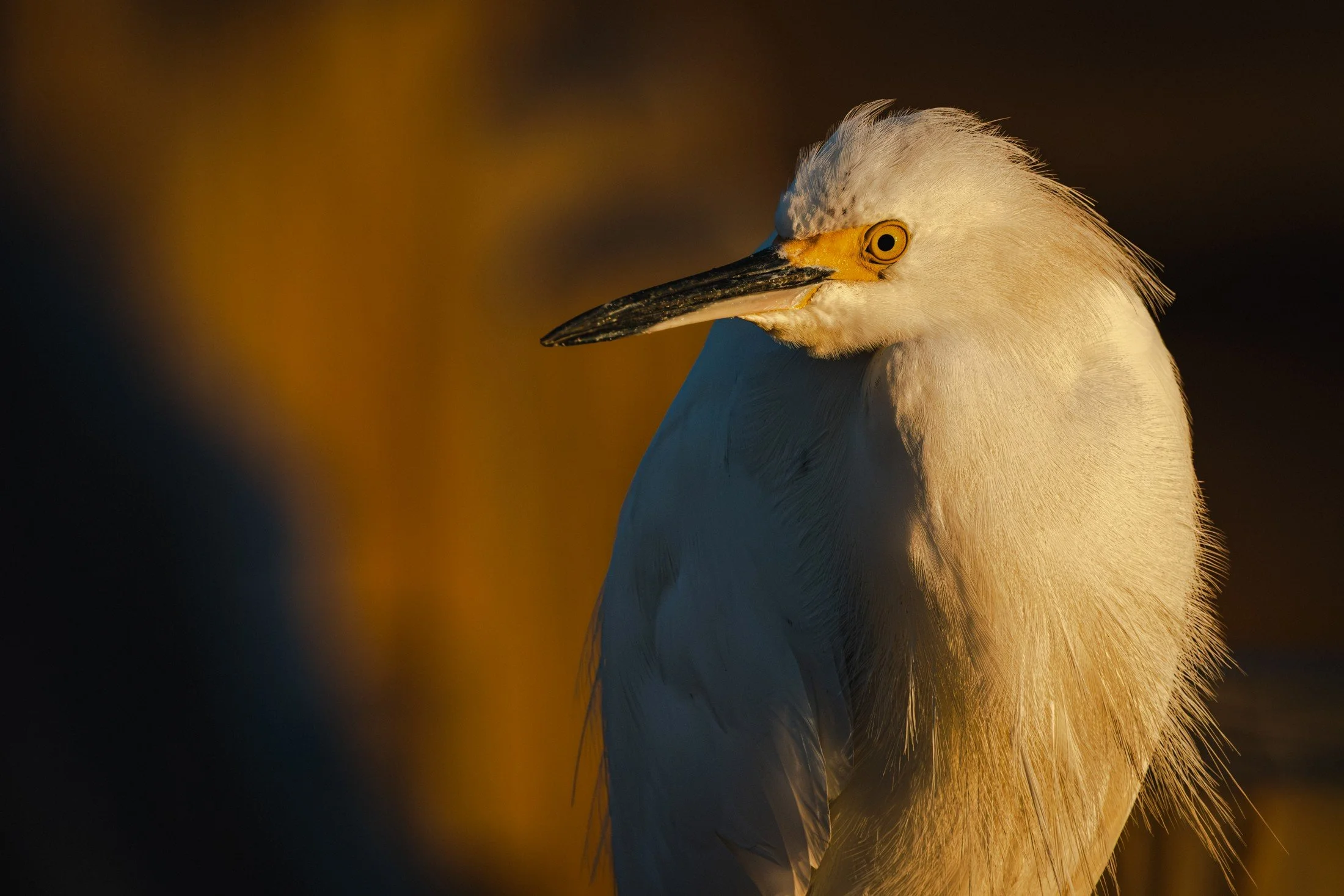
Snowy Egret
Egretta thulaGolden light traces delicate head feathers against a darker background.
Did you know? Its yellow feet can become a deeper orange-yellow at the height of breeding season.
Species notes ↗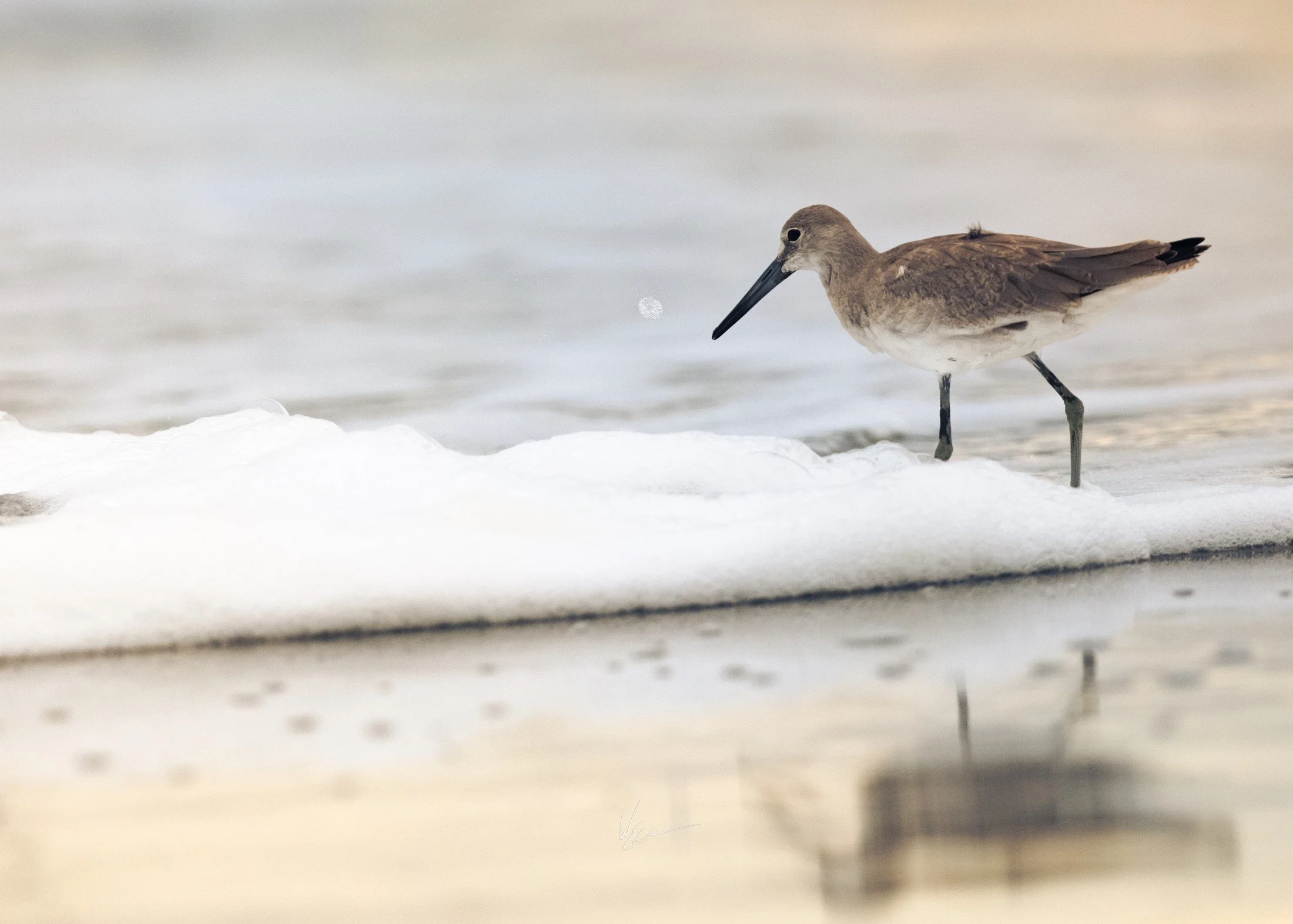
Willet
Tringa semipalmataA Willet steps through the foam as a wave folds around its legs.
Did you know? Both parents incubate the eggs, but the male takes the nighttime shift.
Species notes ↗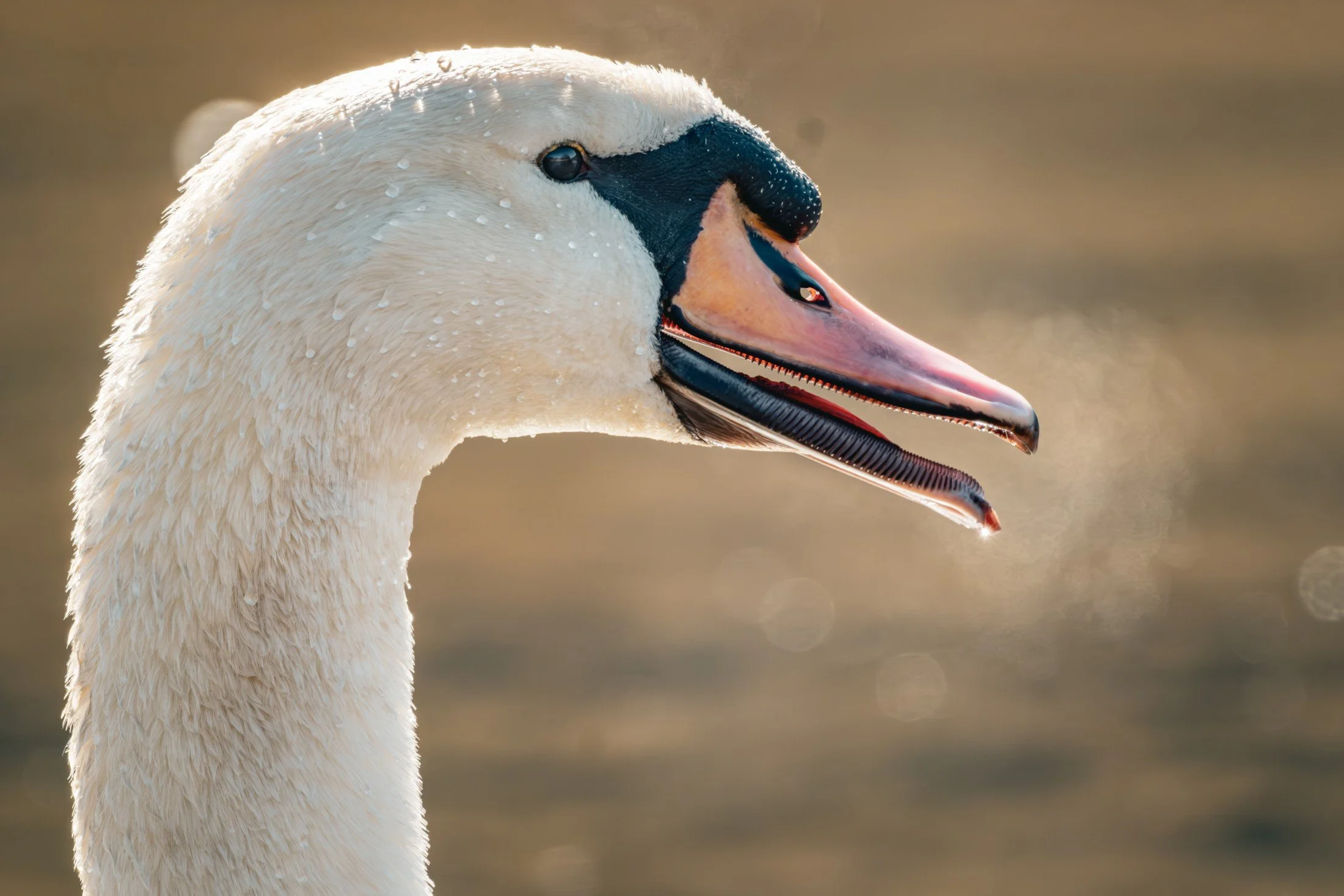
Mute Swan
Cygnus olorSoft light picks out the curve of the neck and the swan’s dark facial markings.
Did you know? Pairs can maintain their bonds across multiple breeding seasons.
Species notes ↗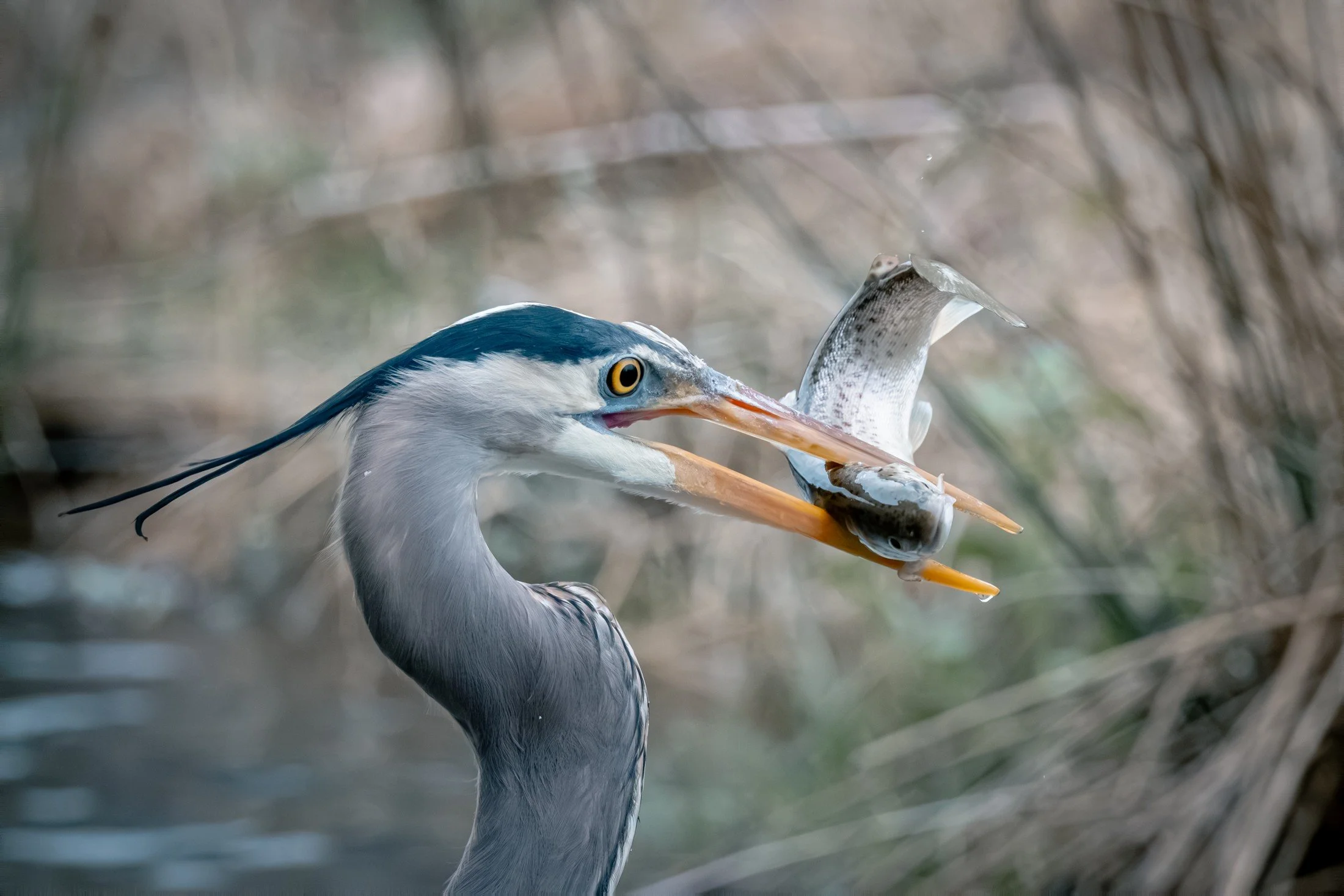
Great Blue Heron
Ardea herodiasA fish held in the bill captures the decisive result of a patient hunt.
Did you know? Despite its impressive height, a Great Blue Heron weighs only about five to six pounds.
Species notes ↗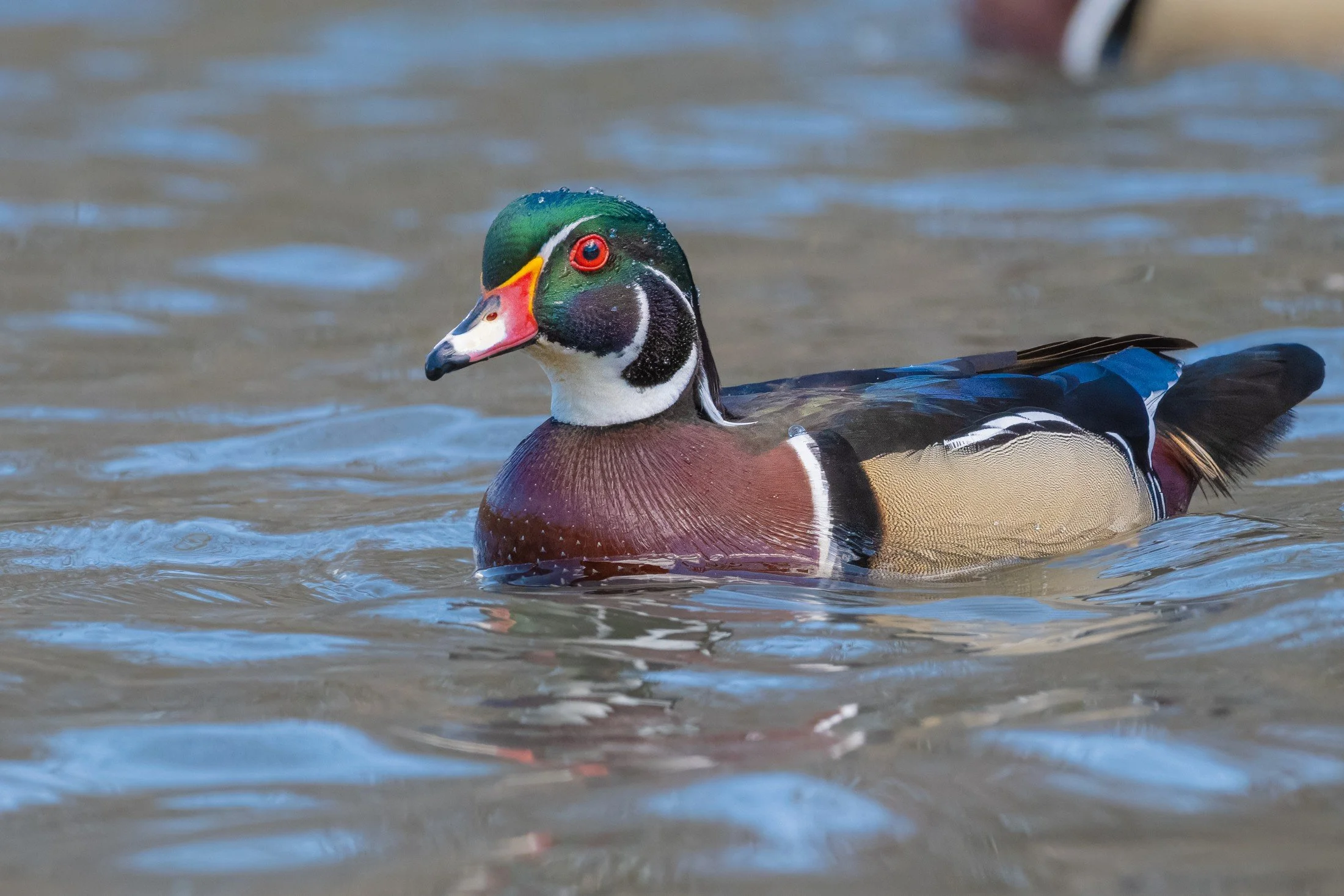
Wood Duck
Aix sponsaColorful plumage and rippled reflections turn an ordinary swim into a portrait.
Did you know? Ducklings leap from their tree-cavity nest and make their way to water soon after hatching.
Species notes ↗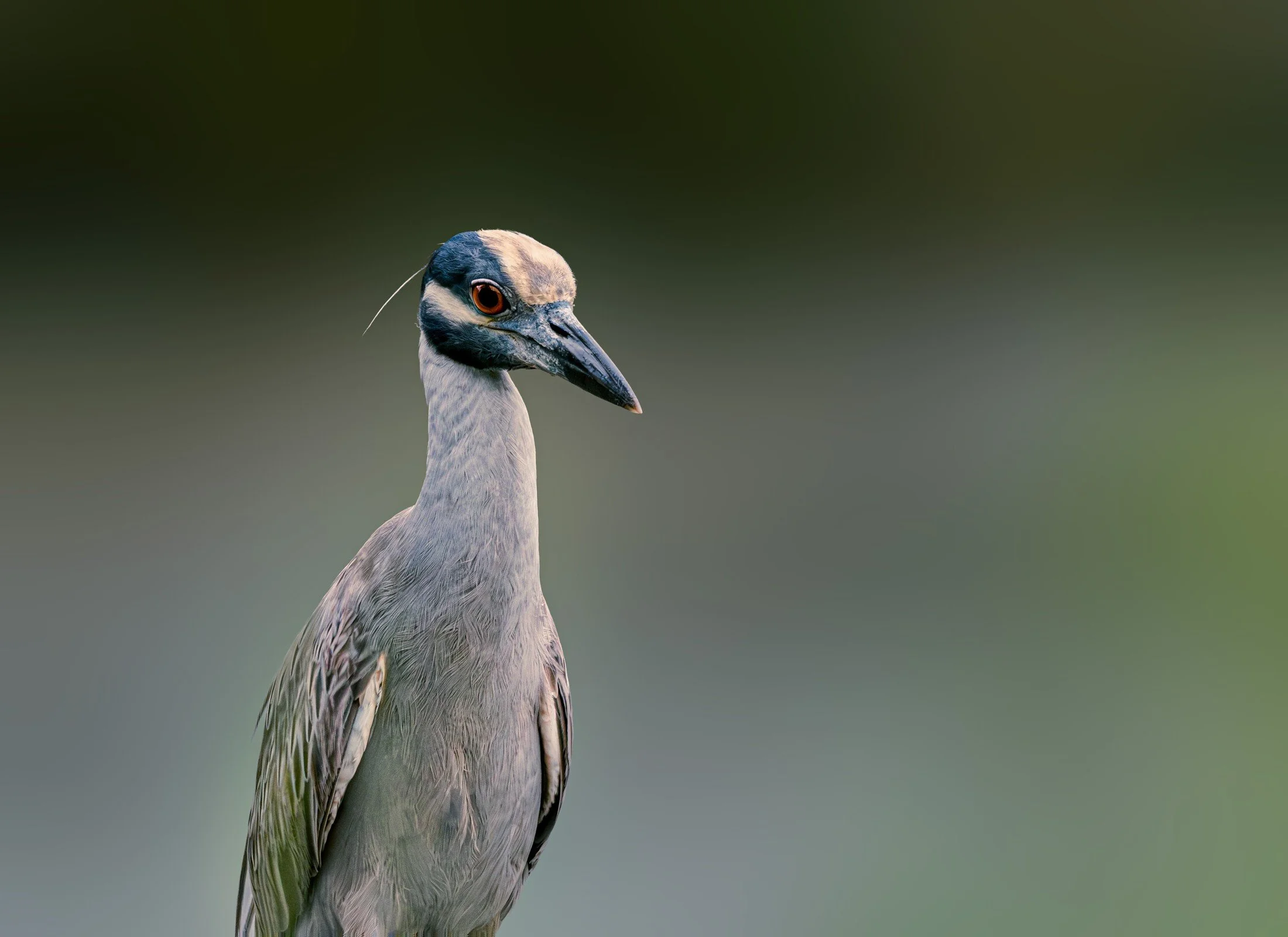
Yellow-crowned Night Heron
Nyctanassa violaceaA dark mask, pale crown, and clear eye define a patient waterside hunter.
Did you know? Coastal nesting can be timed to the spring emergence of crabs.
Species notes ↗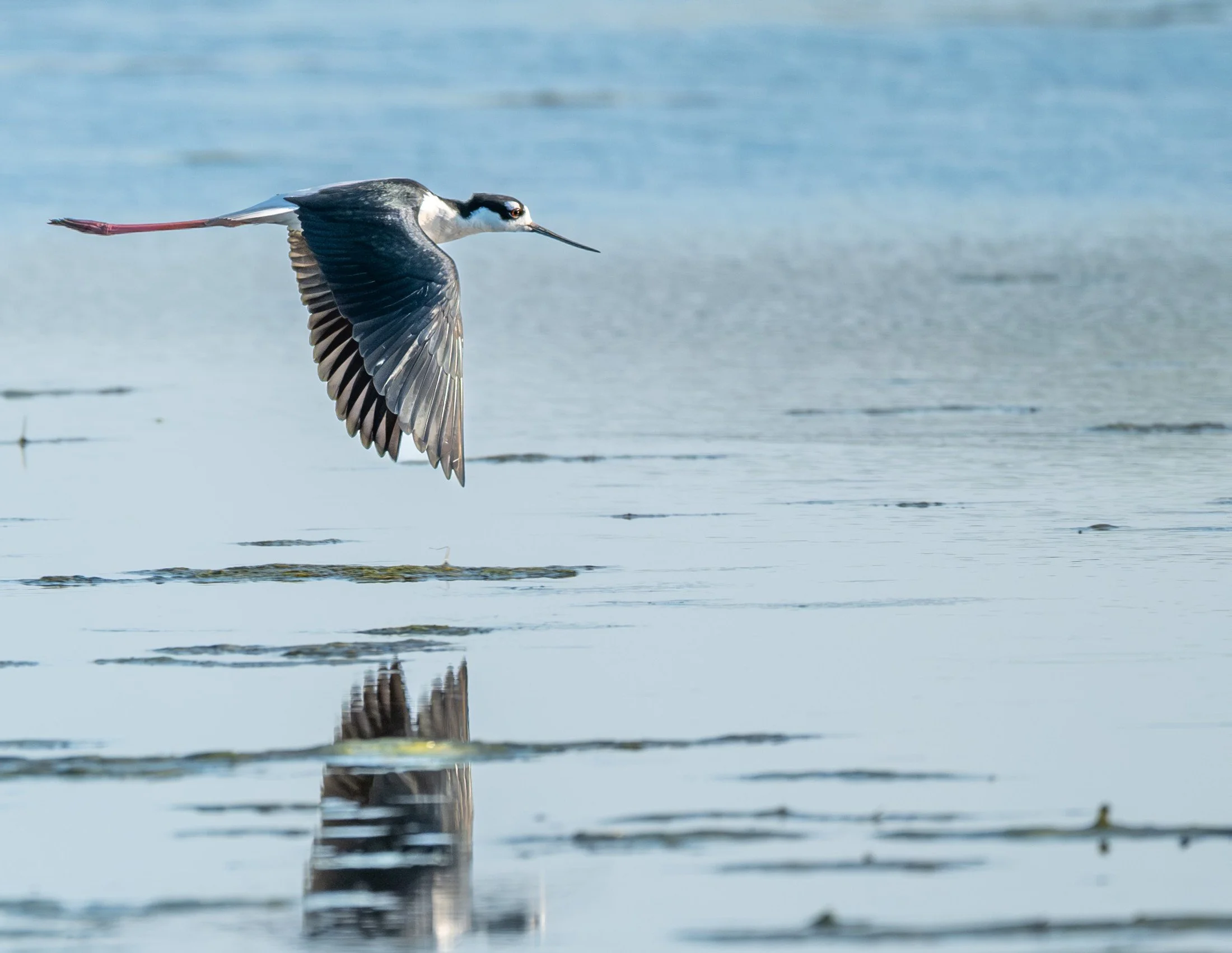
Black-necked Stilt
Himantopus mexicanusLong pink legs trail a Black-necked Stilt as it flies low above its reflection.
Did you know? Only flamingos have longer legs in proportion to their bodies than stilts.
Species notes ↗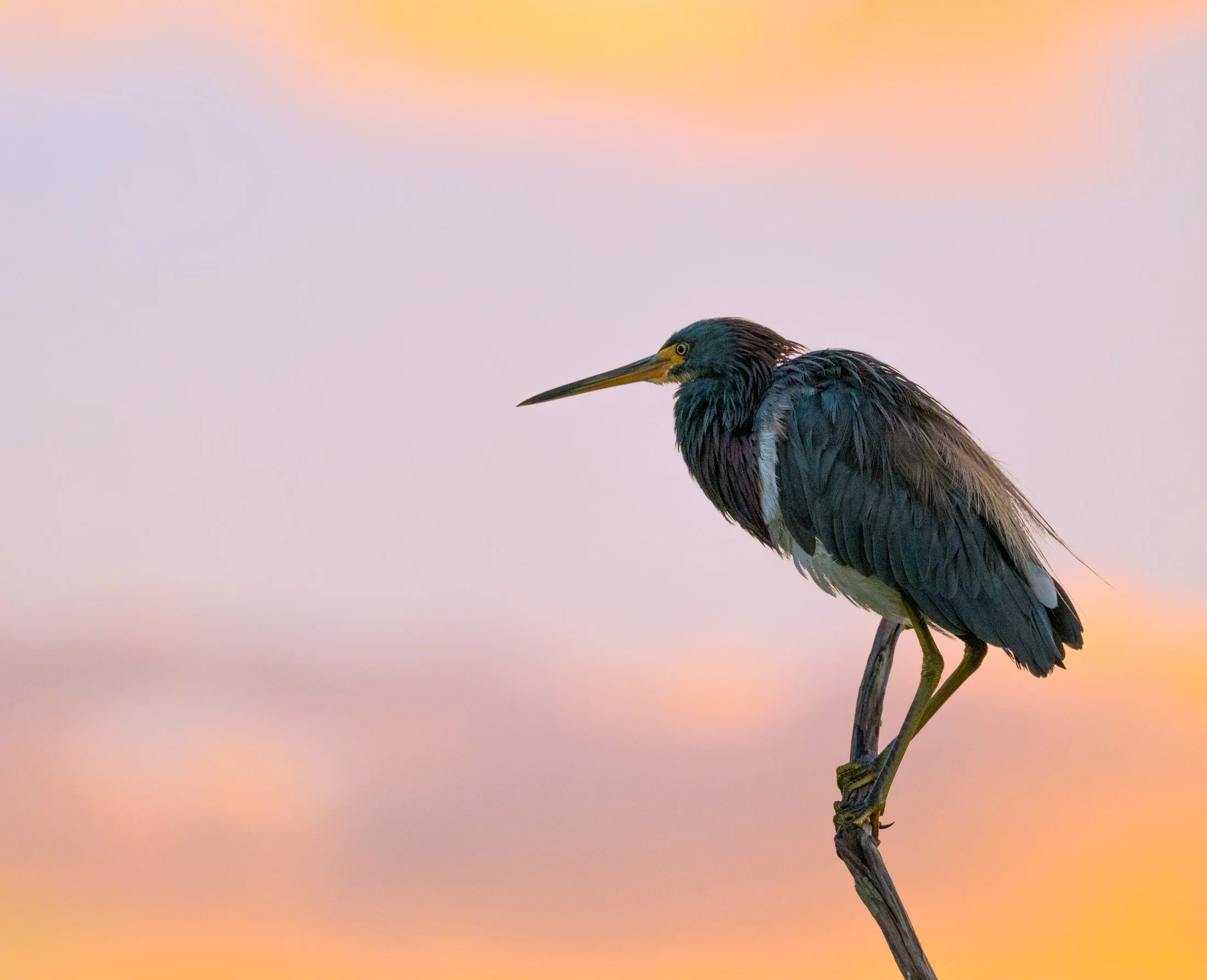
Great Blue Heron
Ardea herodiasPastel evening light surrounds a heron balanced on a narrow perch.
Did you know? Special powder-down feathers and a comb-like claw help it clean fish slime from its plumage.
Species notes ↗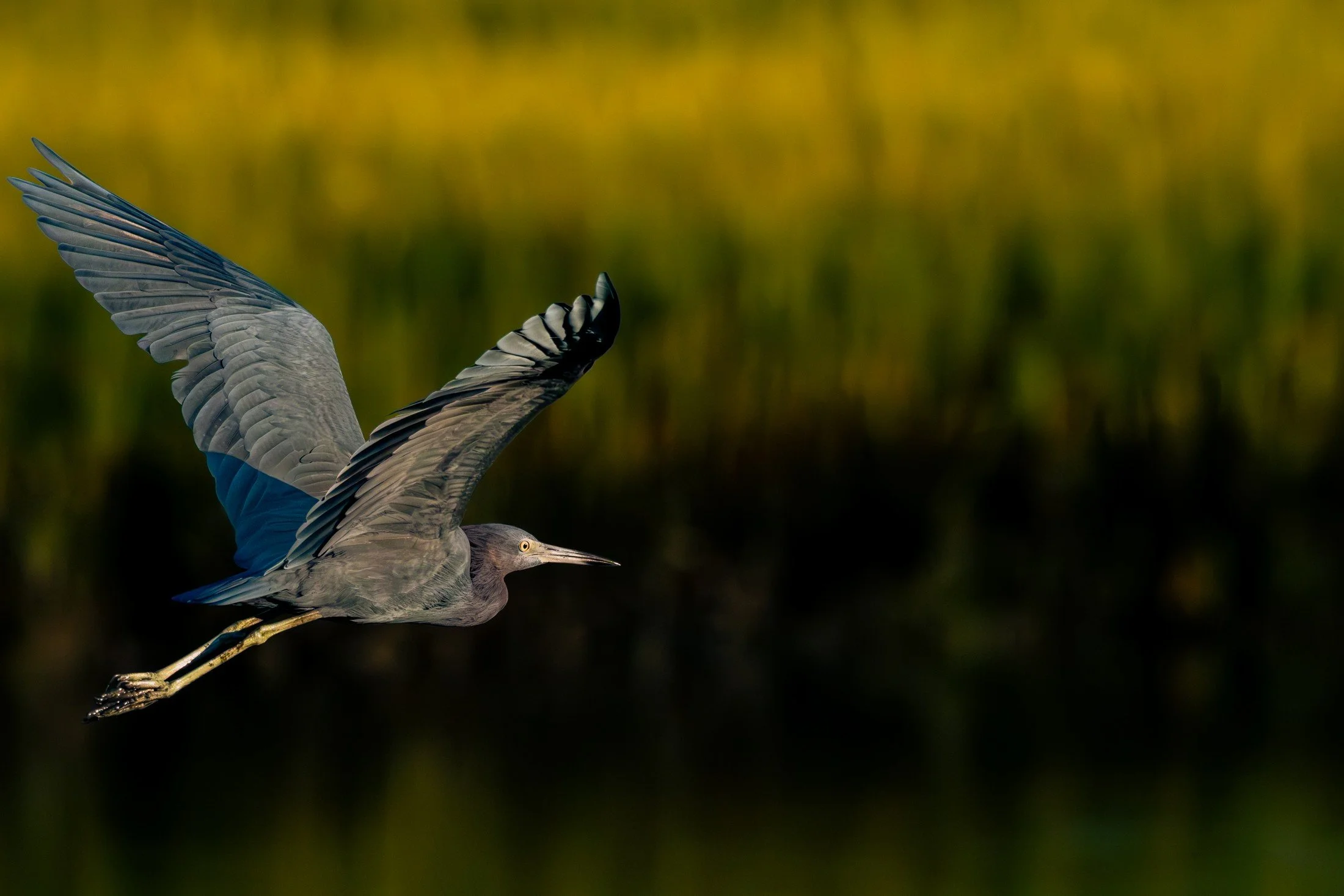
Little Blue Heron
Egretta caeruleaOpen wings carry a Little Blue Heron above warm wetland reflections.
Did you know? Young birds start out white and become blue as they mature.
Species notes ↗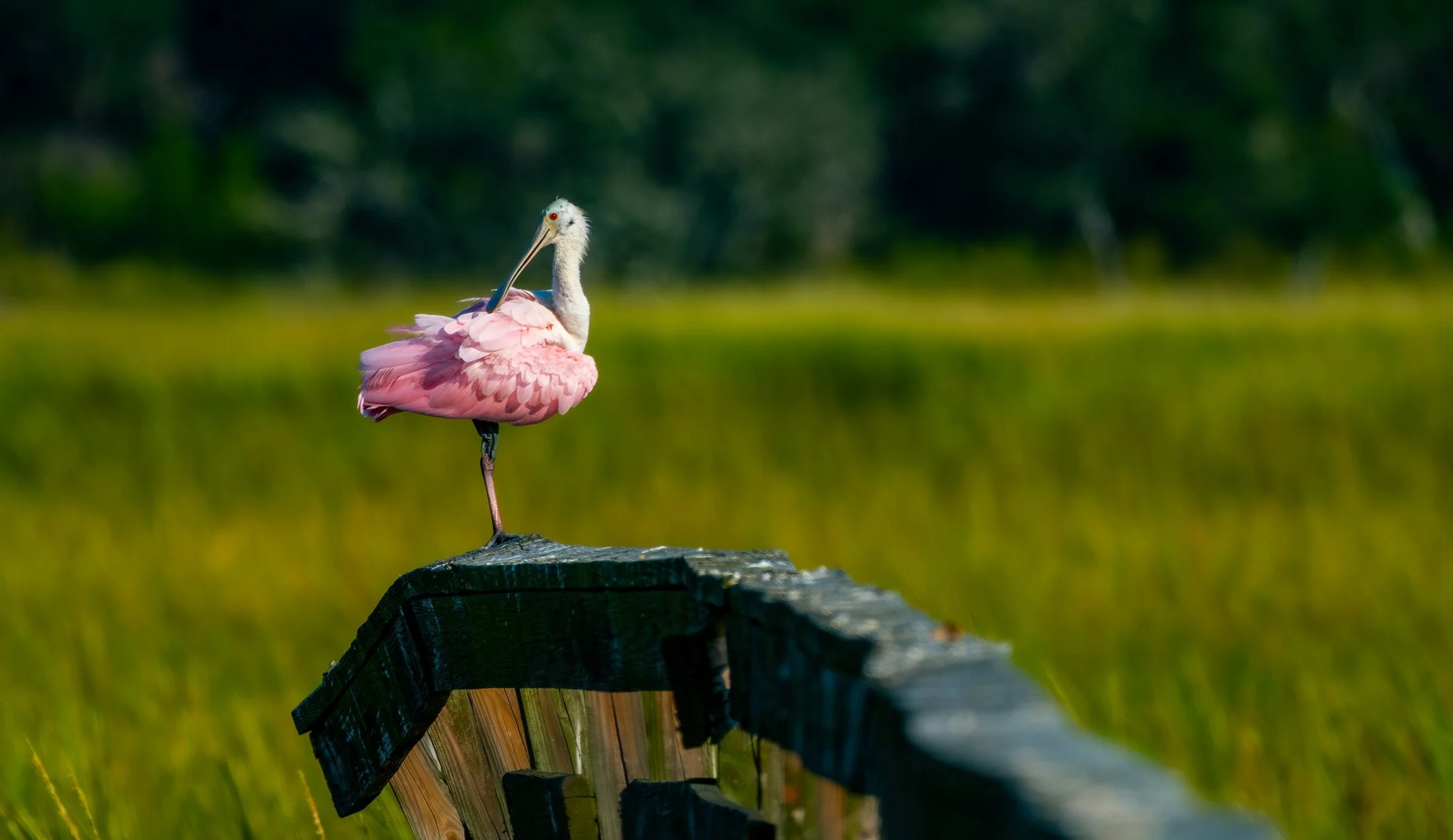
Roseate Spoonbill
Platalea ajajaPink plumage stands against the deep greens of the marsh.
Did you know? Pigments called carotenoids in its food give its feathers their pink color.
Species notes ↗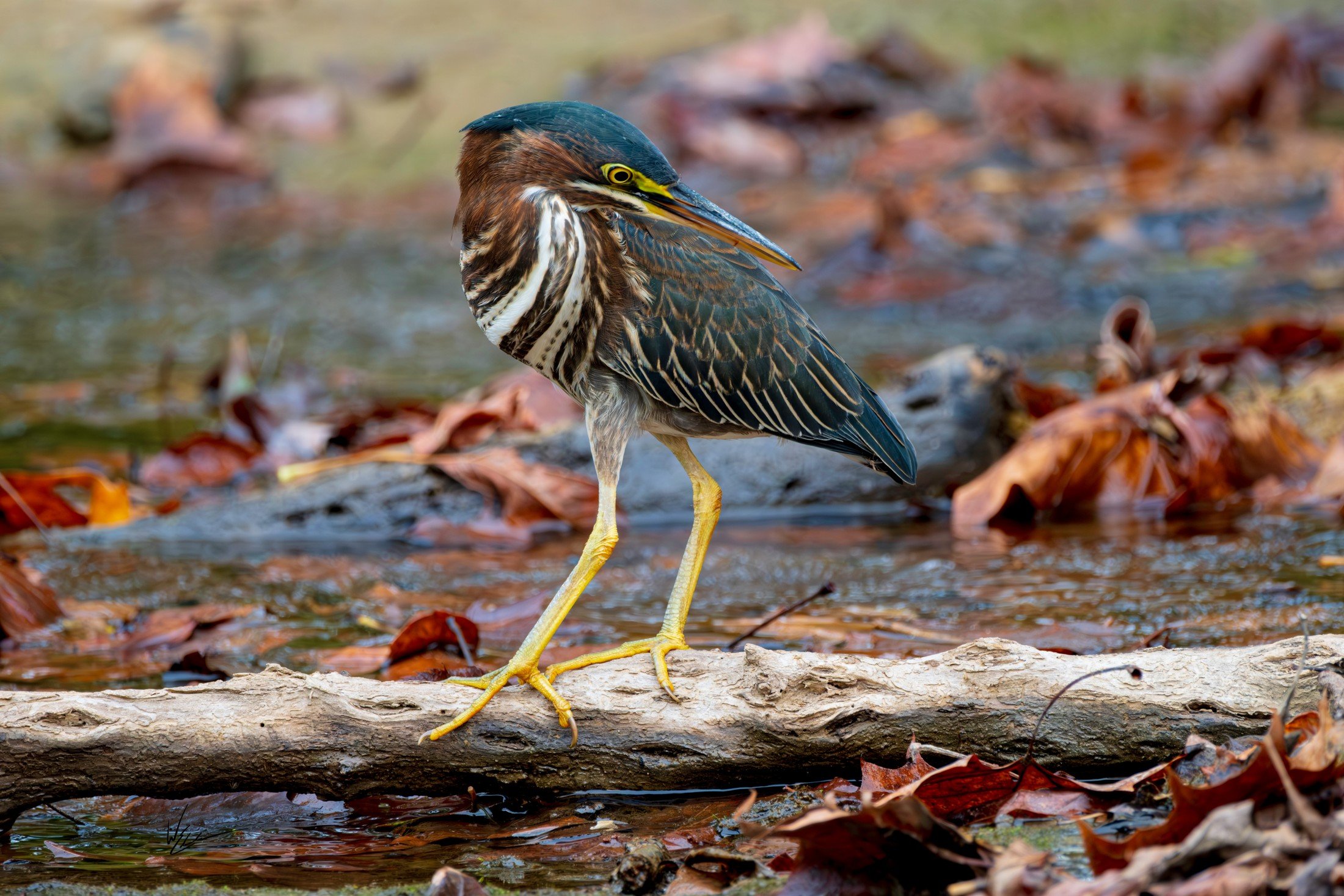
Green Heron
Butorides virescensA backward glance gives this waterside portrait its tension and character.
Did you know? It sometimes uses insects, feathers, or bits of bread as bait to lure fish.
Species notes ↗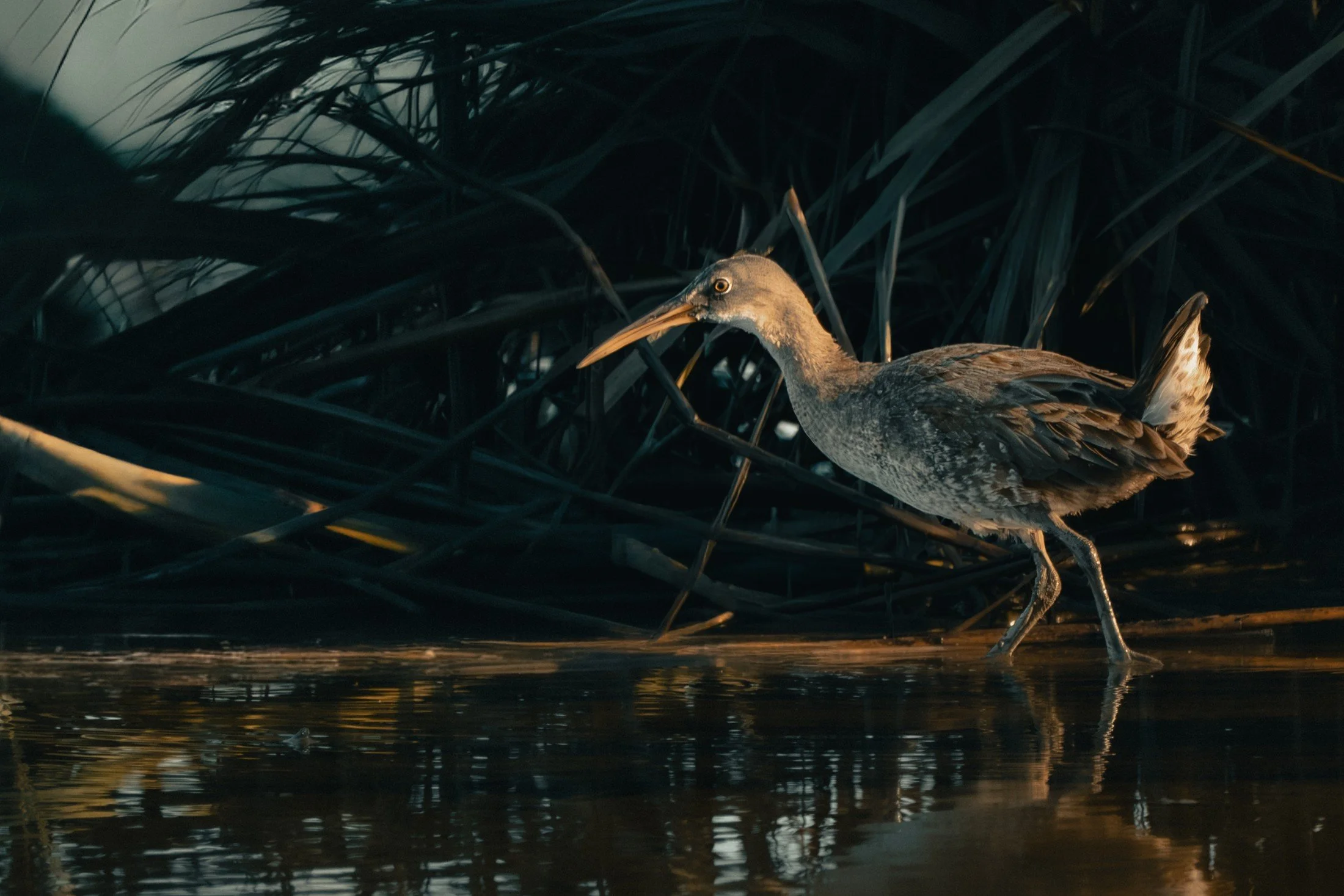
Virginia Rail
Rallus limicolaWarm light reaches a secretive marsh bird between reeds and water.
Did you know? Although it usually walks through marsh vegetation, it can swim and even dive.
Species notes ↗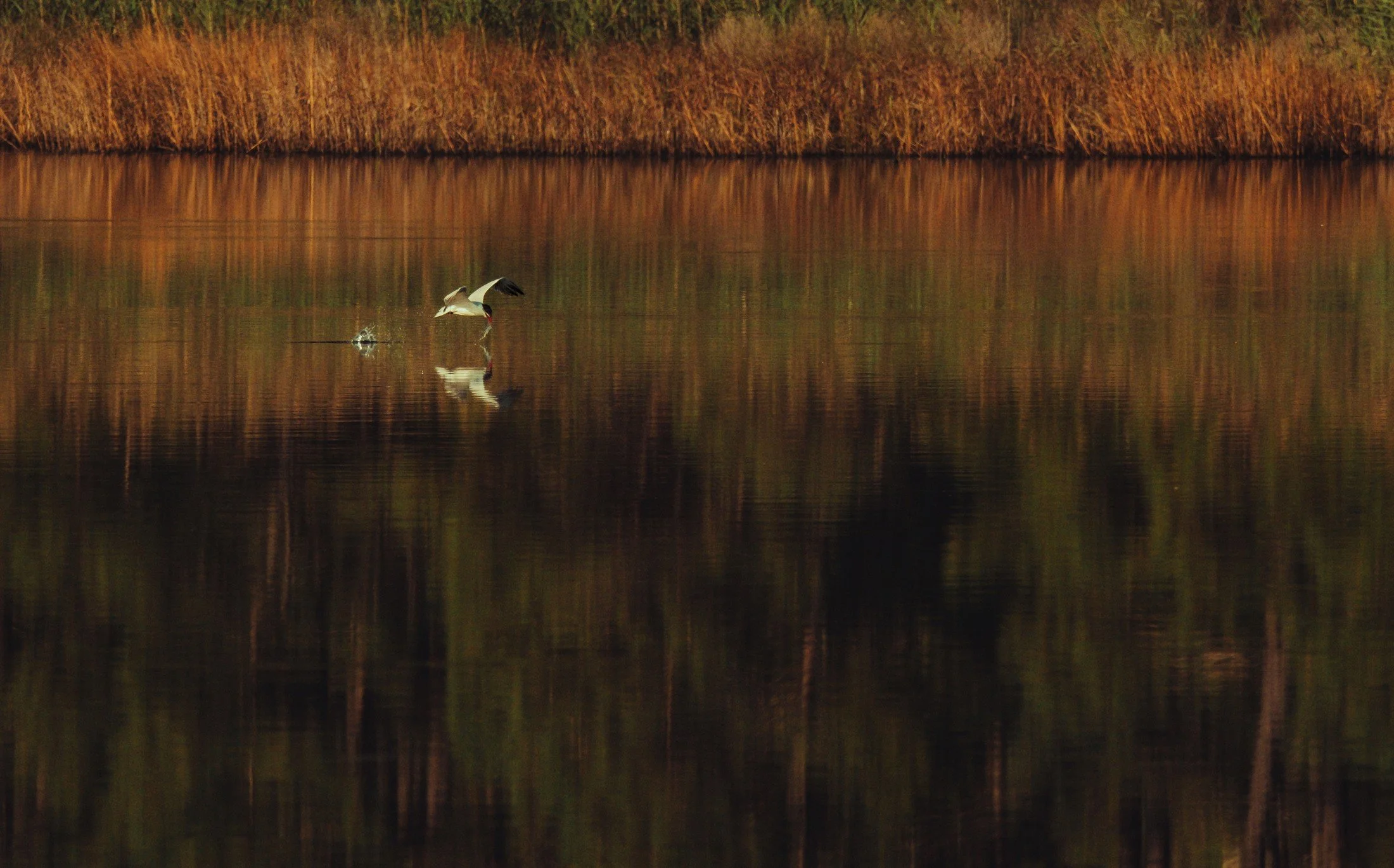
Black Skimmer
Rynchops nigerA small skimmer and its reflection sit within a wide field of wetland color.
Did you know? Finding fish by touch lets this bird feed in dim light and even darkness.
Species notes ↗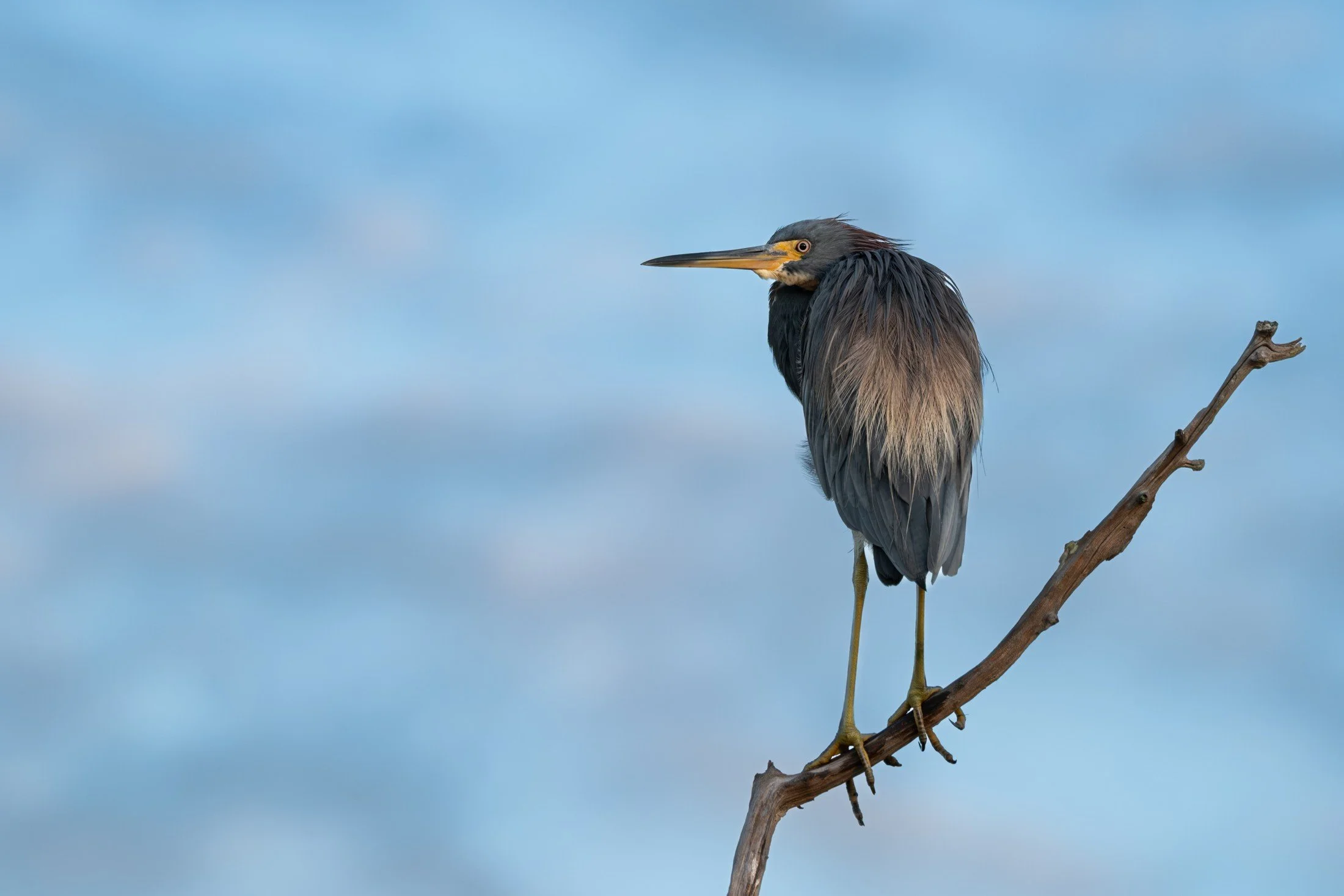
Tricolored Heron
Egretta tricolorCool blue water and a delicate perch frame the heron’s long silhouette.
Did you know? Adults greet their increasingly demanding nestlings with bows when delivering food.
Species notes ↗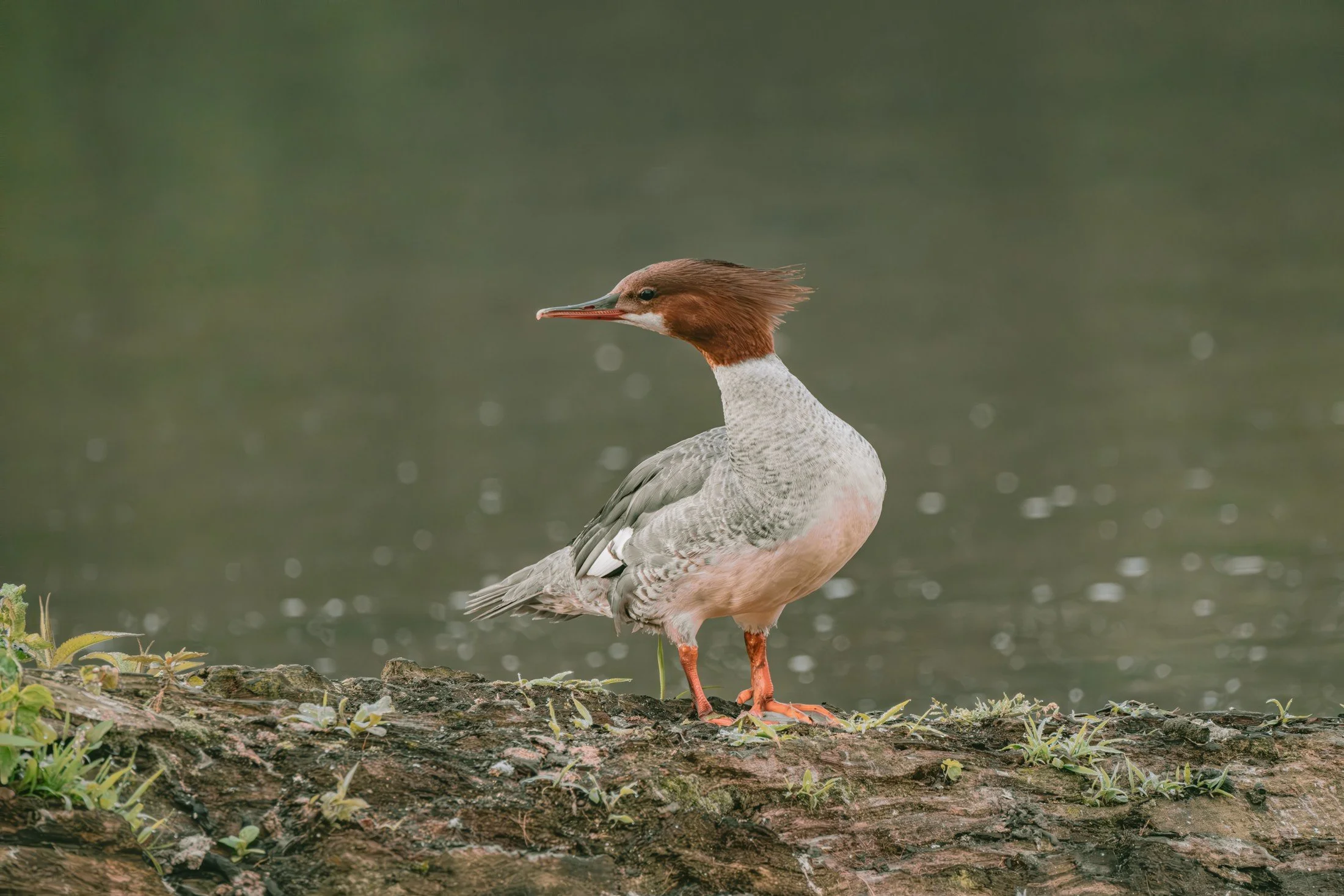
Common Merganser
Mergus merganserA crested merganser pauses at the edge of the river.
Did you know? Its fish-catching bill has earned it the nickname sawbill.
Species notes ↗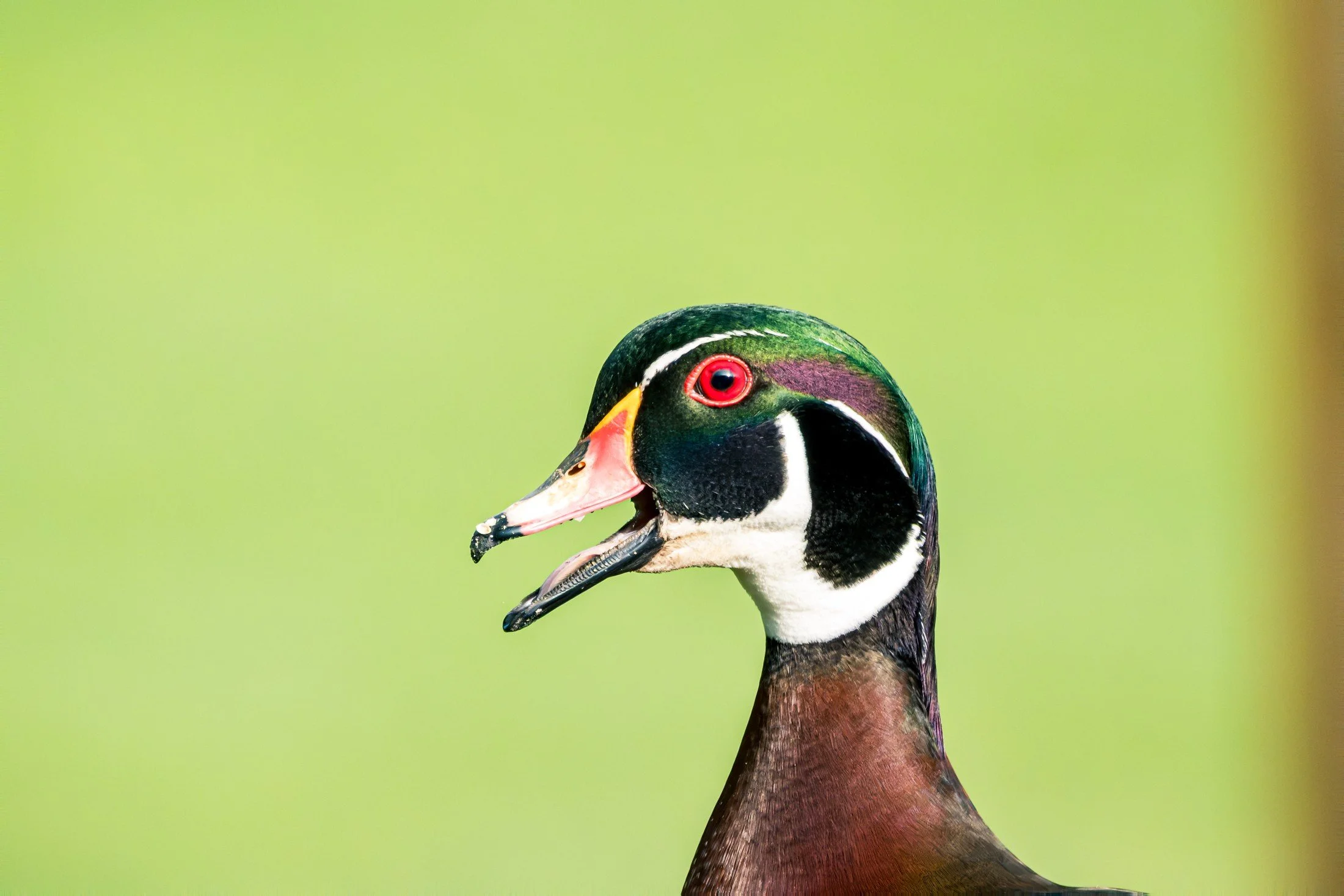
Wood Duck
Aix sponsaA close view brings the Wood Duck’s striking head pattern into focus.
Did you know? It is the only North American duck that regularly produces two broods in a year.
Species notes ↗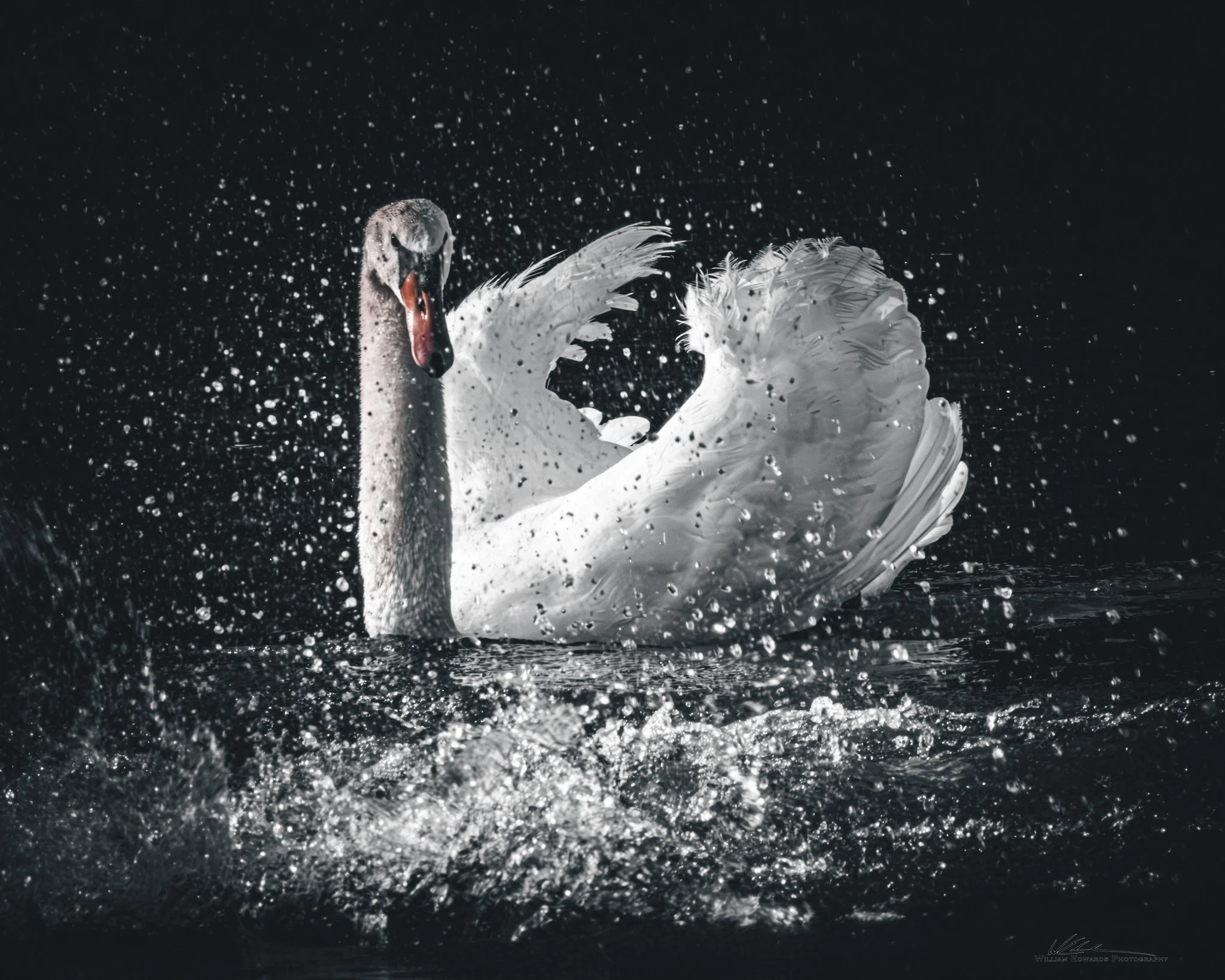
Mute Swan
Cygnus olorWater droplets surround a bathing swan in a dramatic burst of light.
Did you know? The black knob above a male’s bill swells during the breeding season.
Species notes ↗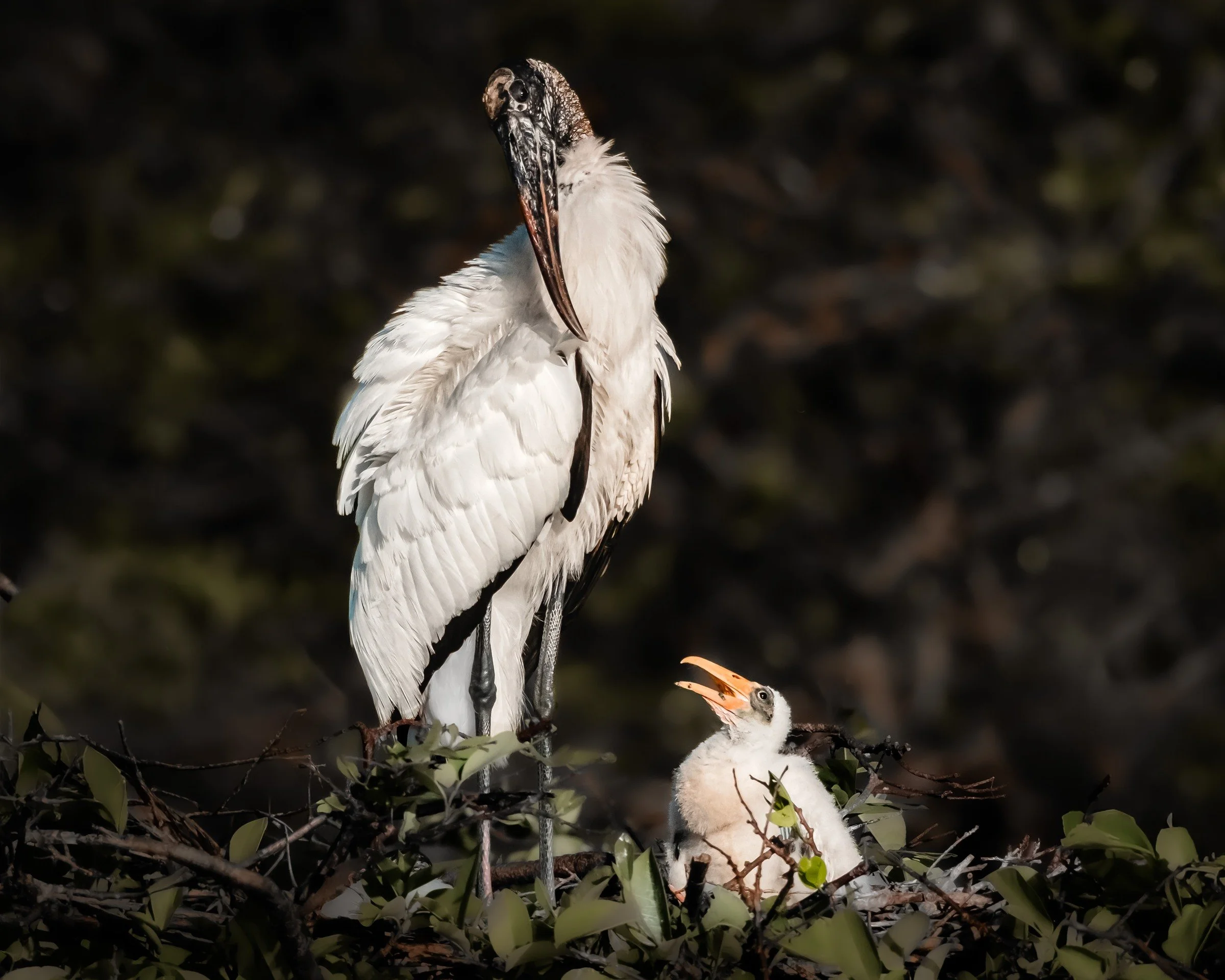
Wood Stork
Mycteria americanaAn adult and chick share the crowded space of a wetland nest.
Did you know? One banded wild Wood Stork was recorded at more than 22 years old.
Species notes ↗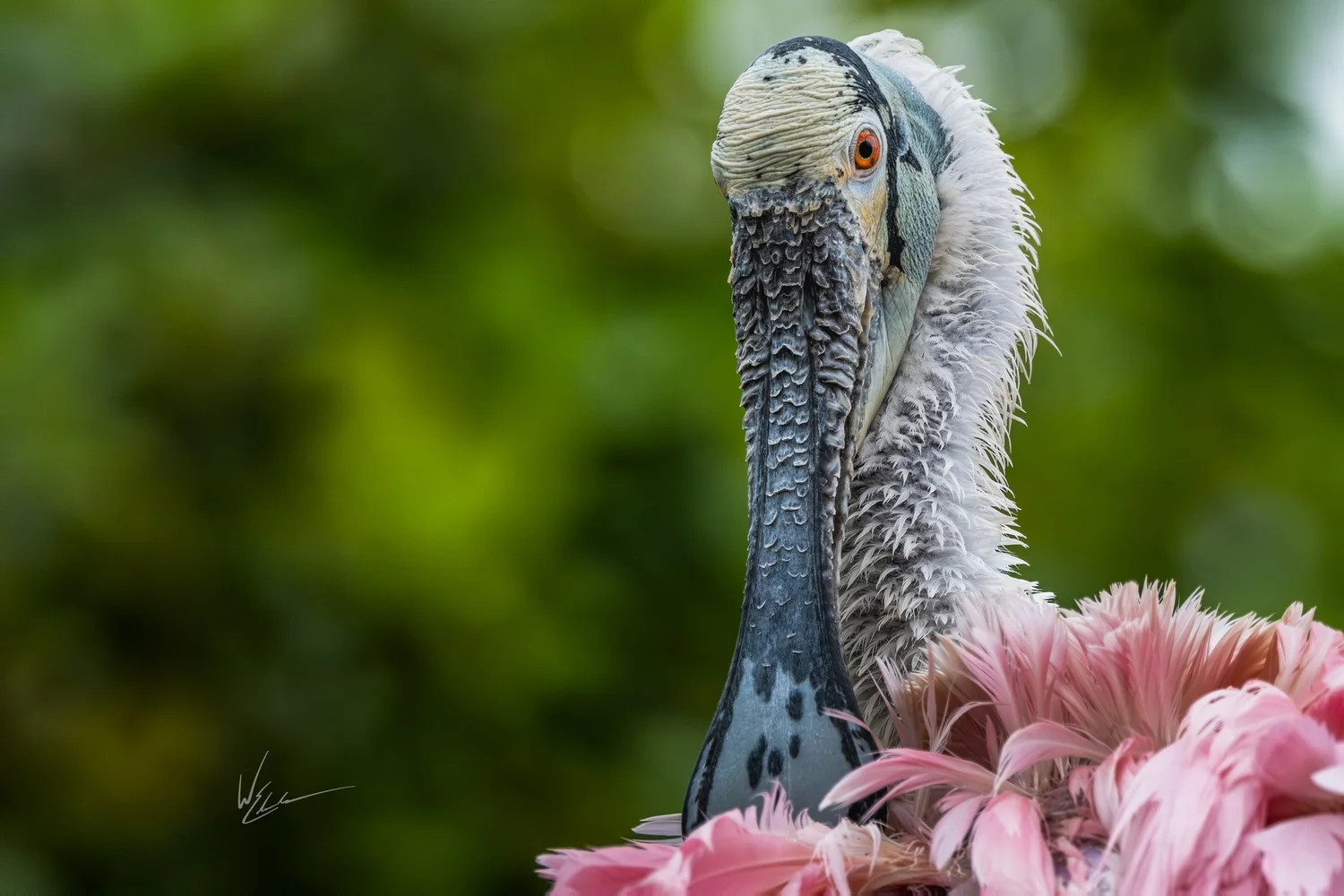
Roseate Spoonbill
Platalea ajajaA close view reveals the extraordinary bill texture and orange eye of a spoonbill.
Did you know? A chick’s bill is not spoon-shaped at hatching; it starts flattening at about nine days old.
Species notes ↗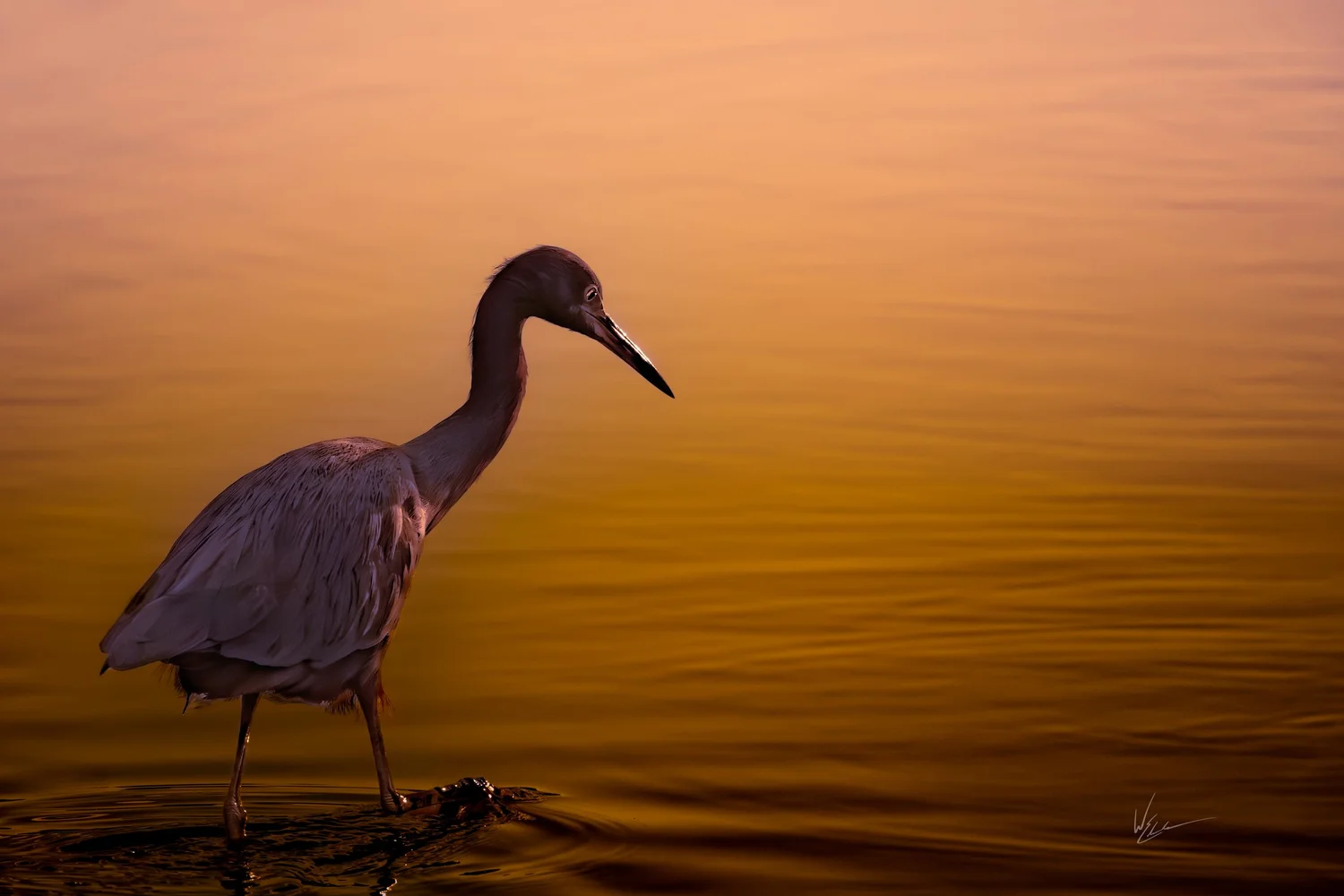
Little Blue Heron
Egretta caeruleaA dark heron stands quietly in water warmed by the last light.
Did you know? Birds changing from white juvenile feathers to blue adult plumage are sometimes called calico herons.
Species notes ↗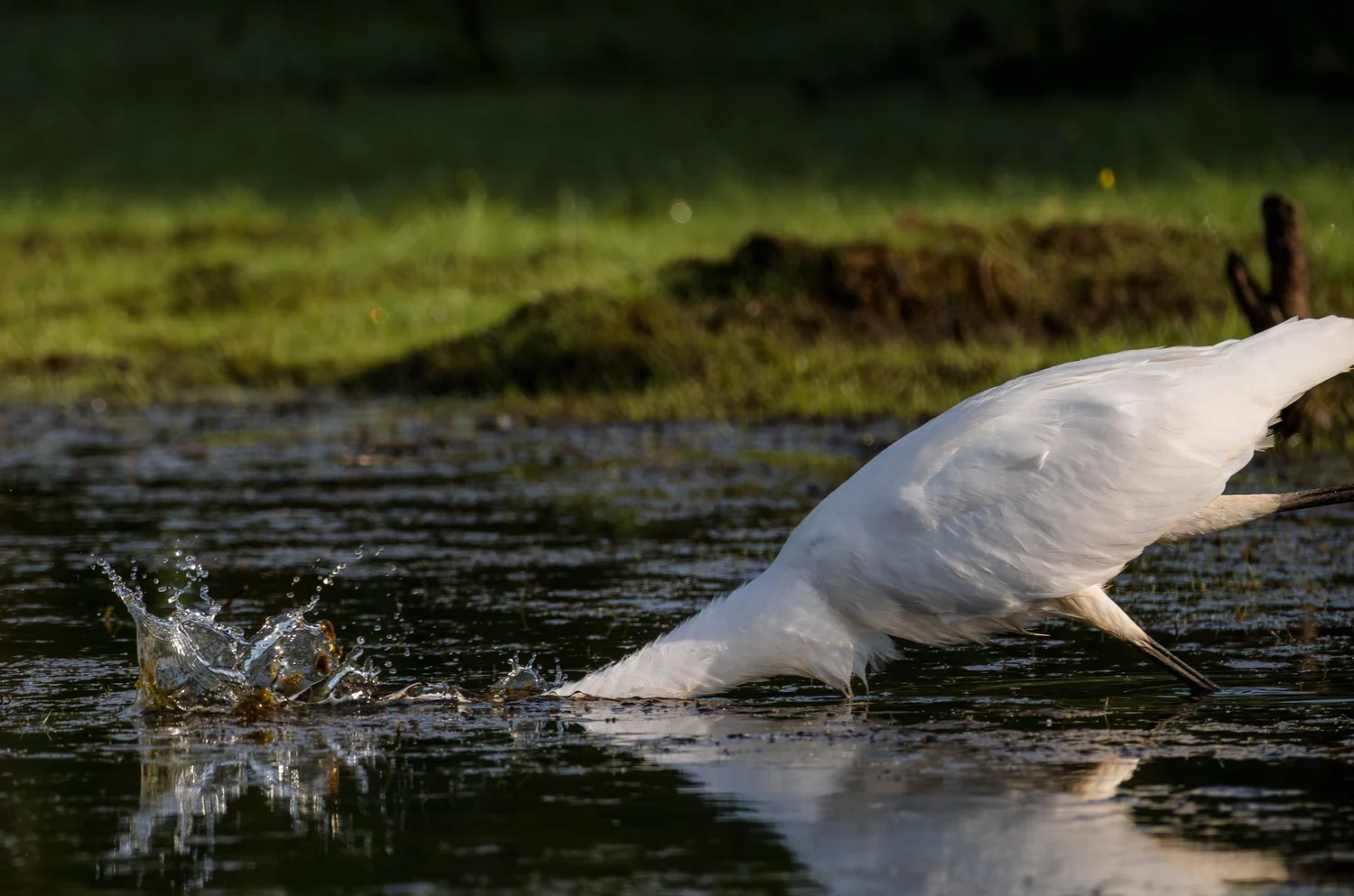
Great Egret
Ardea albaA white egret reaches into the water, bringing the hunt into a single gesture.
Did you know? During breeding season, the skin around its eyes turns a striking green.
Species notes ↗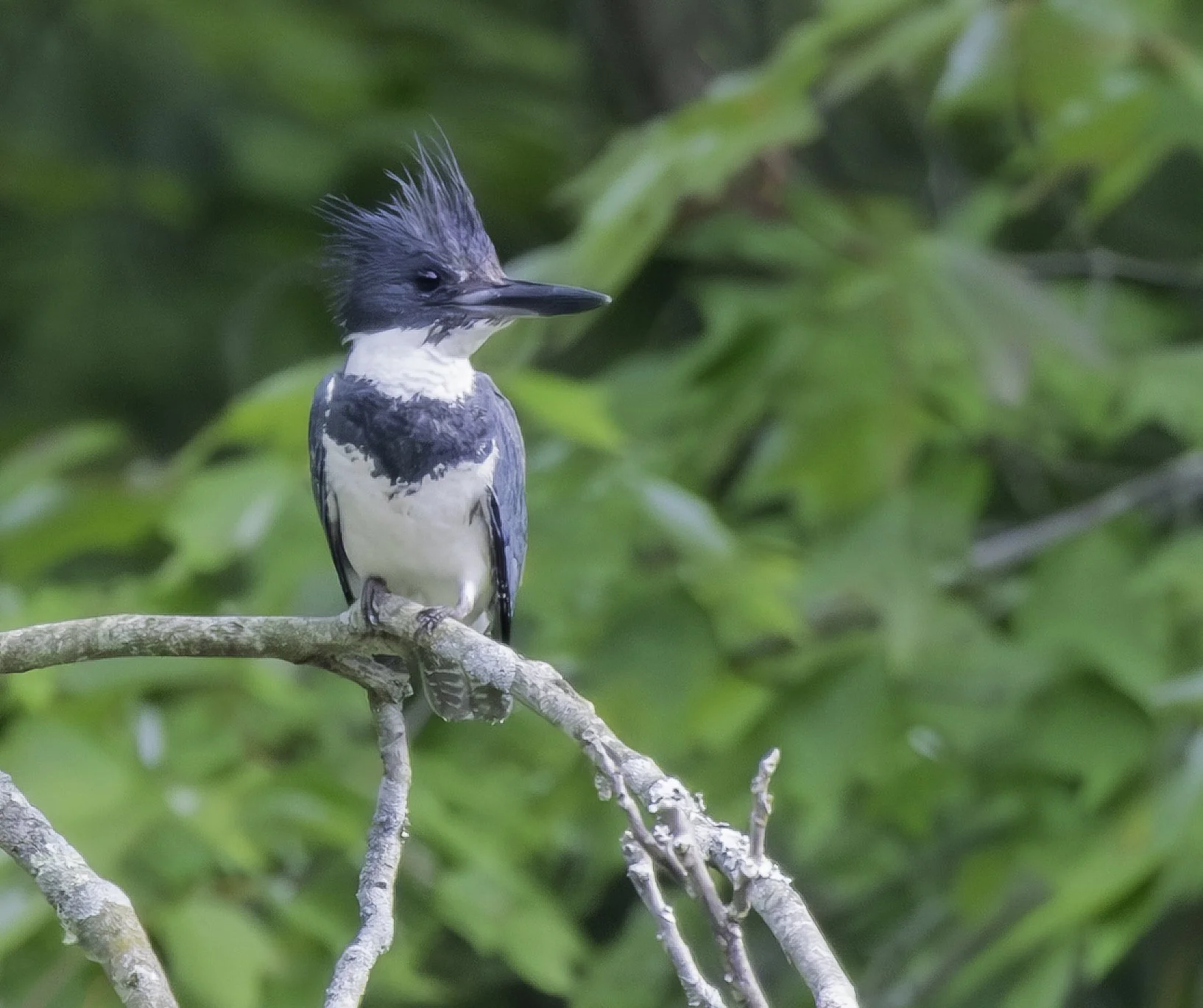
Belted Kingfisher
Megaceryle alcyonA raised crest and direct gaze give this riverside perch a strong sense of character.
Did you know? The female has an extra rusty band across her belly, making her more colorful than the male.
Species notes ↗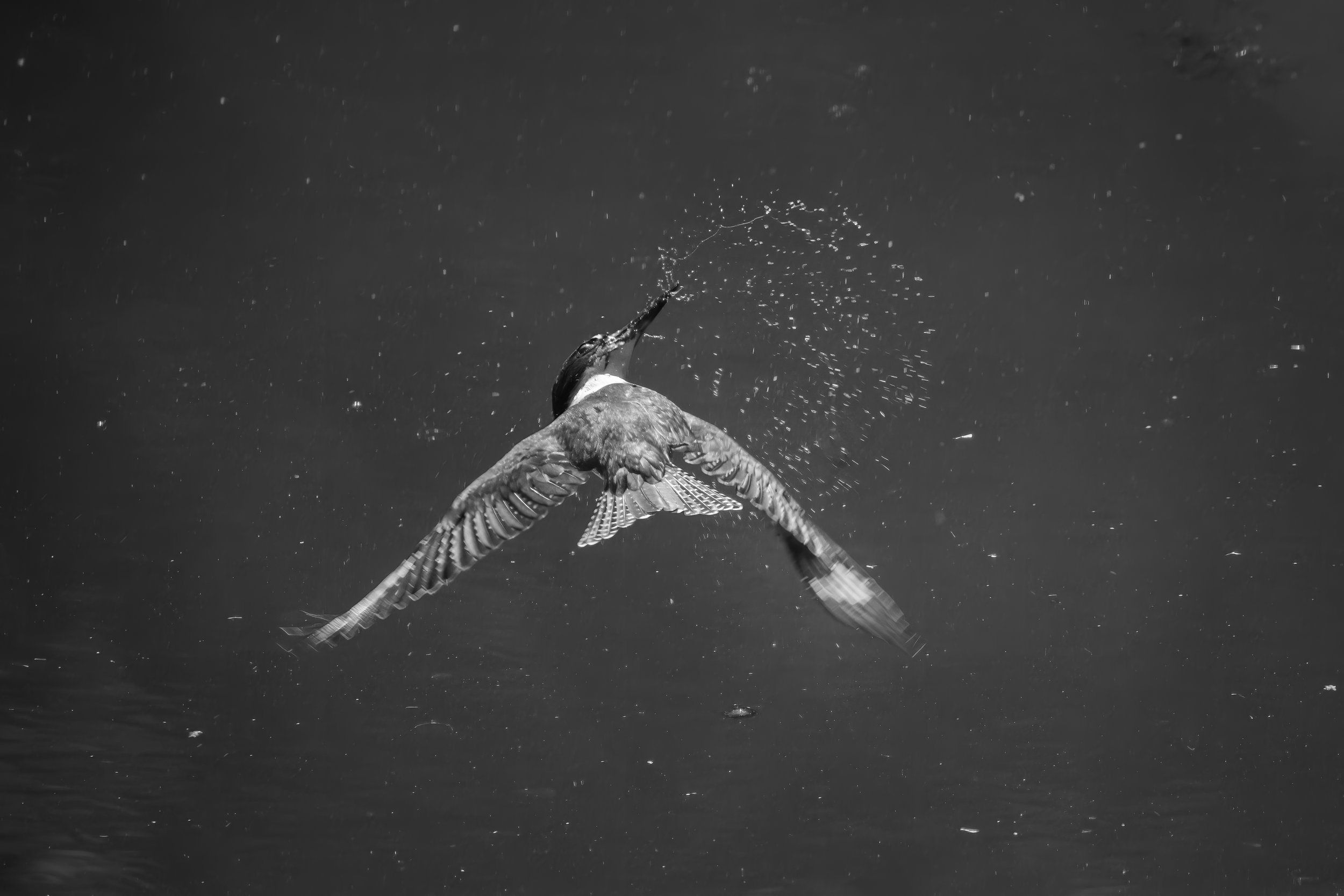
Belted Kingfisher
Megaceryle alcyonSpread wings and flying droplets mark the instant a kingfisher leaves the water.
Did you know? It digs a nesting tunnel into a bank that can extend one to eight feet.
Species notes ↗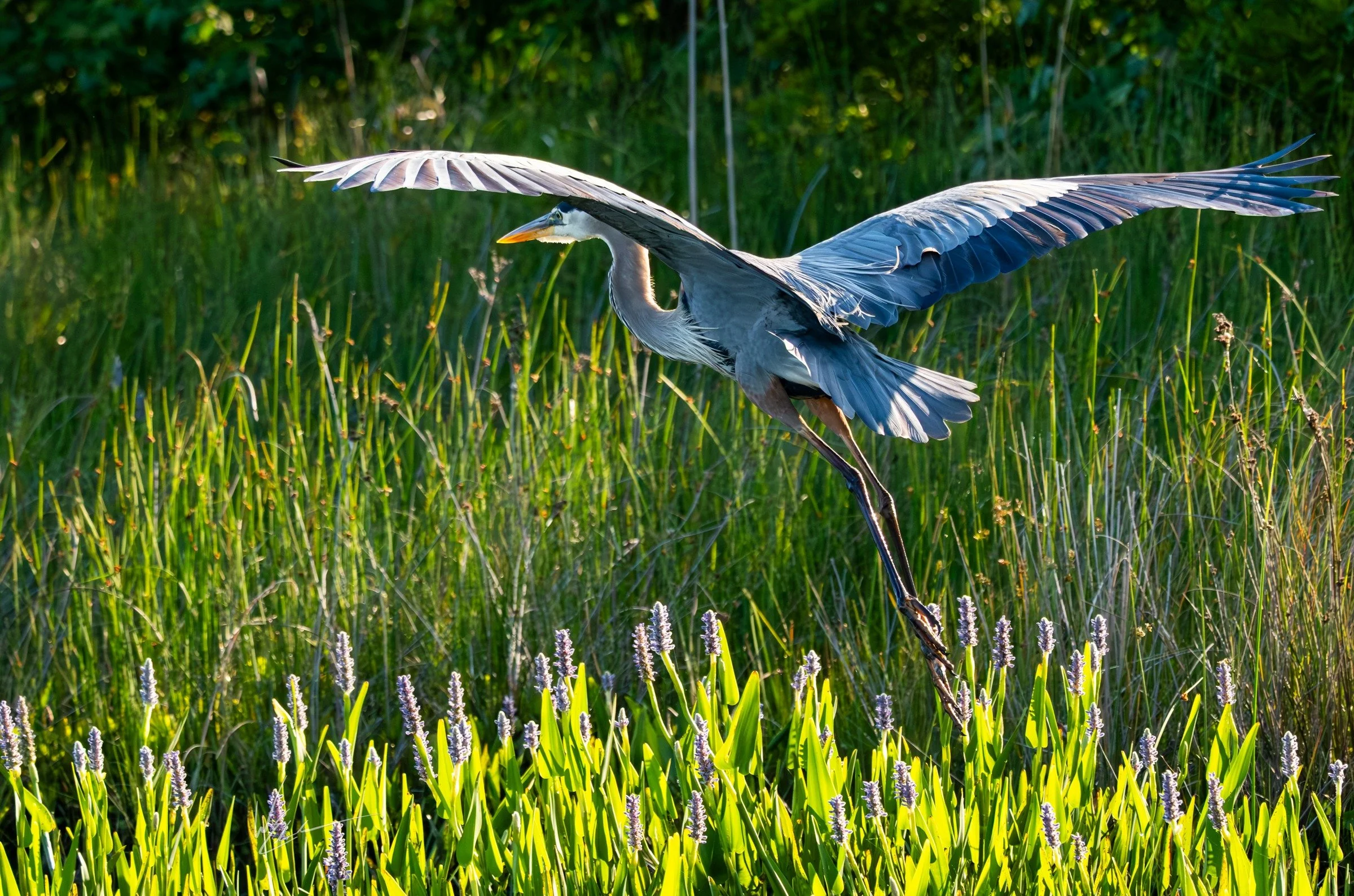
Great Blue Heron
Ardea herodiasBroad wings sweep over sunlit reeds and purple wetland flowers.
Did you know? Its low-light vision lets it hunt at night as well as during the day.
Species notes ↗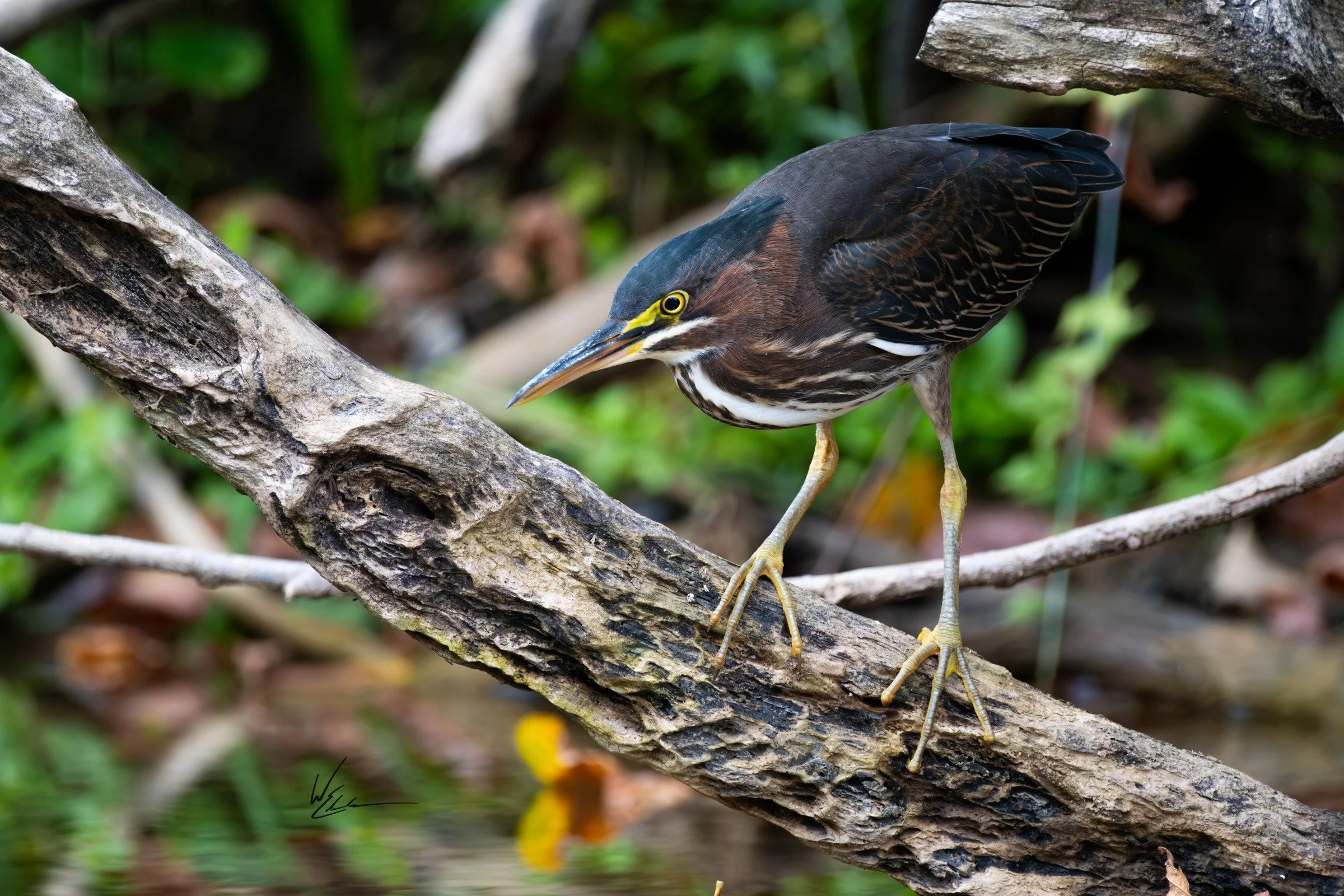
Green Heron
Butorides virescensA Green Heron leans along a weathered branch, its yellow eye fixed ahead.
Did you know? It occasionally dives for prey in deeper water and swims back to shore.
Species notes ↗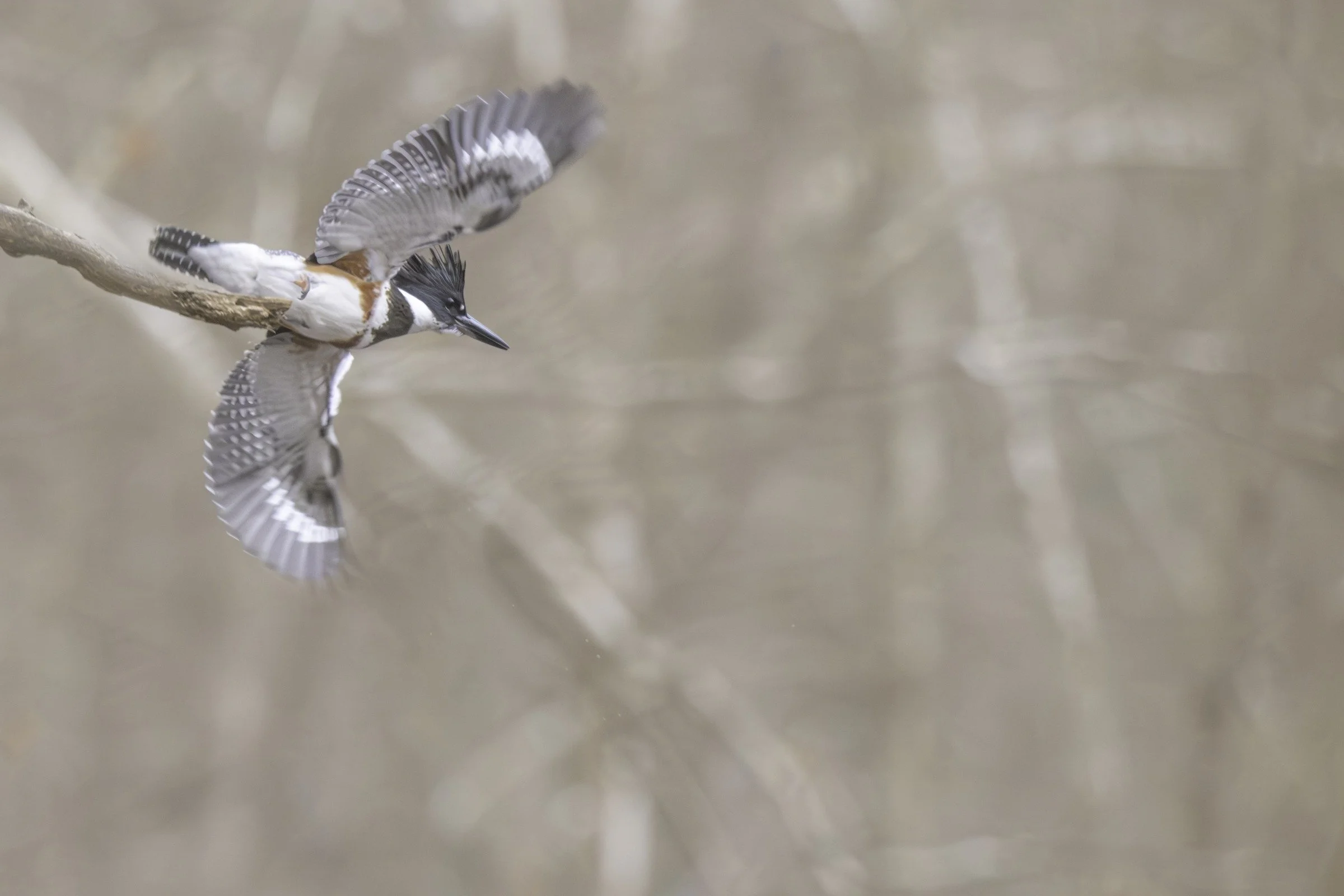
Belted Kingfisher
Megaceryle alcyonFanned wings and a sharp downward gaze capture a moment just above a bare branch.
Did you know? Adults regurgitate pellets of fish bones and scales that reveal what they have eaten.
Species notes ↗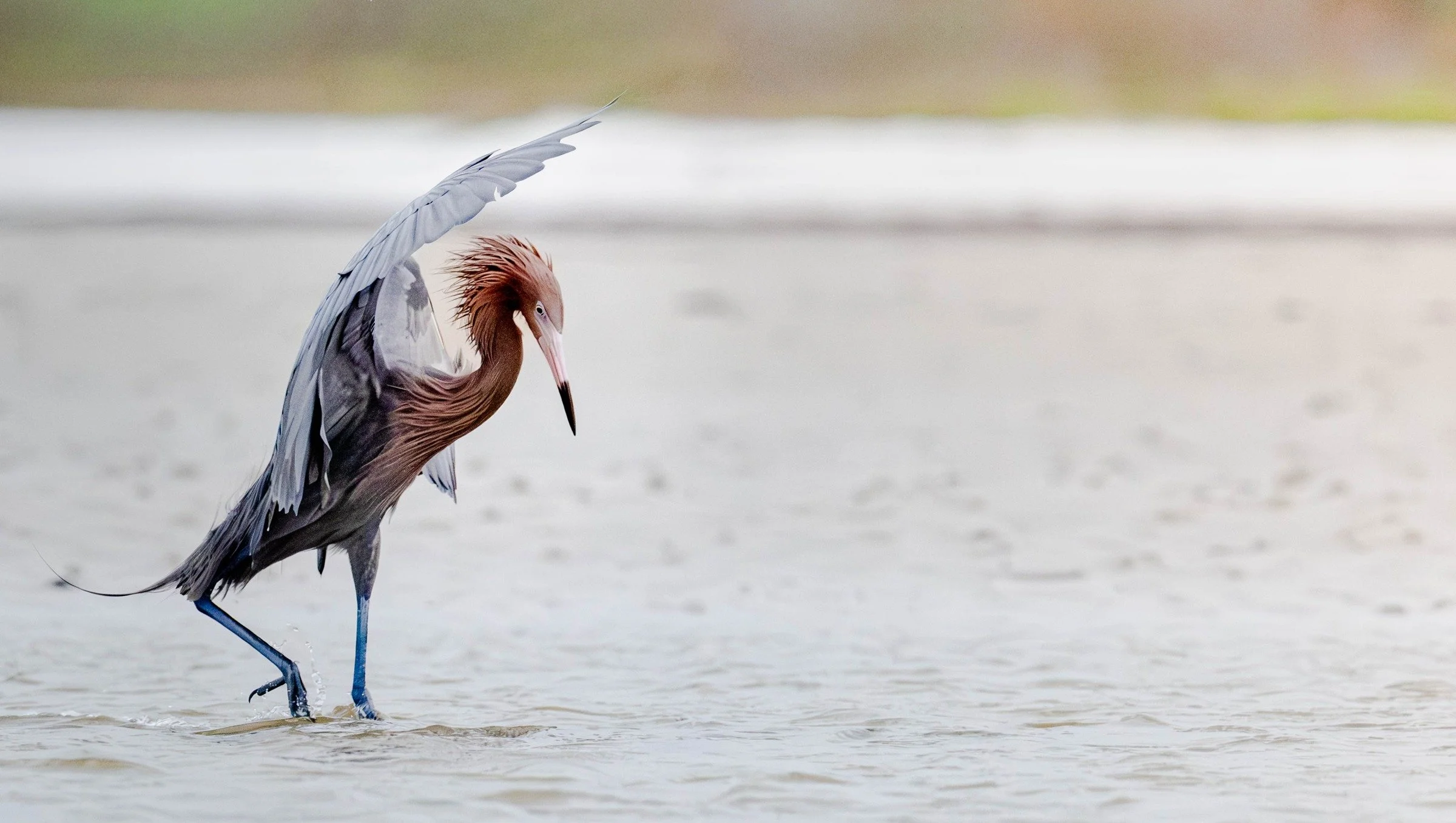
Reddish Egret
Egretta rufescensA raised wing and tousled head give this shallow-water encounter a sense of motion.
Did you know? This species has dark and white color forms; chicks of both can occur in one nest.
Species notes ↗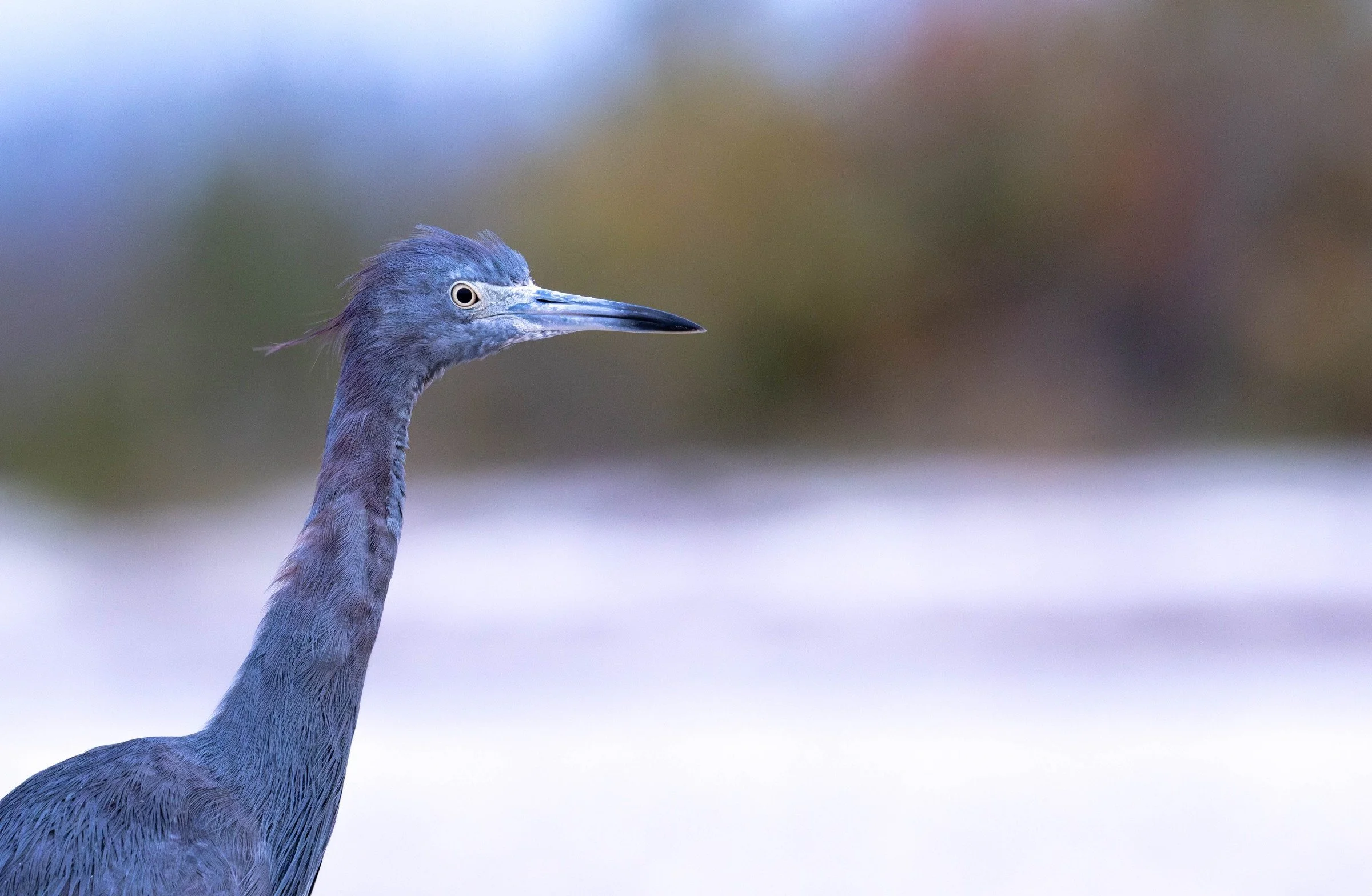
Little Blue Heron
Egretta caeruleaA pale eye and blue-gray bill stand out in a close coastal portrait.
Did you know? A comb-like edge on the middle claw helps it groom its feathers.
Species notes ↗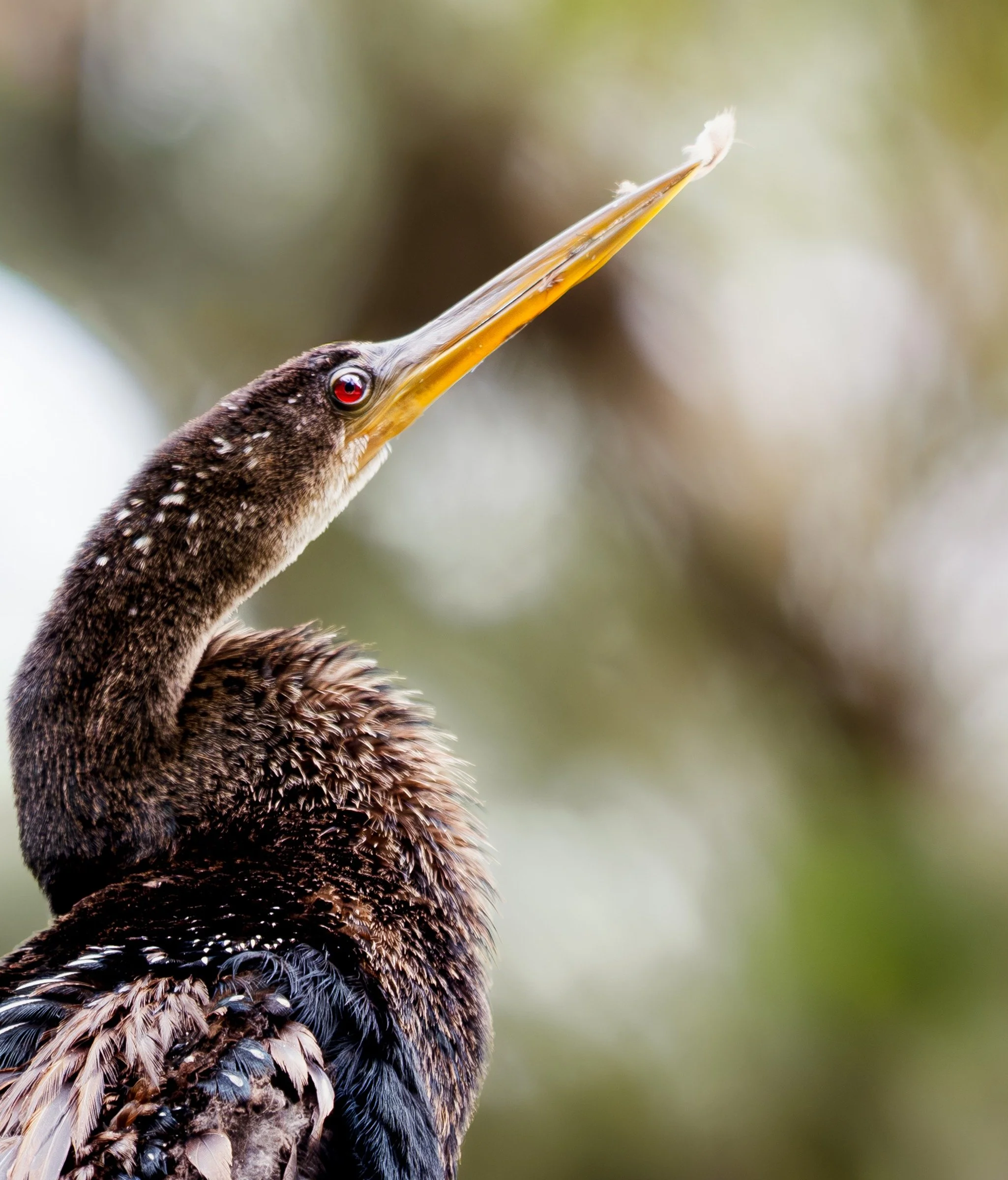
Anhinga
Anhinga anhingaA tiny feather balances at the tip of an Anhinga’s long golden bill.
Did you know? Its wettable feathers and dense bones help it submerge while stalking fish.
Species notes ↗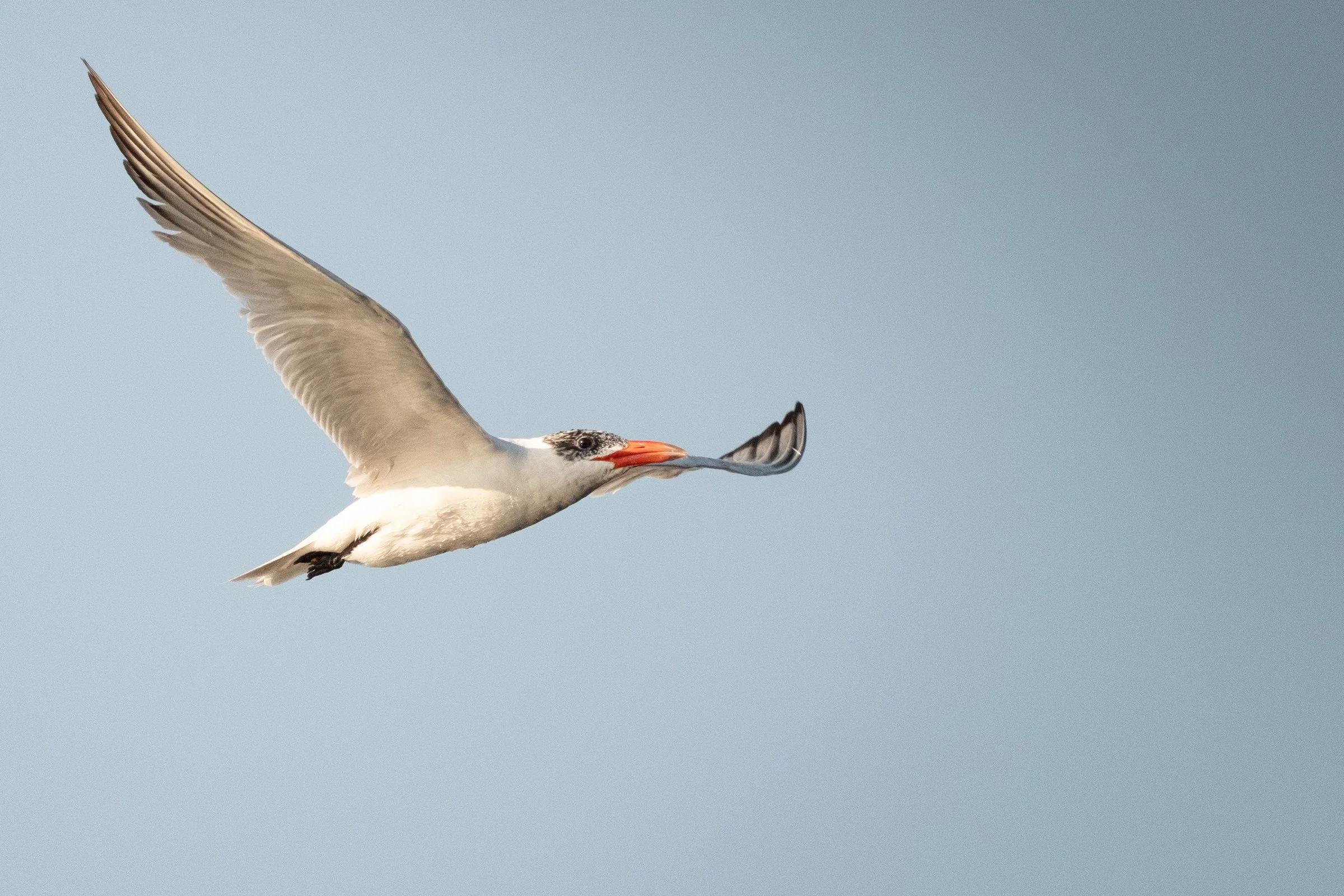
Caspian Tern
Hydroprogne caspiaA Caspian Tern carries a fish beneath one raised wing across a pale sky.
Did you know? Young may receive food from their parents for months after leaving the nest.
Species notes ↗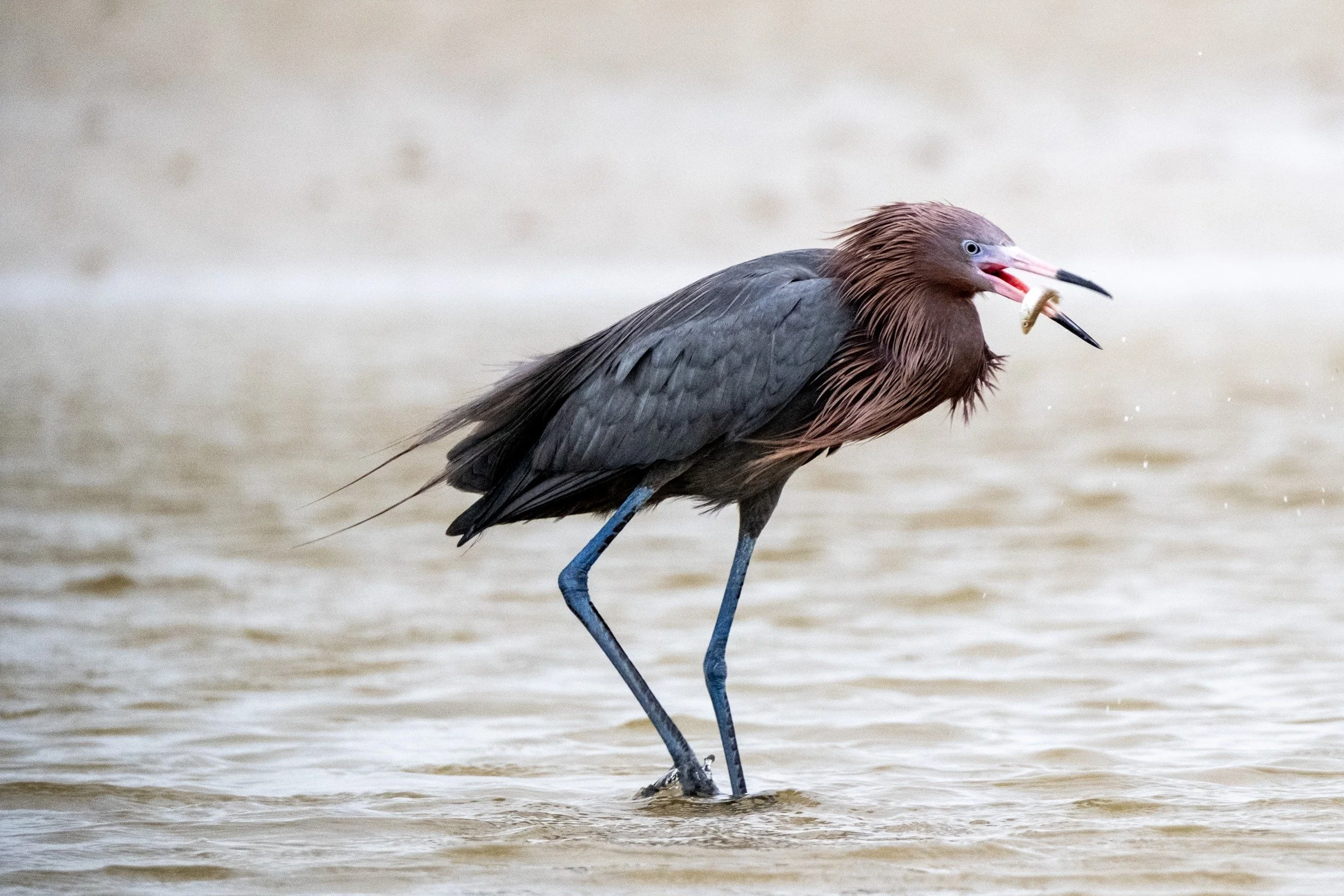
Reddish Egret
Egretta rufescensA small fish catches the light between the open tips of a Reddish Egret’s bill.
Did you know? It runs, spreads its wings, and stirs the shallows to flush small fish into view.
Species notes ↗