

WOODLAND BIRDS / WILLIAM EDWARDS
Birds of the woodland.
Warblers, songbirds, and life among the branches. Close portraits and fleeting behavior from the woodland canopy.
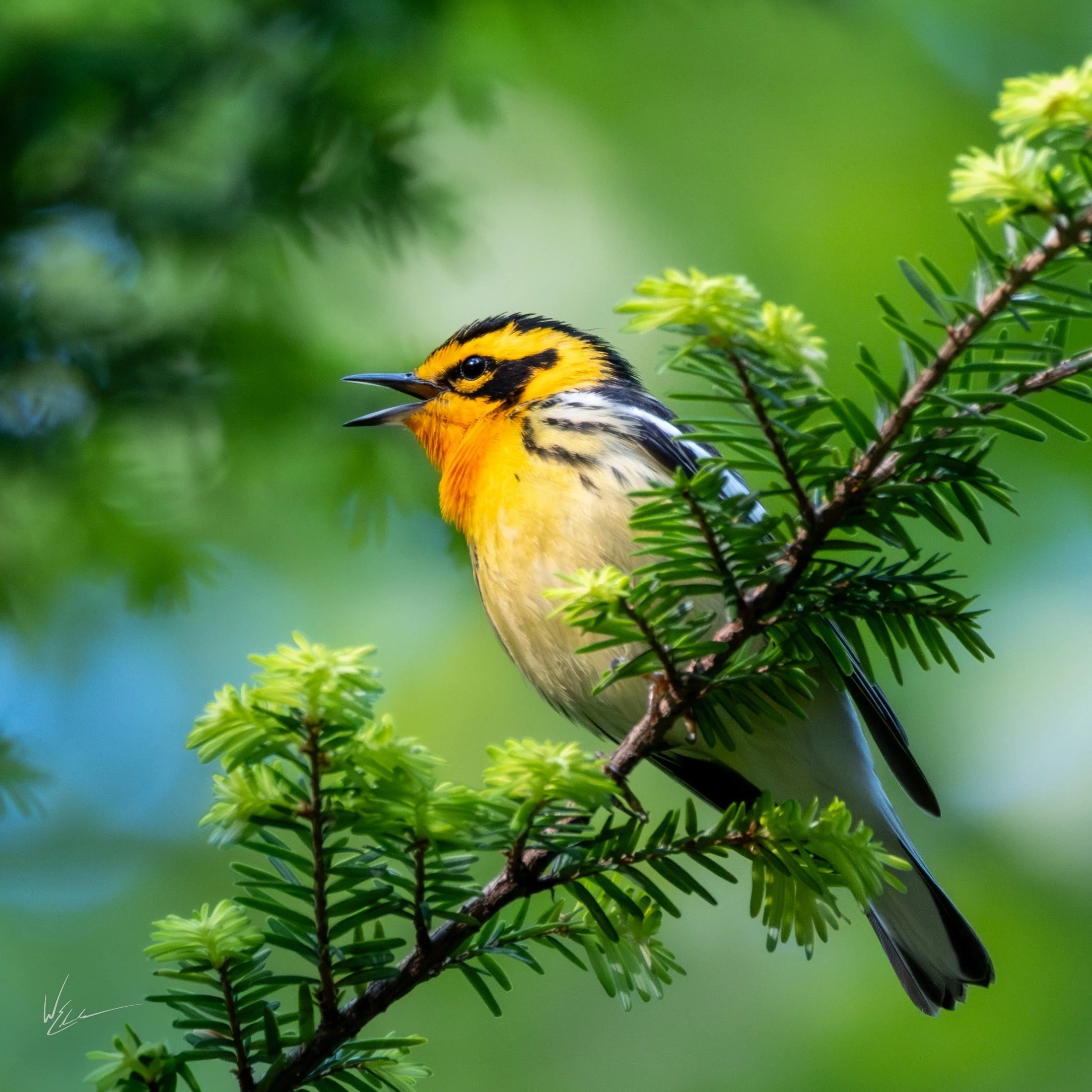
Blackburnian Warbler
Setophaga fuscaA bright orange throat catches the light among fresh evergreen tips.
Did you know? No other North American warbler has an orange throat.
Species notes ↗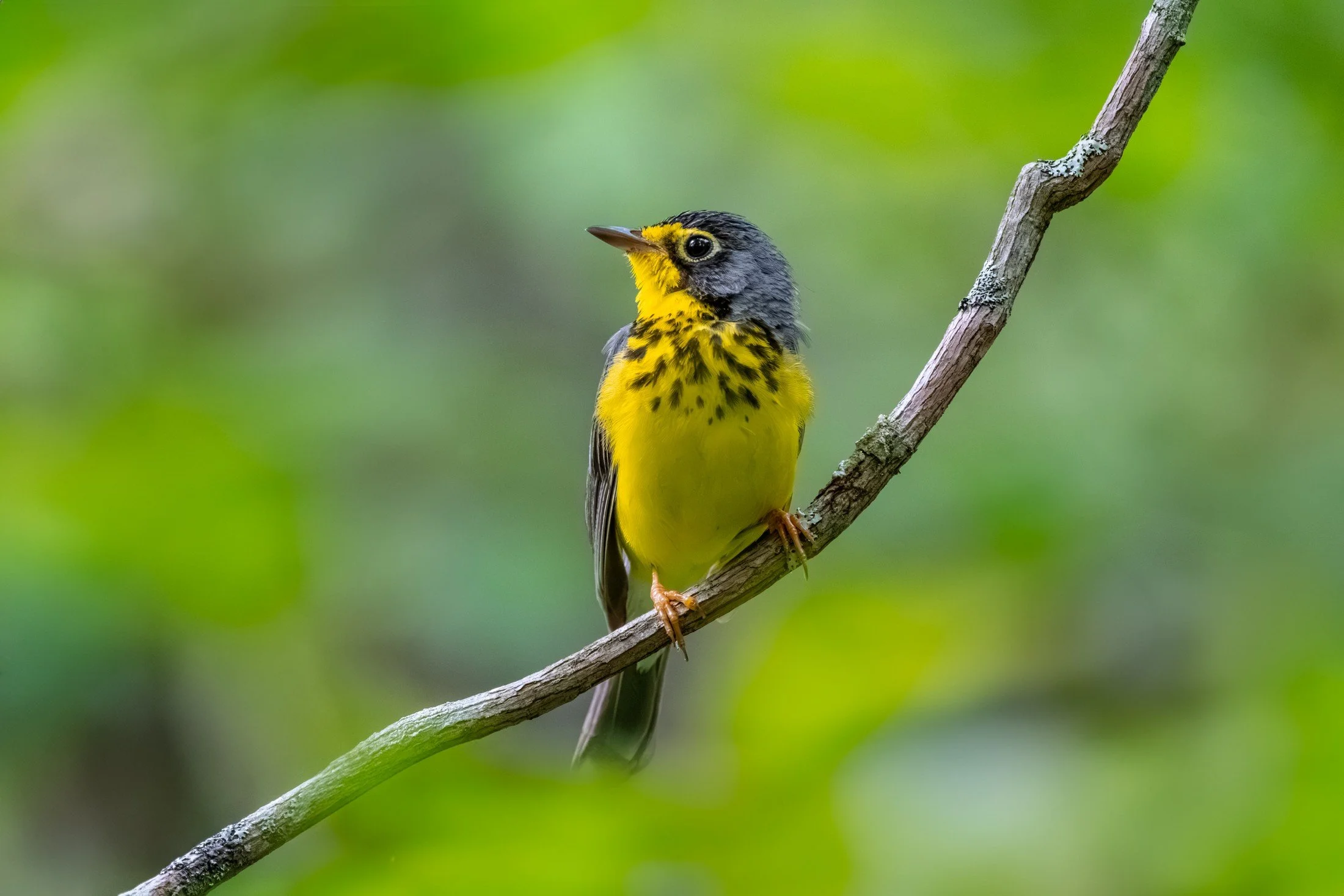
Canada Warbler
Cardellina canadensisA small yellow songbird framed by a clean sweep of green.
Did you know? Its migration connects South America with breeding forests more than 3,000 miles away.
Species notes ↗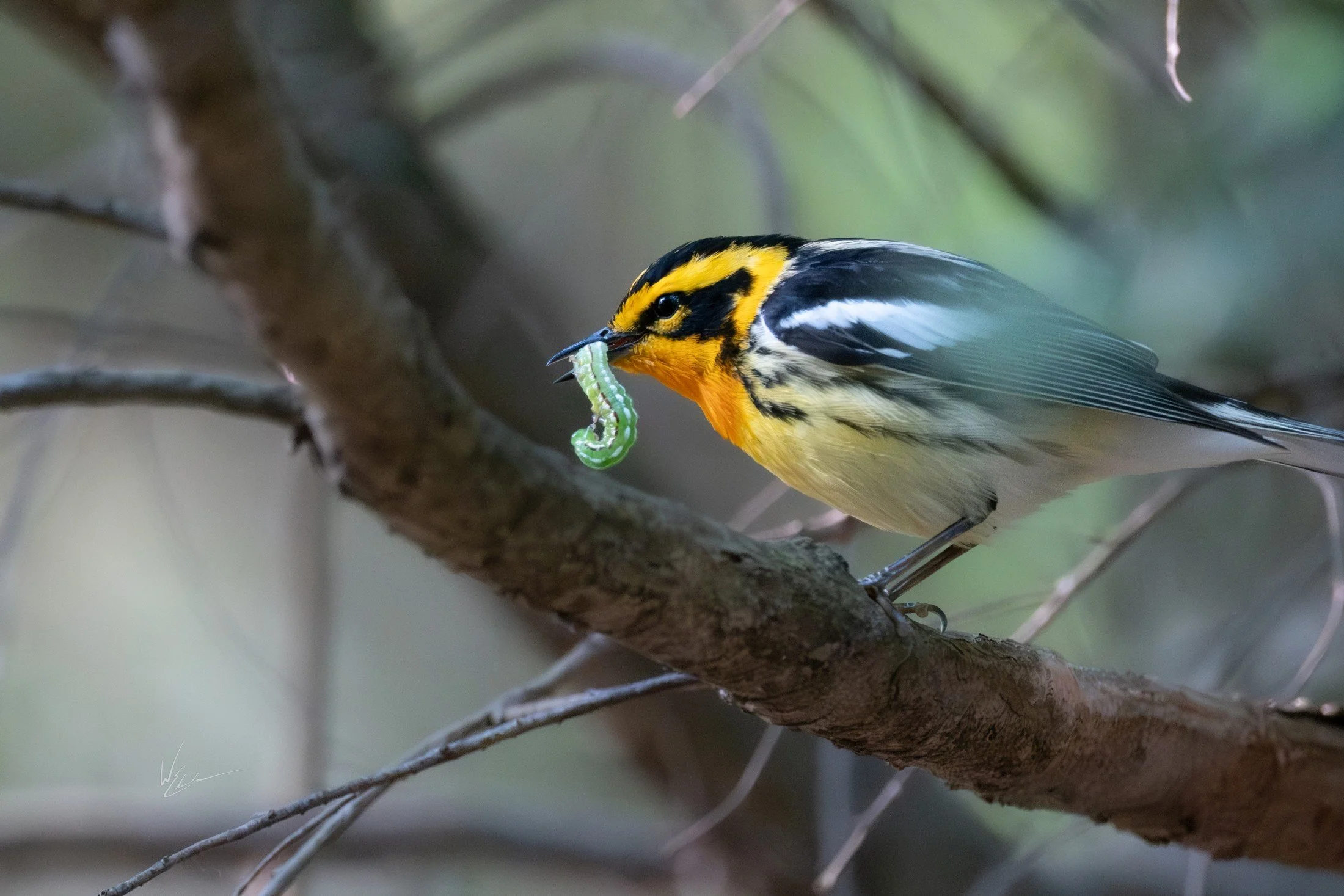
Blackburnian Warbler
Setophaga fuscaA caterpillar in the bill turns a woodland portrait into a feeding story.
Did you know? After fledging, young Blackburnian Warblers may join feeding flocks of chickadees, kinglets, and nuthatches.
Species notes ↗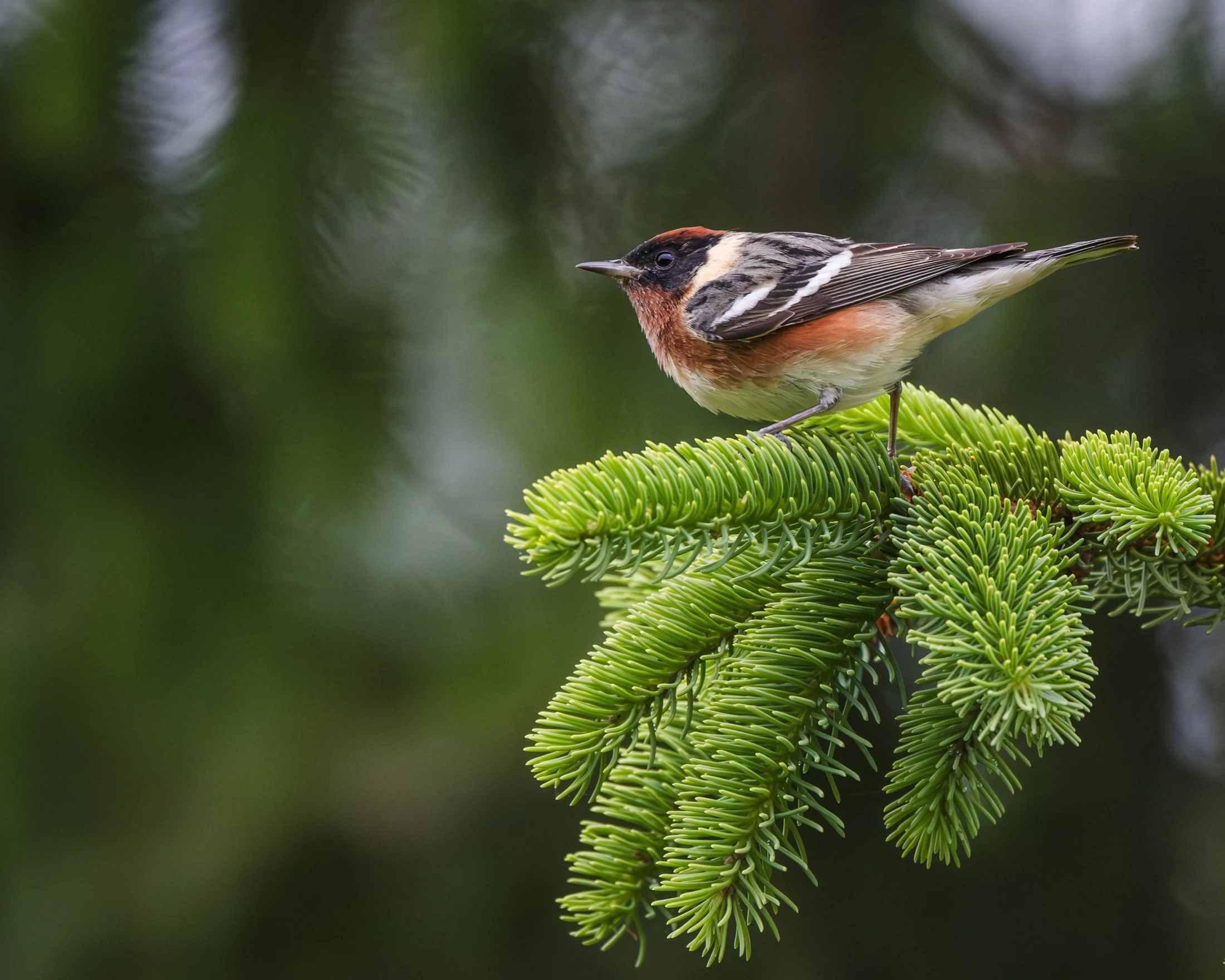
Bay-breasted Warbler
Setophaga castaneaWarm chestnut plumage appears between the branches of an evergreen.
Did you know? These forest specialists feast on spruce budworms when the caterpillars become abundant.
Species notes ↗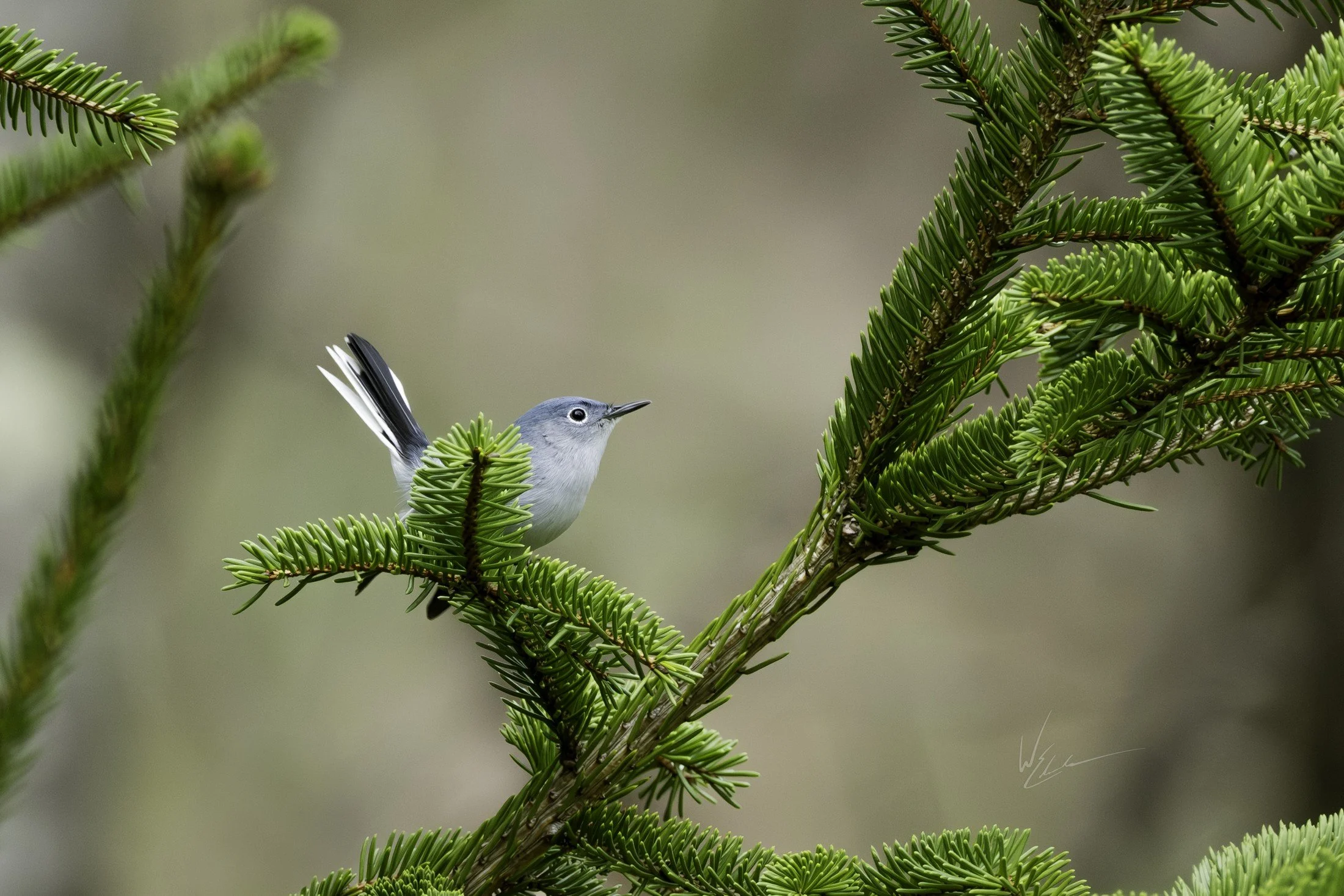
Blue-gray Gnatcatcher
Polioptila caeruleaA tiny bird balanced against the texture of new conifer growth.
Did you know? Despite its name, gnats make up only a small part of its diet.
Species notes ↗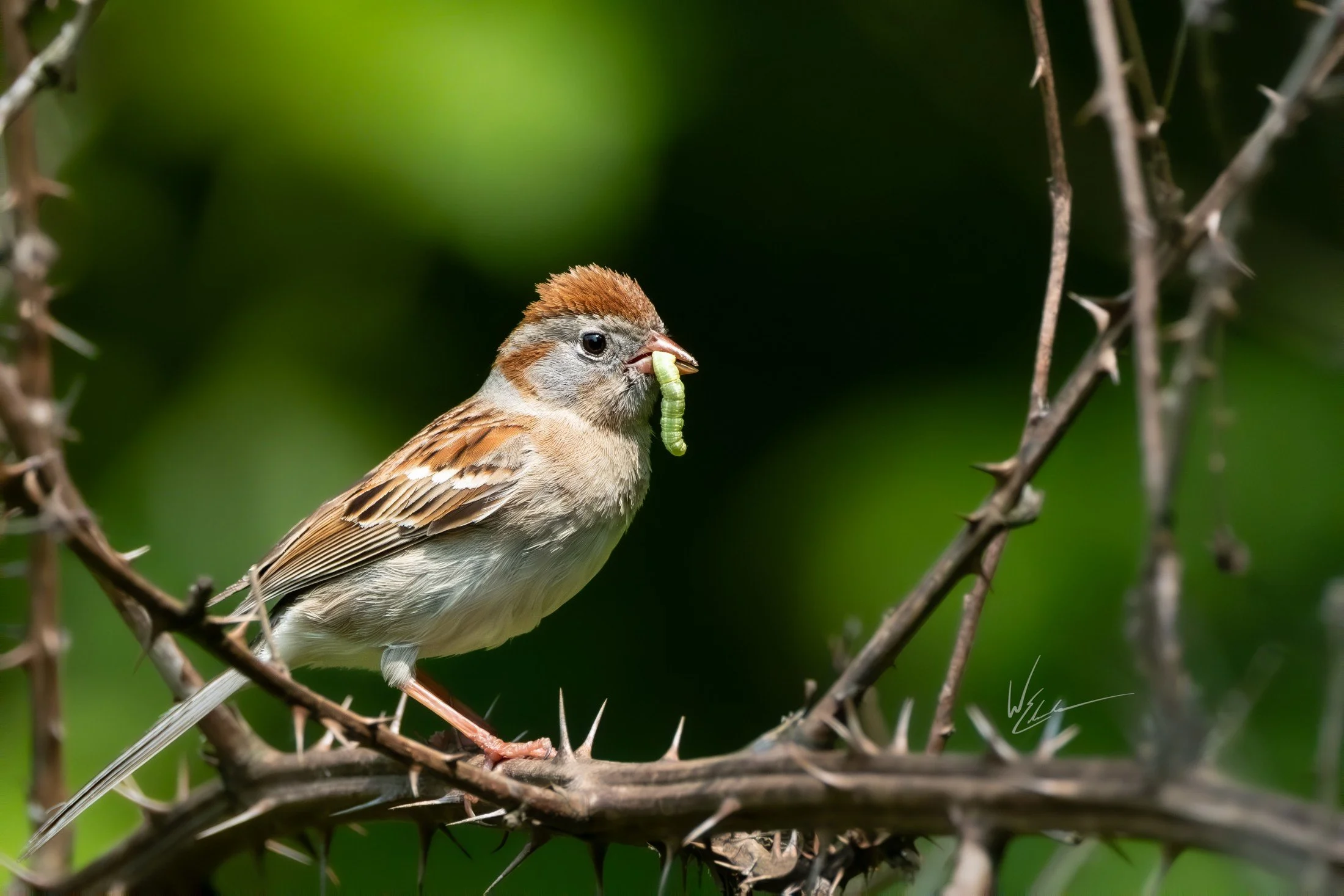
Field Sparrow
Spizella pusillaA caterpillar held against a green background reveals the work behind a small meal.
Did you know? Its accelerating song sounds a little like a bouncing ball coming to rest.
Species notes ↗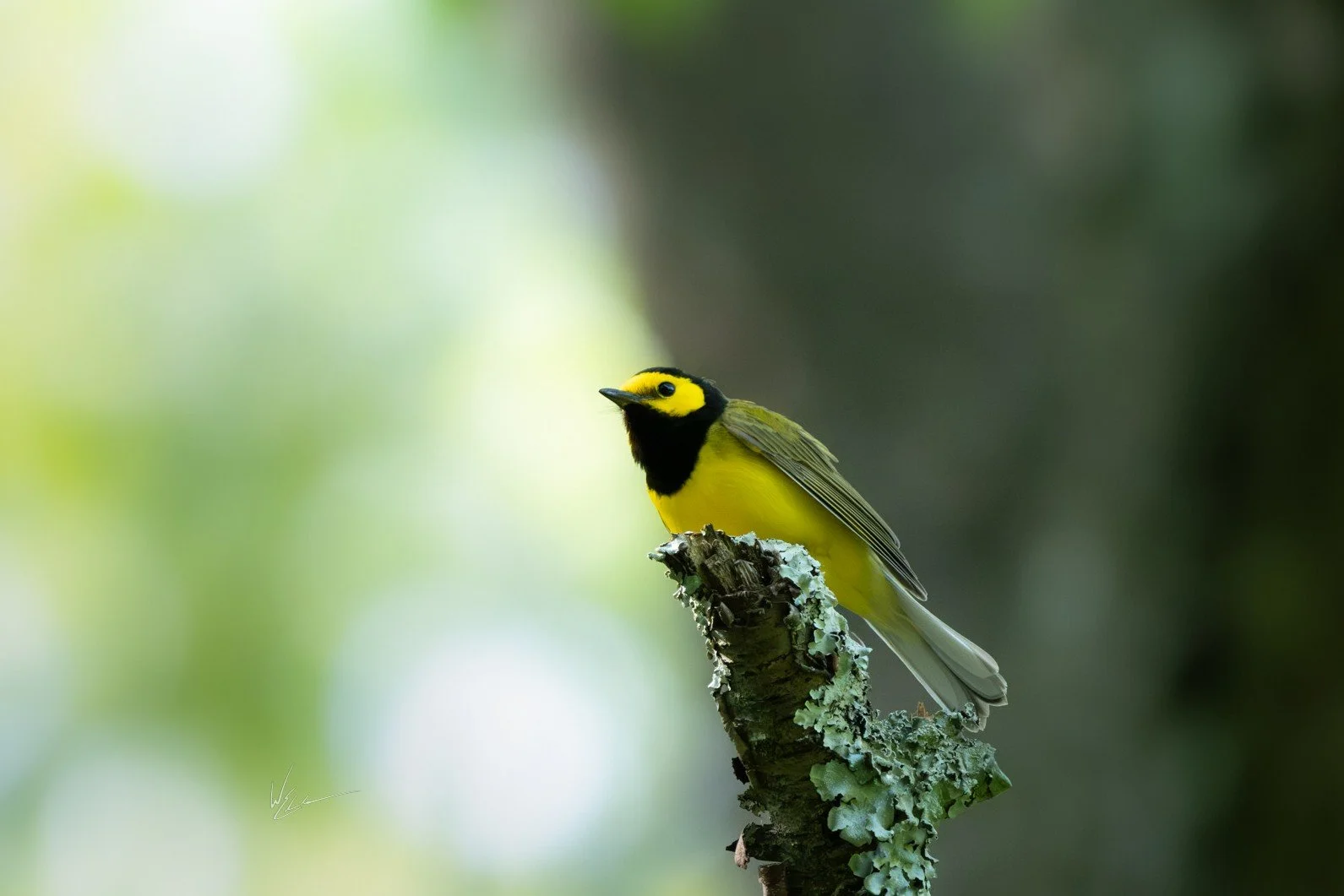
Hooded Warbler
Setophaga citrinaA bright face and dark hood stand out within the woodland foliage.
Did you know? Flashing white tail spots can startle insects into flight, making them easier to catch.
Species notes ↗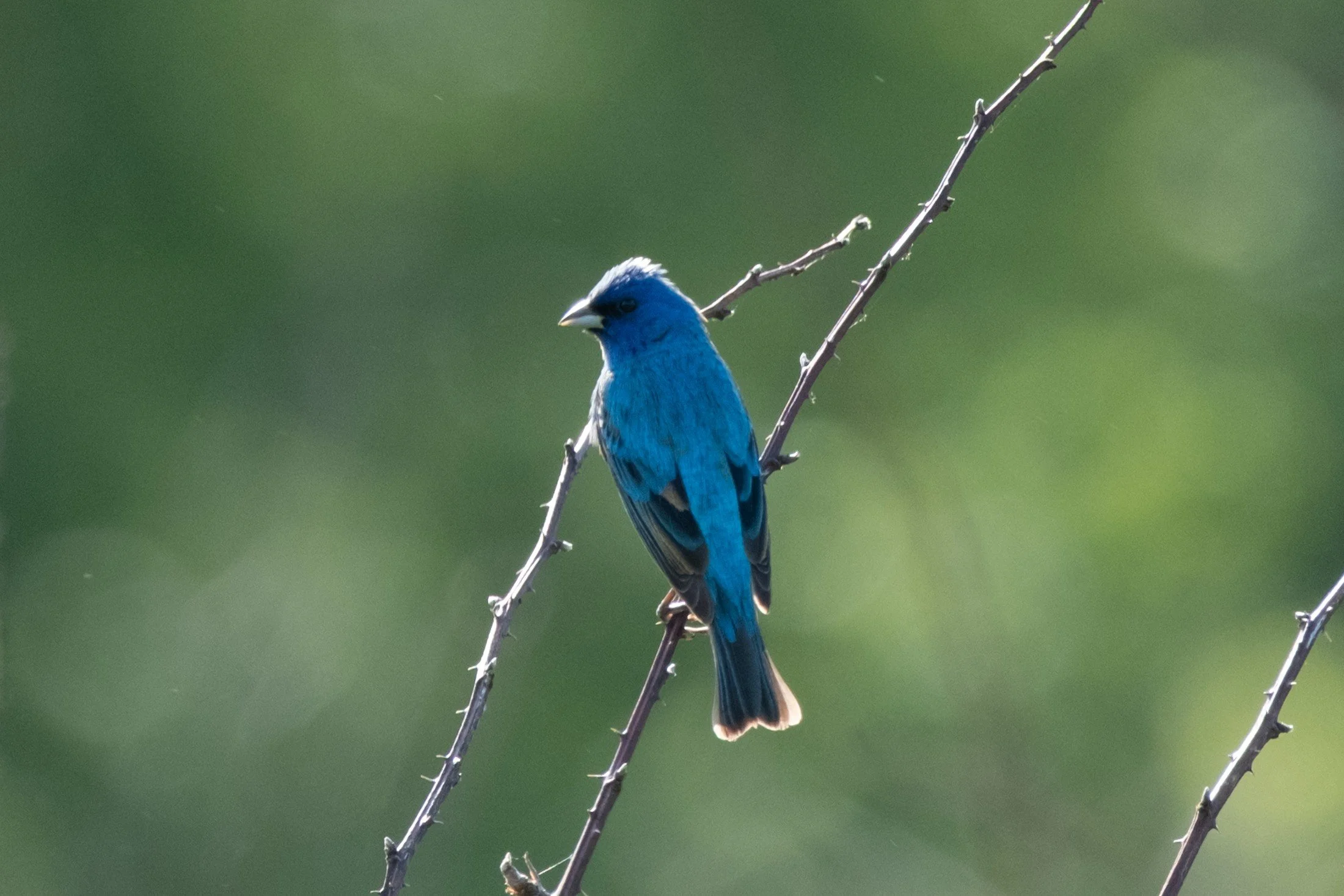
Indigo Bunting
Passerina cyaneaBlue plumage rests against the soft greens of an open branch.
Did you know? These night migrants use the stars to help guide their journeys.
Species notes ↗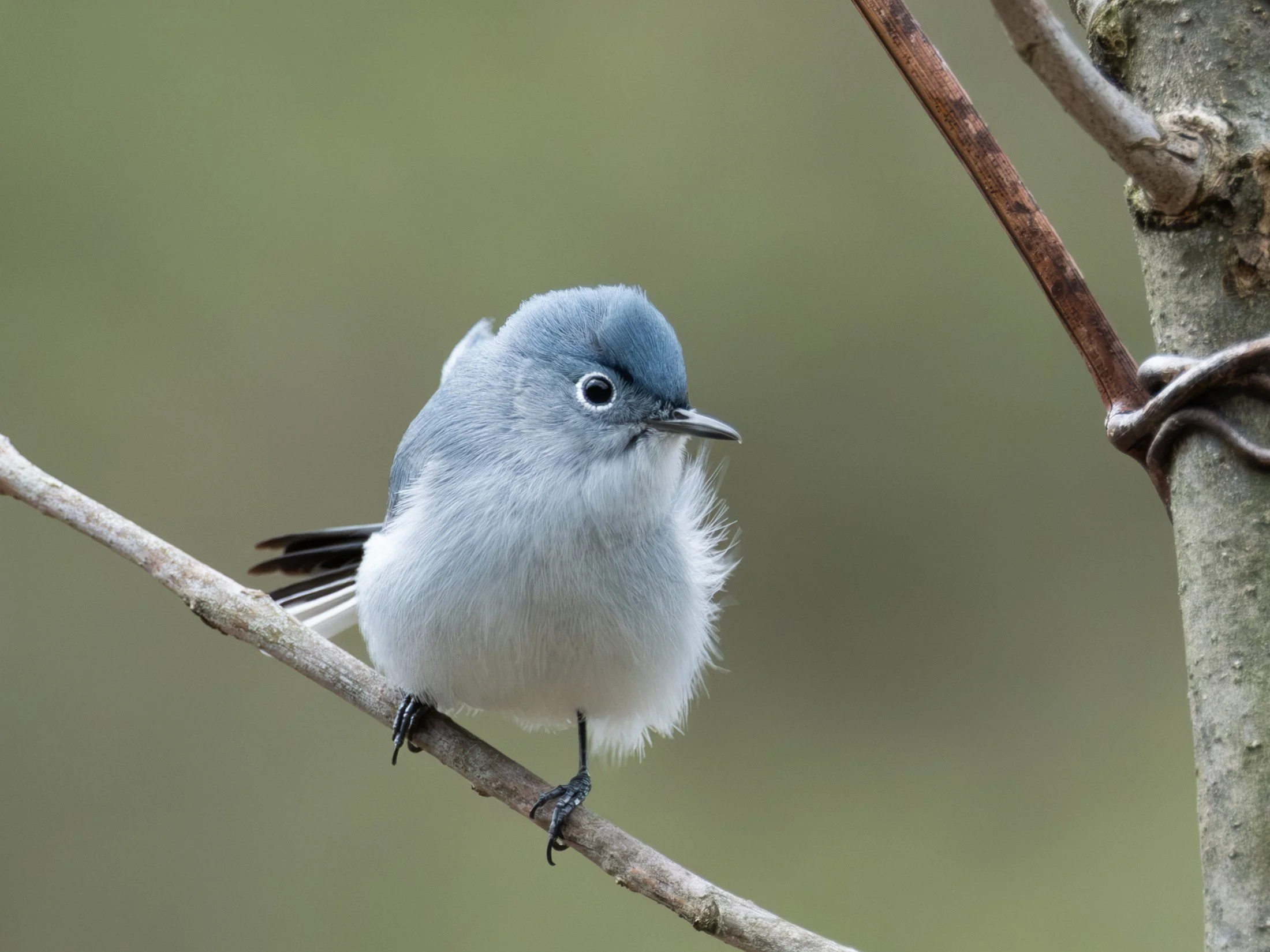
Blue-gray Gnatcatcher
Polioptila caeruleaFluffed feathers give a familiar woodland bird an unexpectedly gentle presence.
Did you know? A pair may build as many as seven nests during one breeding season.
Species notes ↗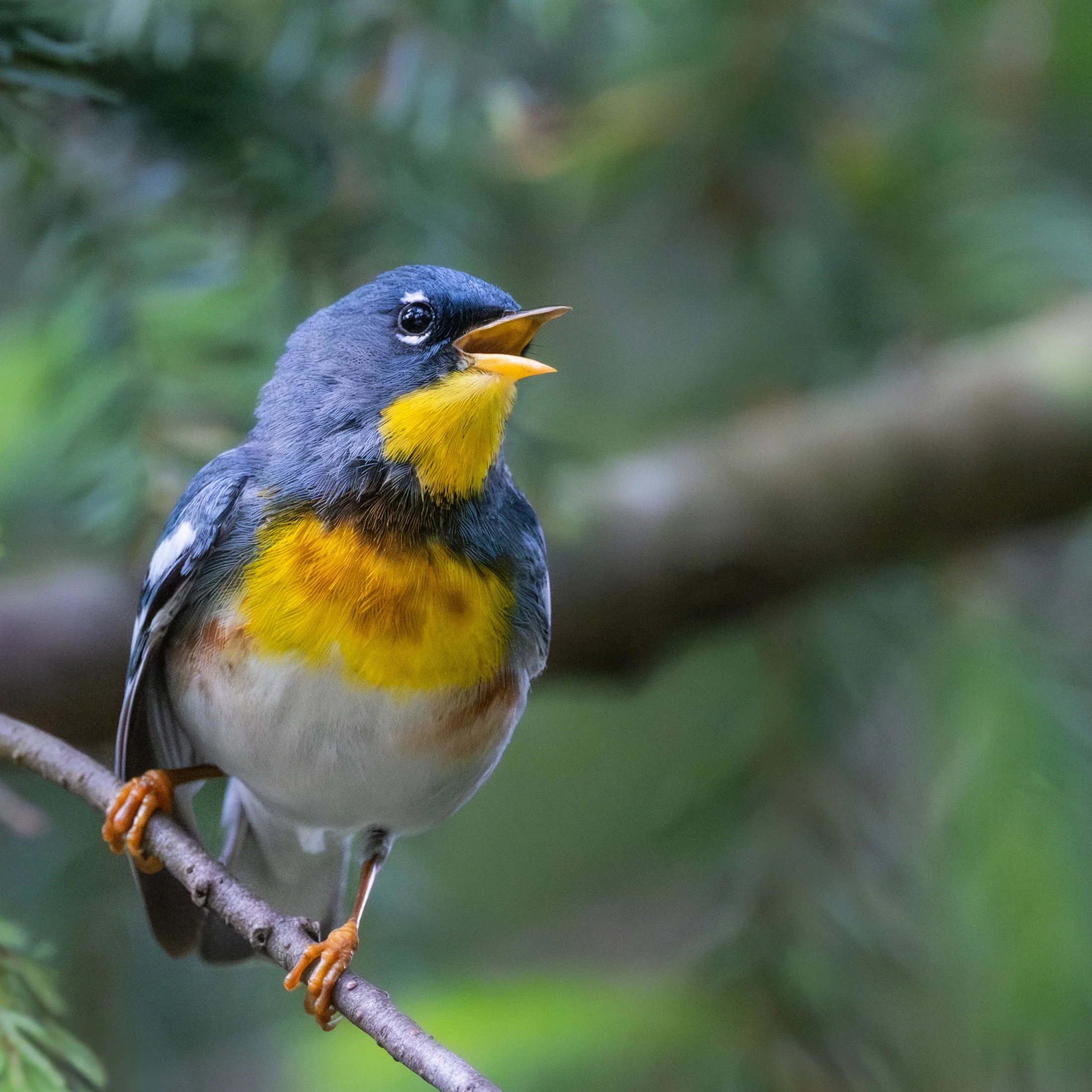
Northern Parula
Setophaga americanaYellow, blue, and olive meet in a close view among leaves.
Did you know? Many build their nests in hanging Spanish moss or beard lichens.
Species notes ↗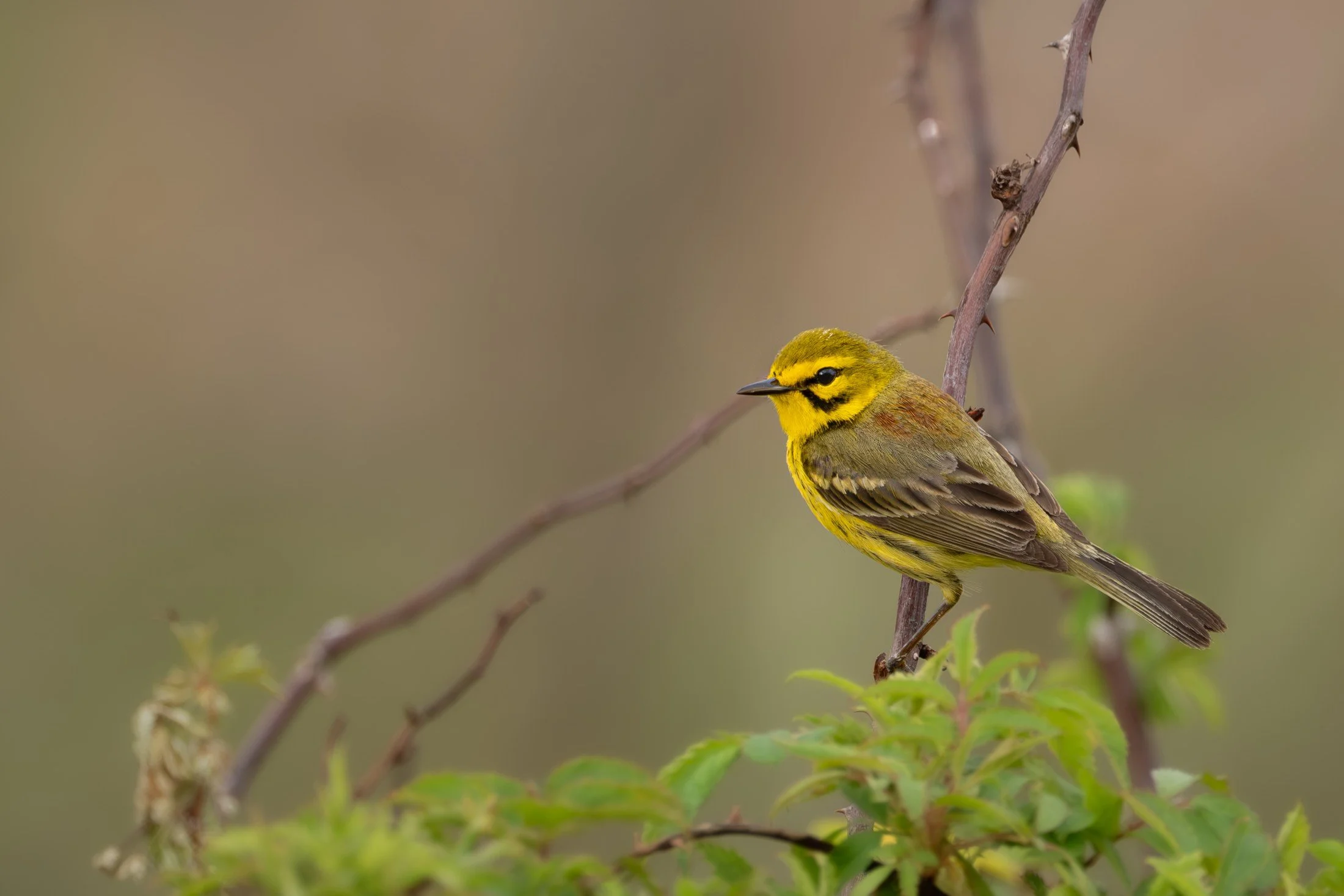
Prairie Warbler
Setophaga discolorA delicate songbird pauses in the open space between twigs.
Did you know? Despite its name, it favors brushy young woodland rather than open prairie.
Species notes ↗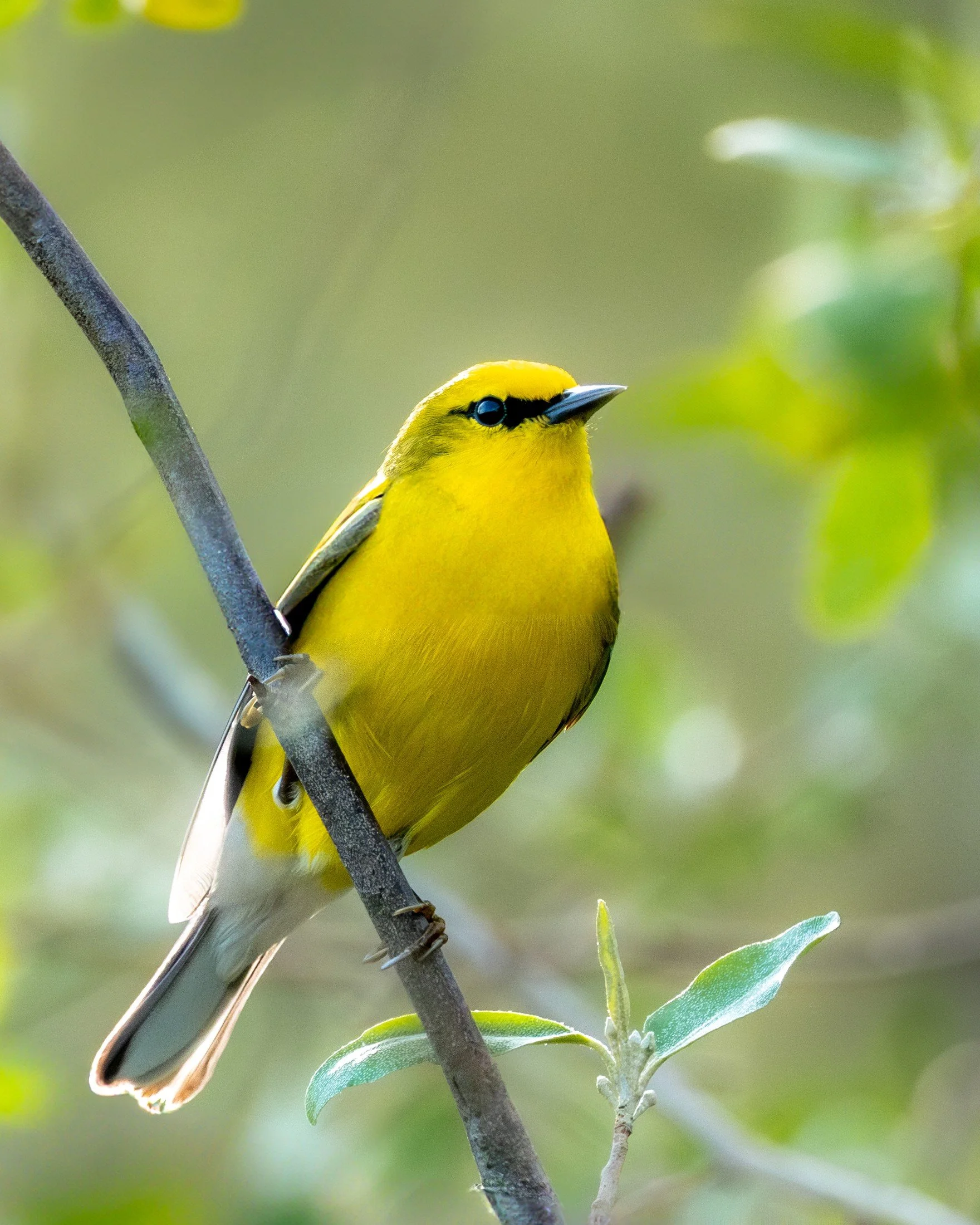
Blue-winged Warbler
Vermivora cyanopteraA yellow breast and fine black eye line glow against new leaves.
Did you know? Its raspy, two-part song is often described as a bee-buzz.
Species notes ↗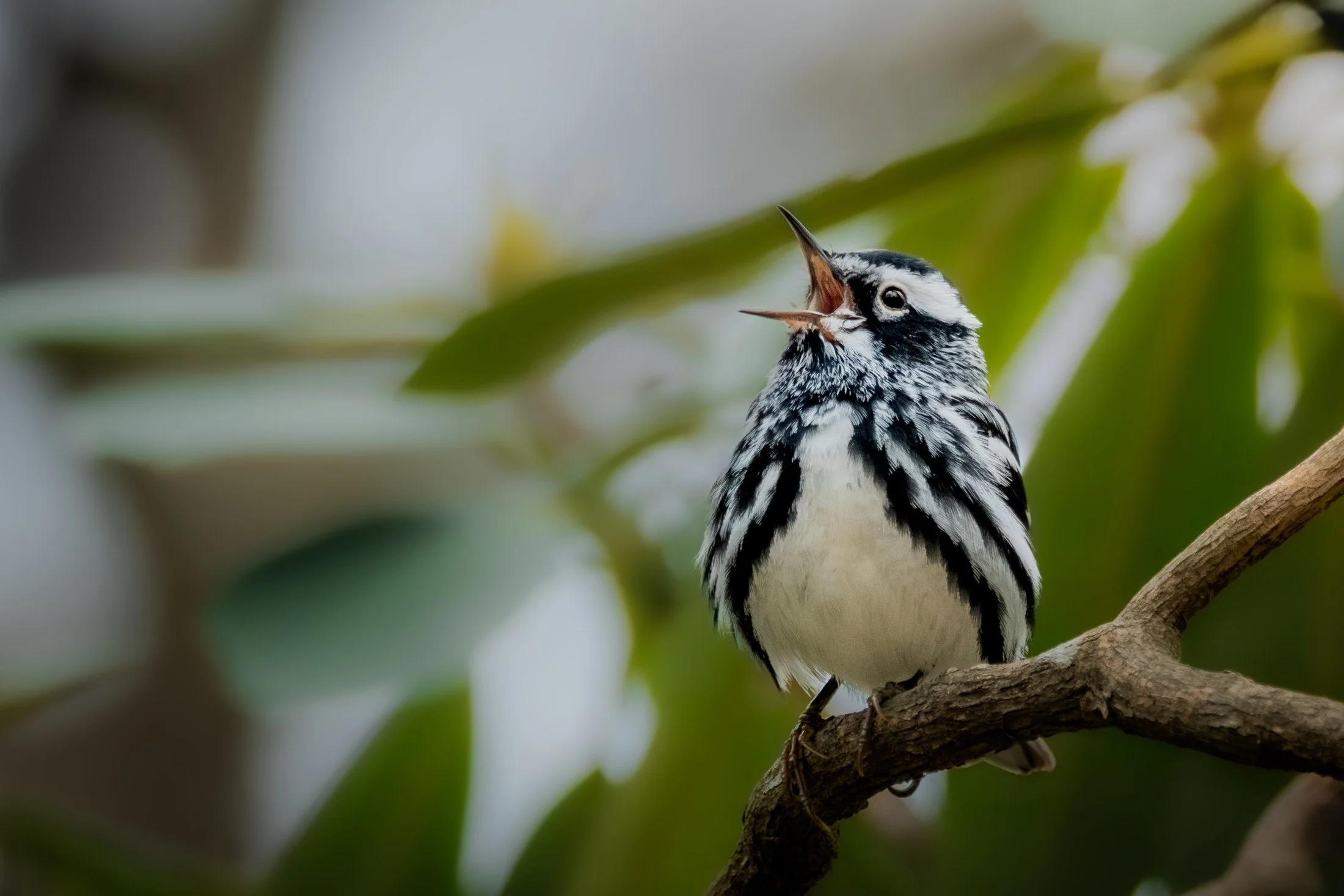
Black-and-white Warbler
Mniotilta variaA lifted bill and striped breast give a quiet perch a sense of anticipation.
Did you know? An extra-long hind claw helps it grip bark while hunting for insects.
Species notes ↗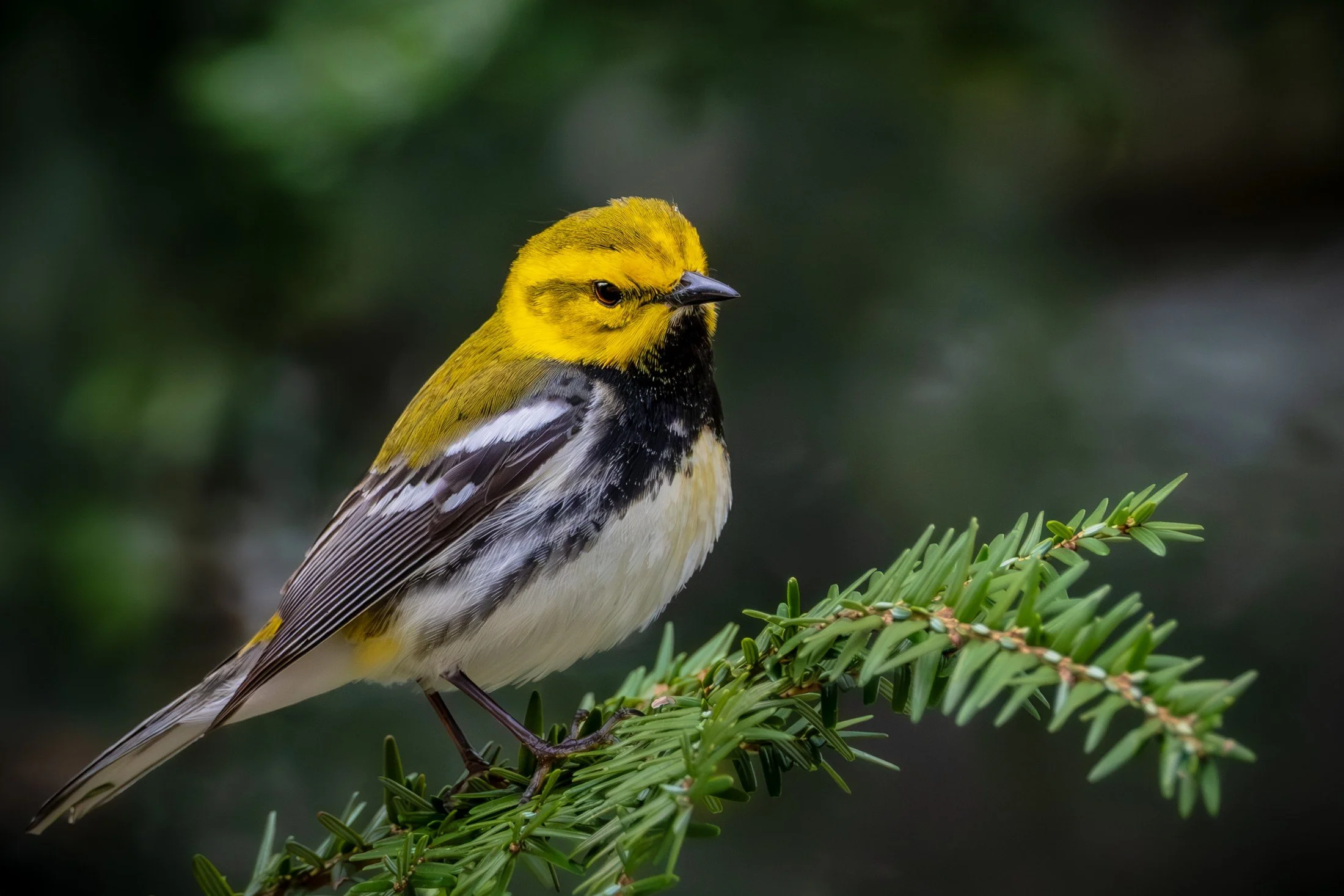
Black-throated Green Warbler
Setophaga virensYellow cheeks and dark throat stand apart from the surrounding evergreen.
Did you know? One male was recorded delivering 466 songs in a single hour.
Species notes ↗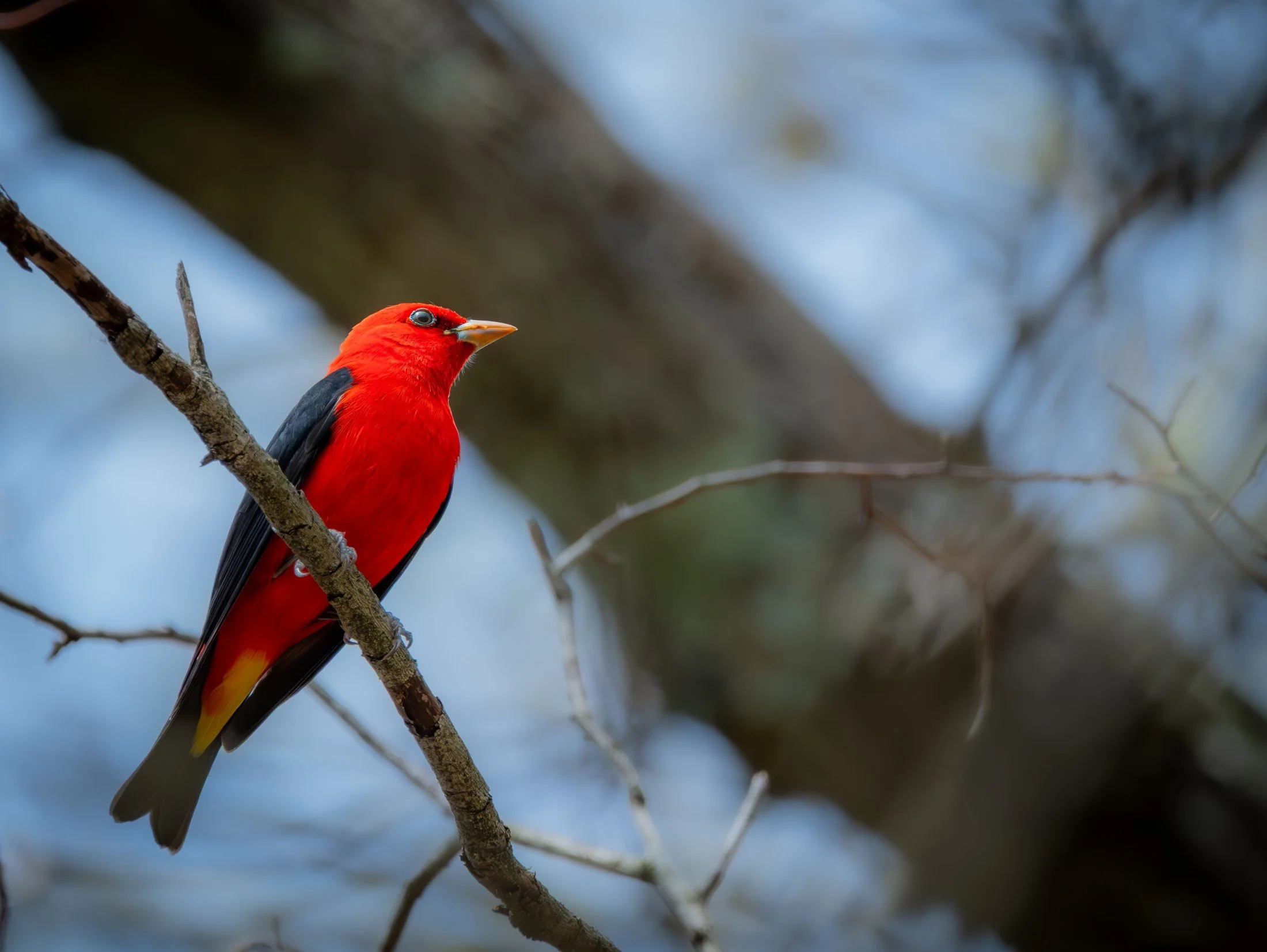
Scarlet Tanager
Piranga olivaceaA flash of scarlet anchors a tangle of branches.
Did you know? Females sing too, answering males with a softer version of their song.
Species notes ↗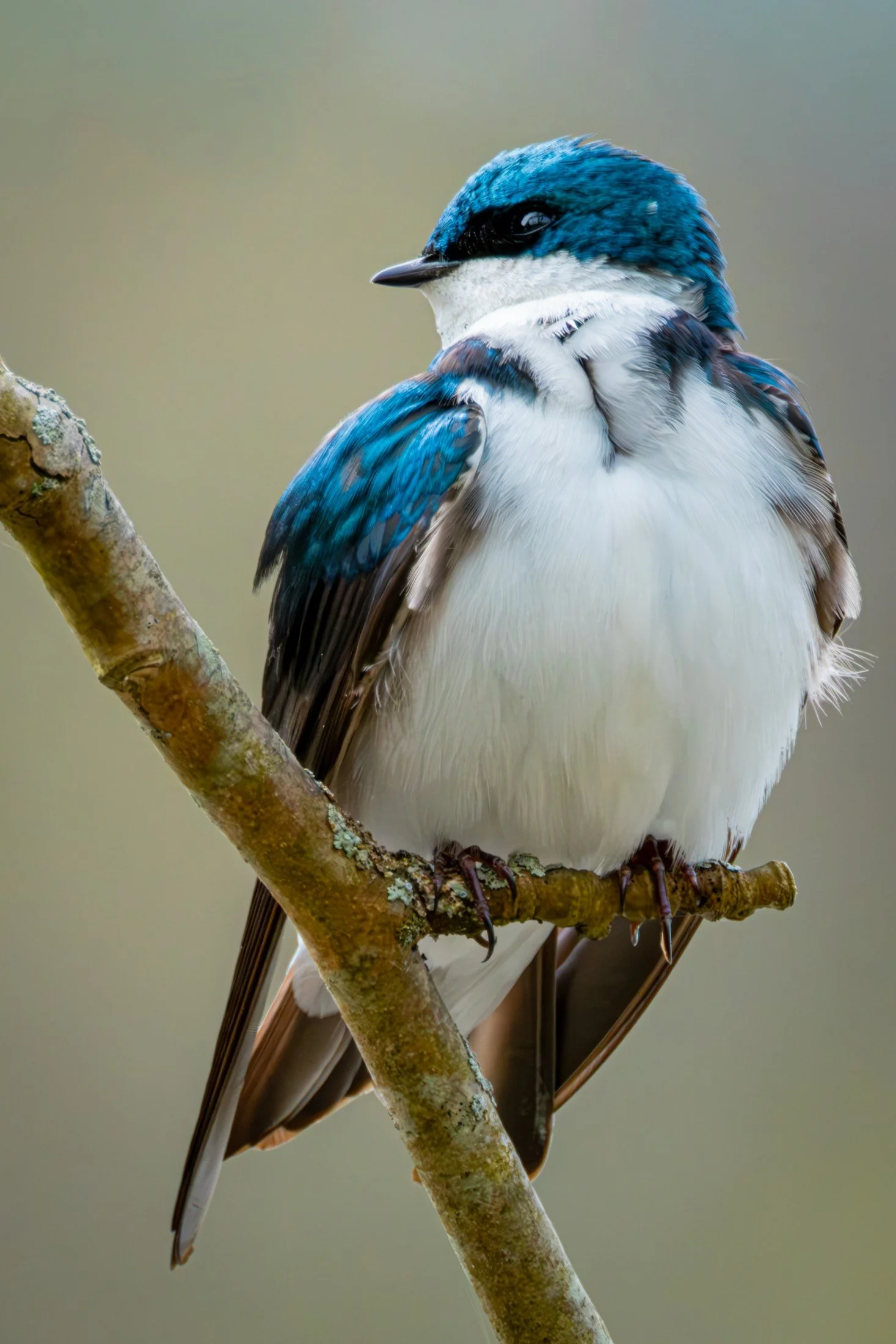
Tree Swallow
Tachycineta bicolorIridescent blue meets the soft texture of a resting bird’s breast.
Did you know? Its name comes from nesting in tree cavities; it also readily uses nest boxes.
Species notes ↗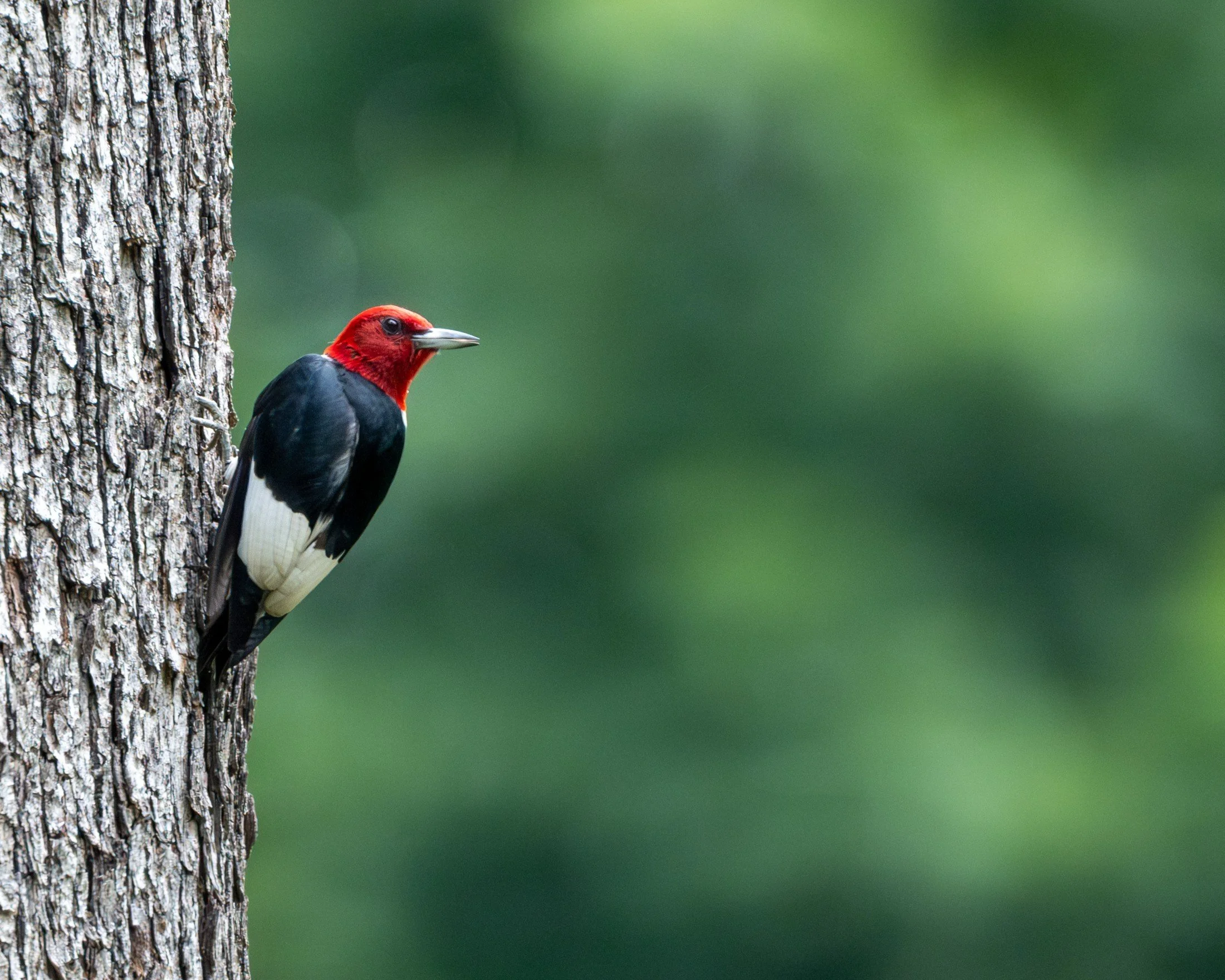
Red-headed Woodpecker
Melanerpes erythrocephalusRed, black, and white stand out against the texture of a tree trunk.
Did you know? It catches insects in midair as well as finding food on trees.
Species notes ↗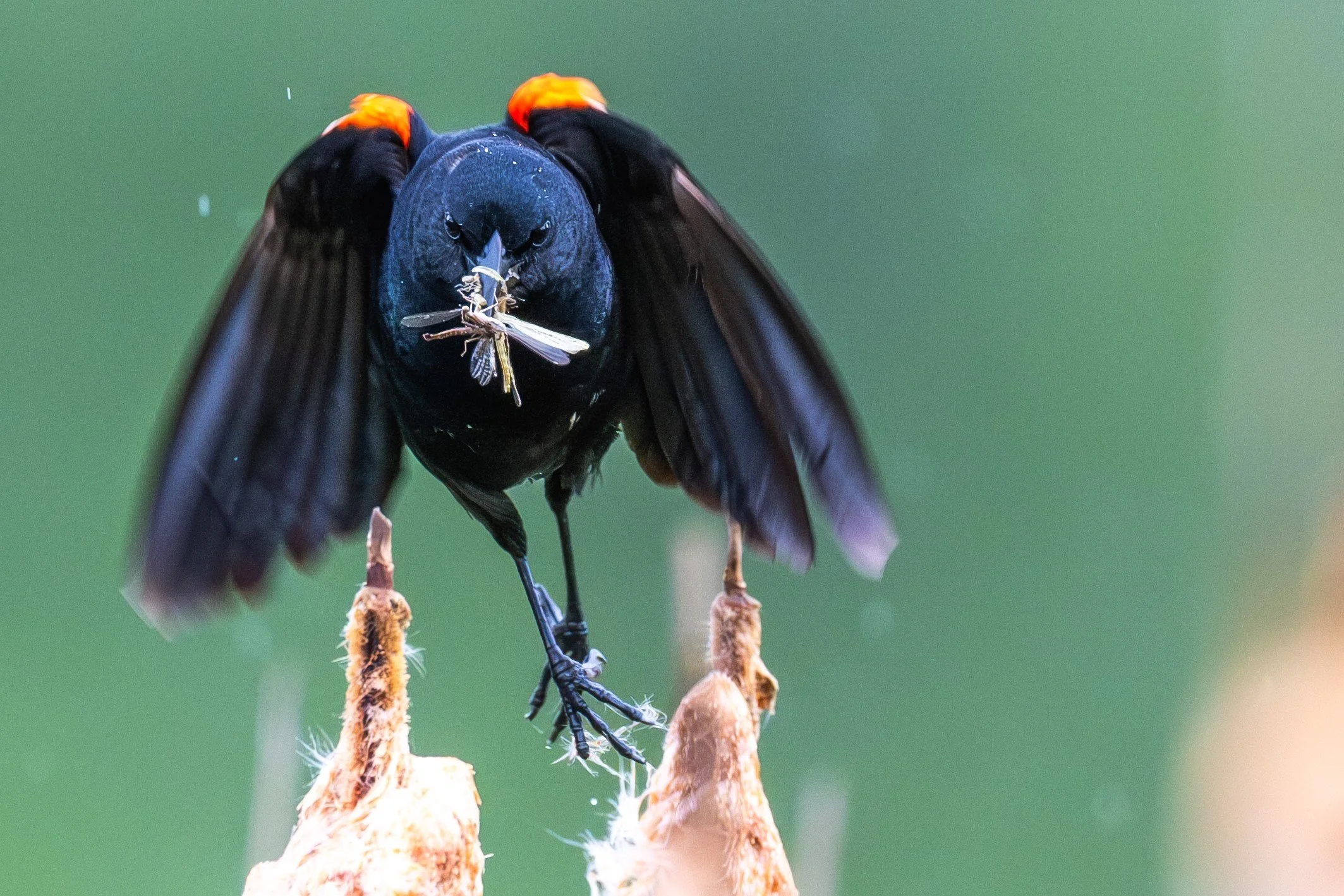
Red-winged Blackbird
Agelaius phoeniceusSpread wings and a captured insect reveal a brief, energetic feeding moment.
Did you know? Winter roosts can gather millions of birds, often alongside other blackbird species.
Species notes ↗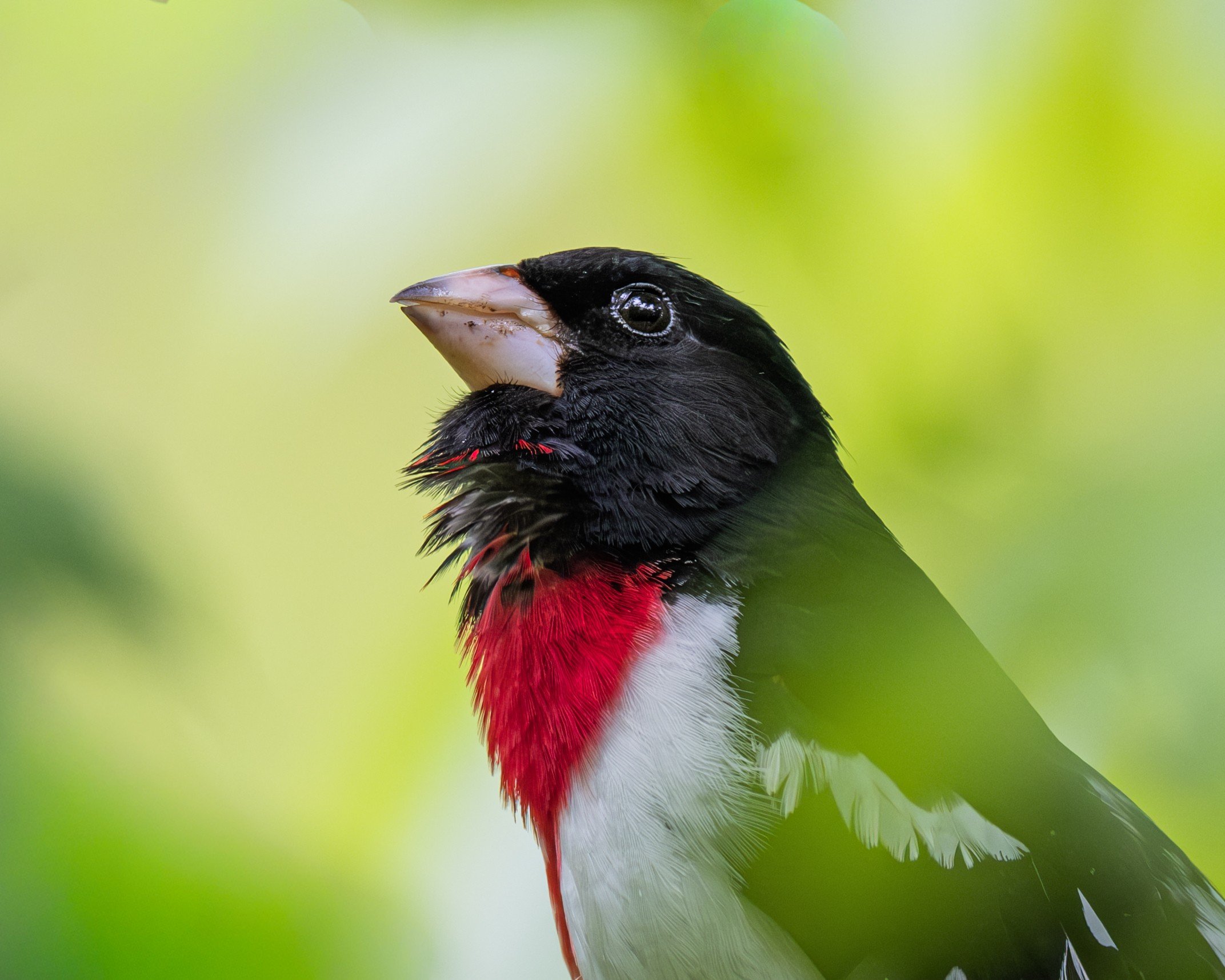
Rose-breasted Grosbeak
Pheucticus ludovicianusA rose-red breast and strong bill hold the eye in a close portrait.
Did you know? Males share incubation duties and sometimes sing while sitting on the nest.
Species notes ↗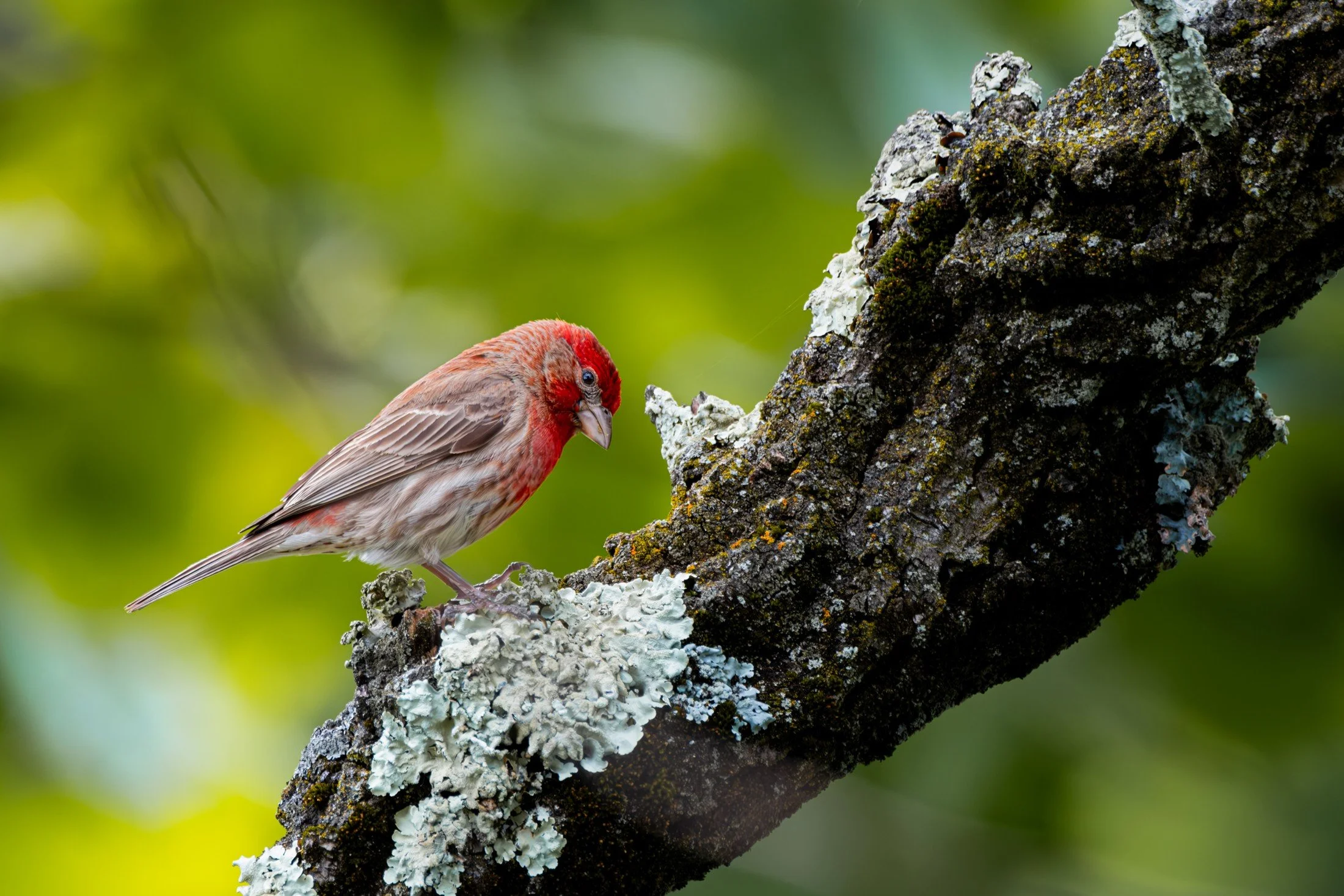
Purple Finch
Haemorhous purpureusMuted woodland color frames the finch’s warm raspberry plumage.
Did you know? Its rich song can include imitations of other bird species.
Species notes ↗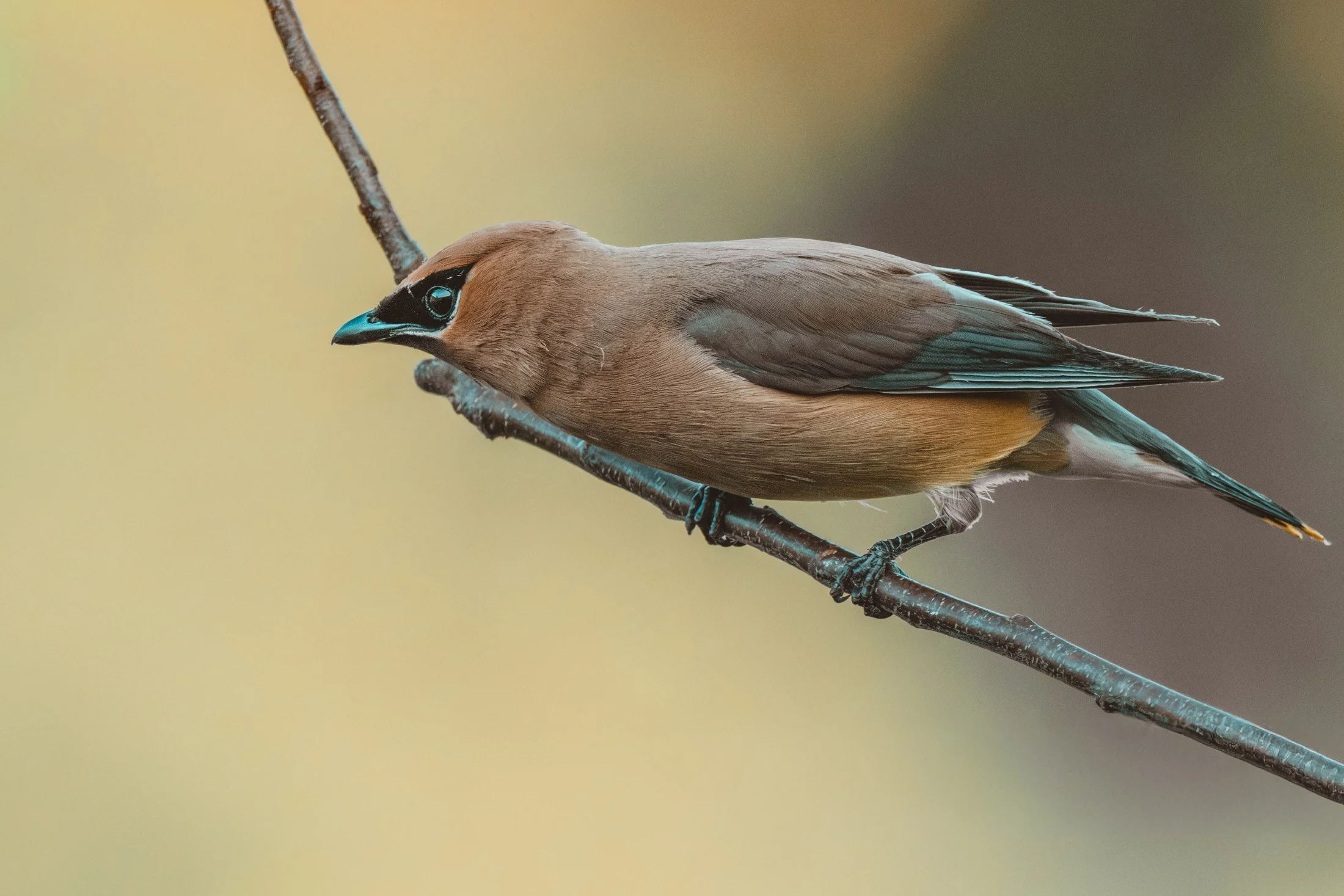
Cedar Waxwing
Bombycilla cedrorumSmooth plumage and a dark mask make a simple branch feel sculptural.
Did you know? This fruit specialist can live on fruit alone for several months.
Species notes ↗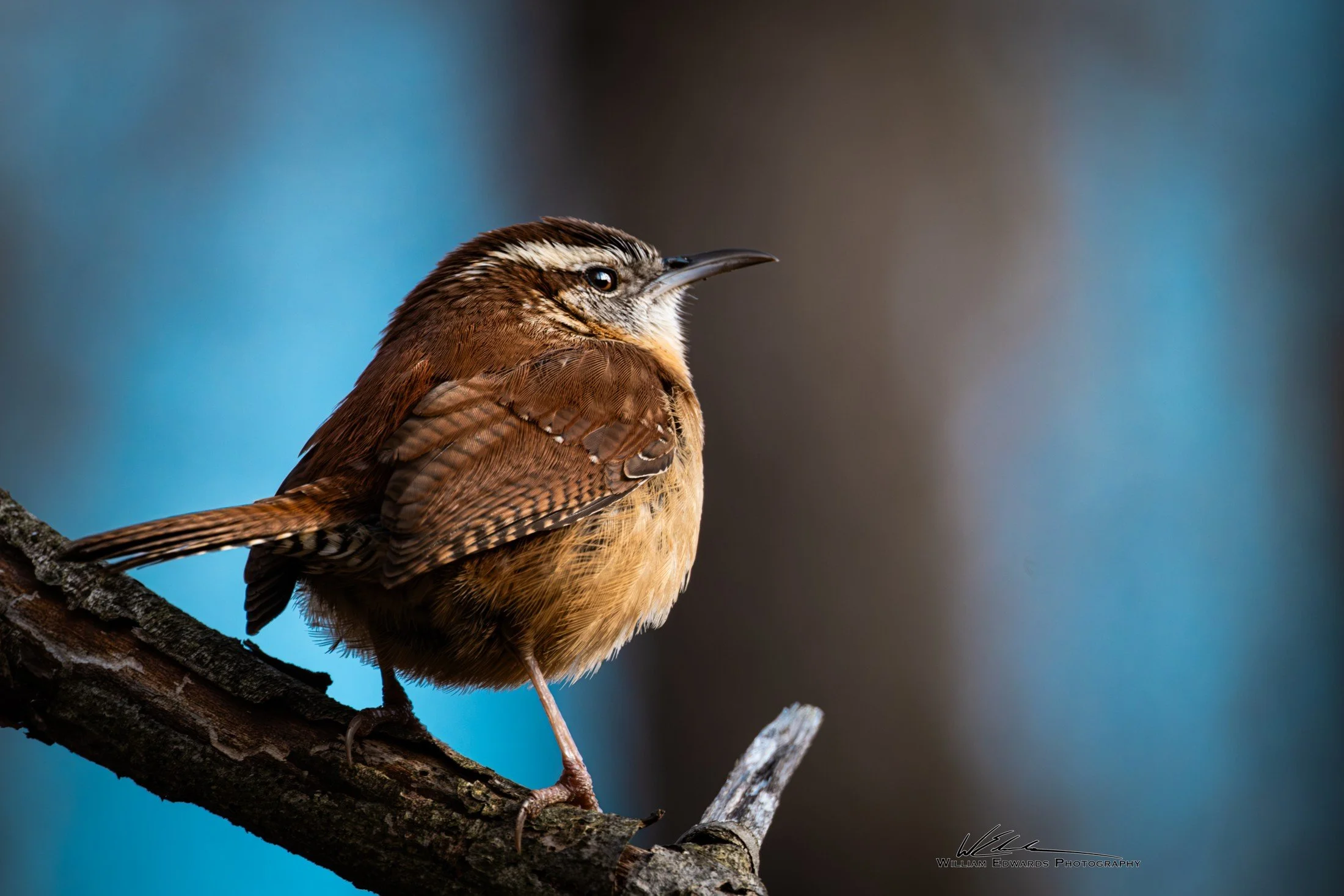
Carolina Wren
Thryothorus ludovicianusWarm brown feathers and a pale eyebrow emerge from the woodland shade.
Did you know? Pairs stay together on their territory throughout the year.
Species notes ↗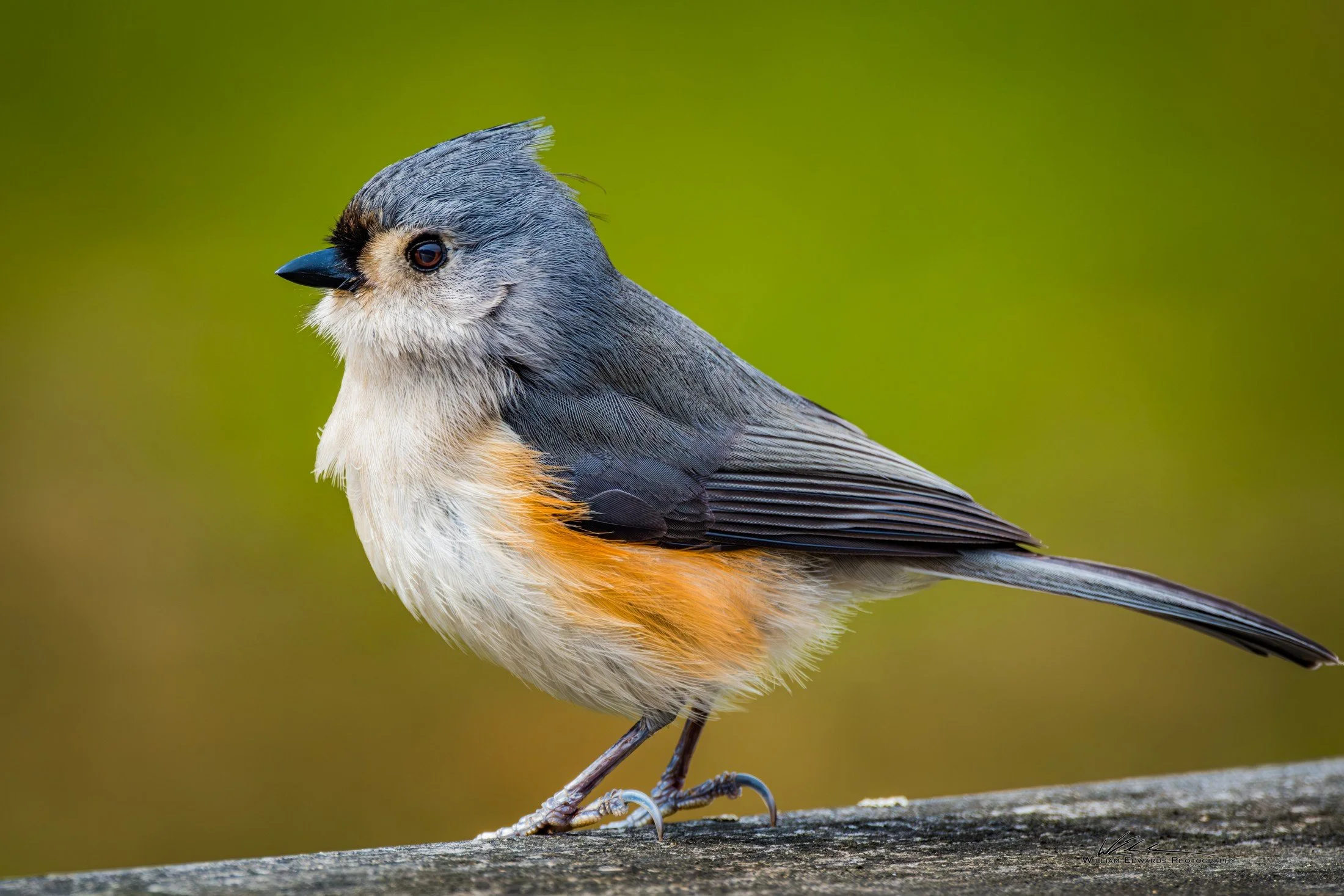
Tufted Titmouse
Baeolophus bicolorA raised crest and clear eye bring personality to a small woodland portrait.
Did you know? It stores seeds for later, usually shelling each one before hiding it.
Species notes ↗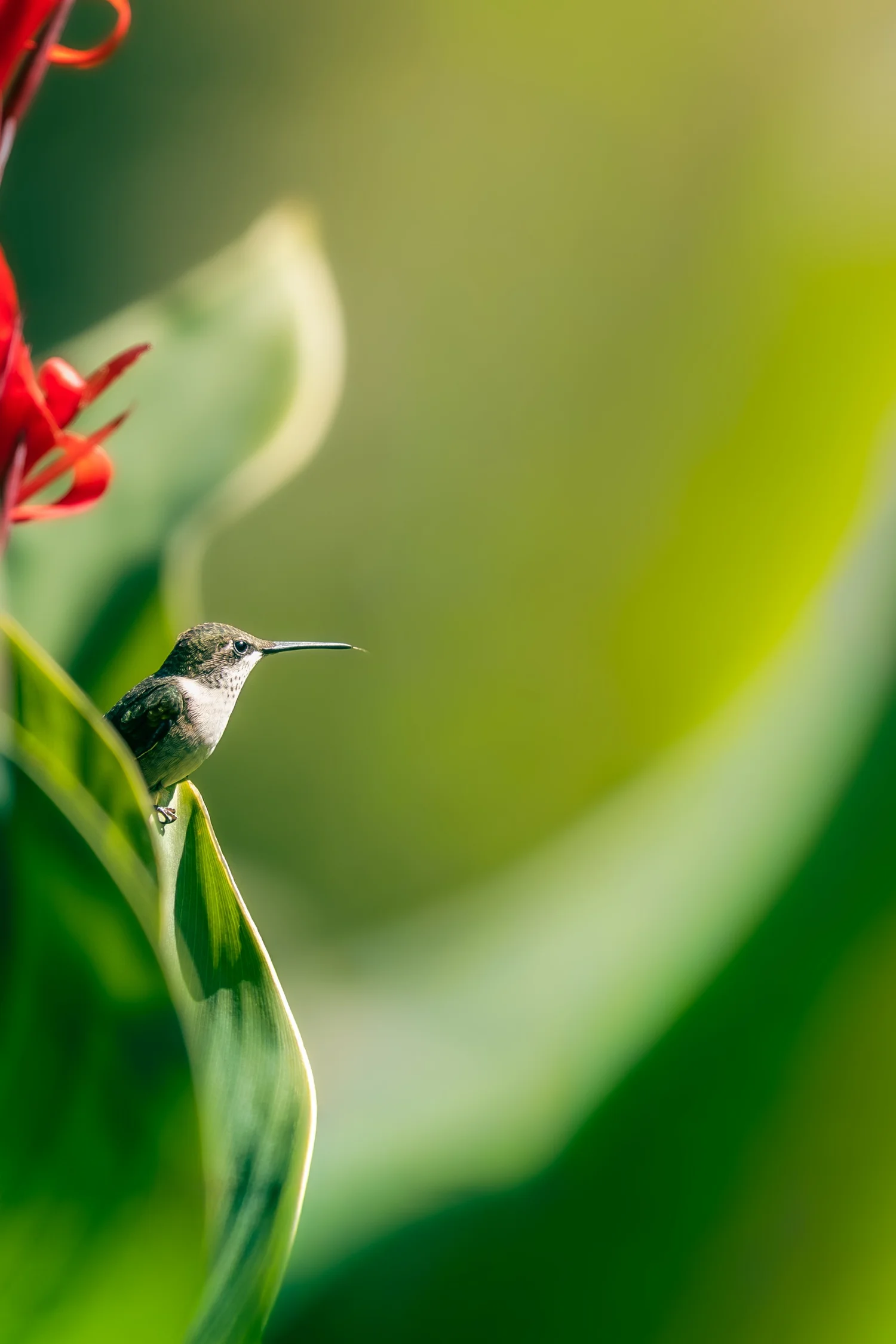
Ruby-throated Hummingbird
Archilochus colubrisA small hummingbird waits within a broad sweep of leaves and red flowers.
Did you know? Its wings beat about 53 times each second.
Species notes ↗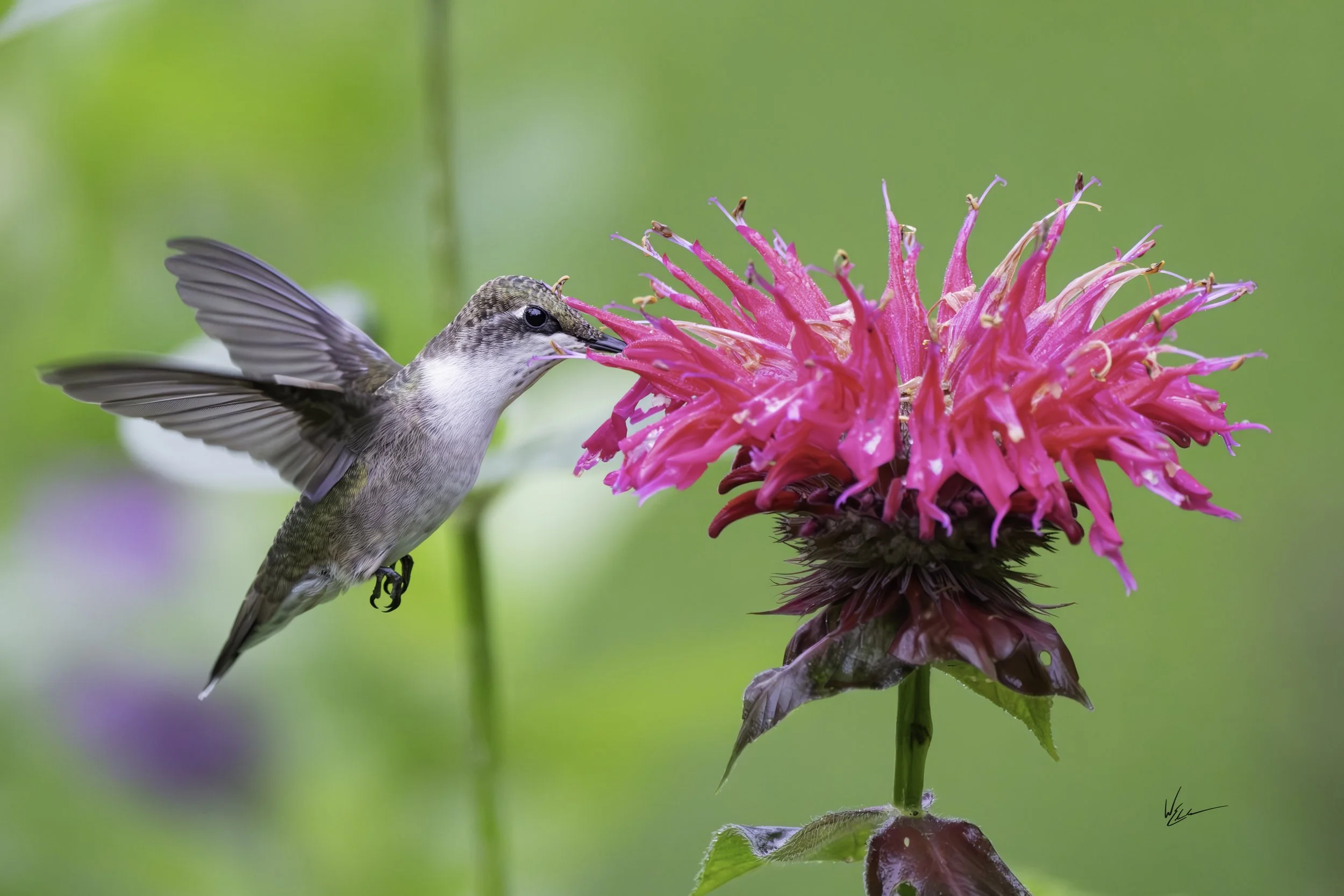
Ruby-throated Hummingbird
Archilochus colubrisA hummingbird reaches toward a bright flower, its wings a blur beside the petals.
Did you know? Its short legs cannot walk or hop, though it can shuffle along a perch.
Species notes ↗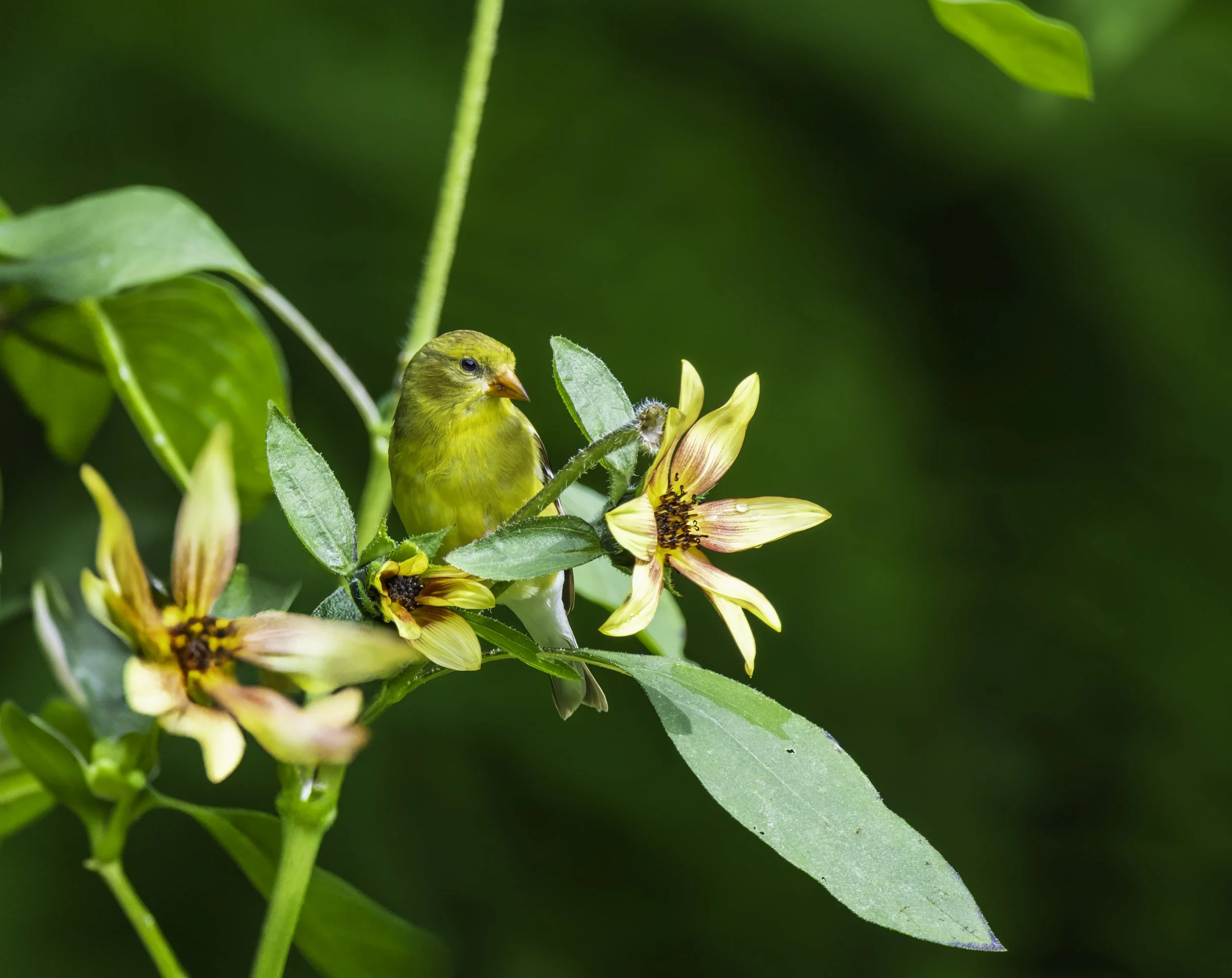
American Goldfinch
Spinus tristisYellow plumage echoes the flowers around a small, alert seed-eater.
Did you know? It nests later than many birds, when thistles and other seed-bearing plants are ready.
Species notes ↗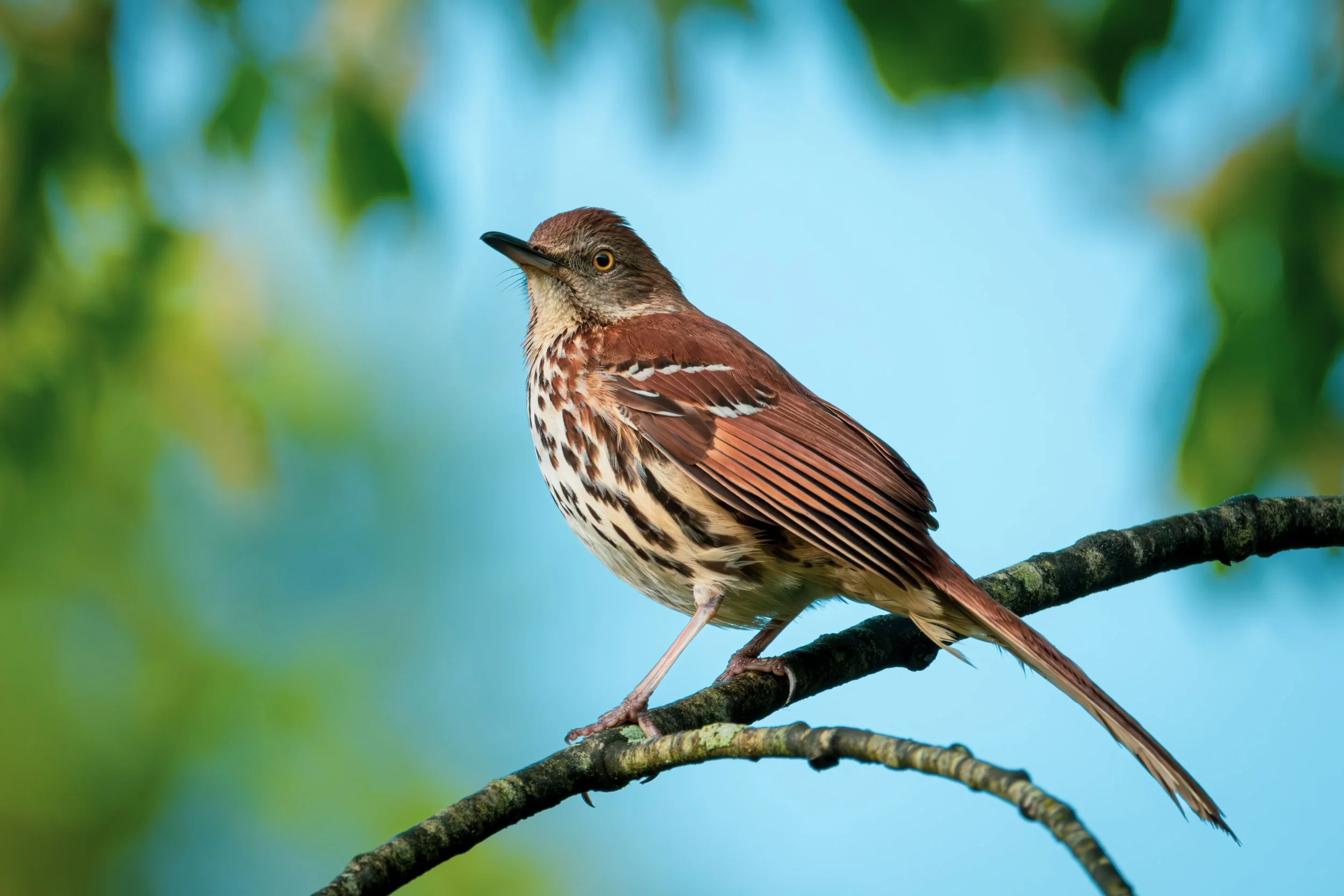
Brown Thrasher
Toxostoma rufumA curved bill, clear eye, and streaked breast make an expressive woodland portrait.
Did you know? A talented singer may use more than 1,100 different song types.
Species notes ↗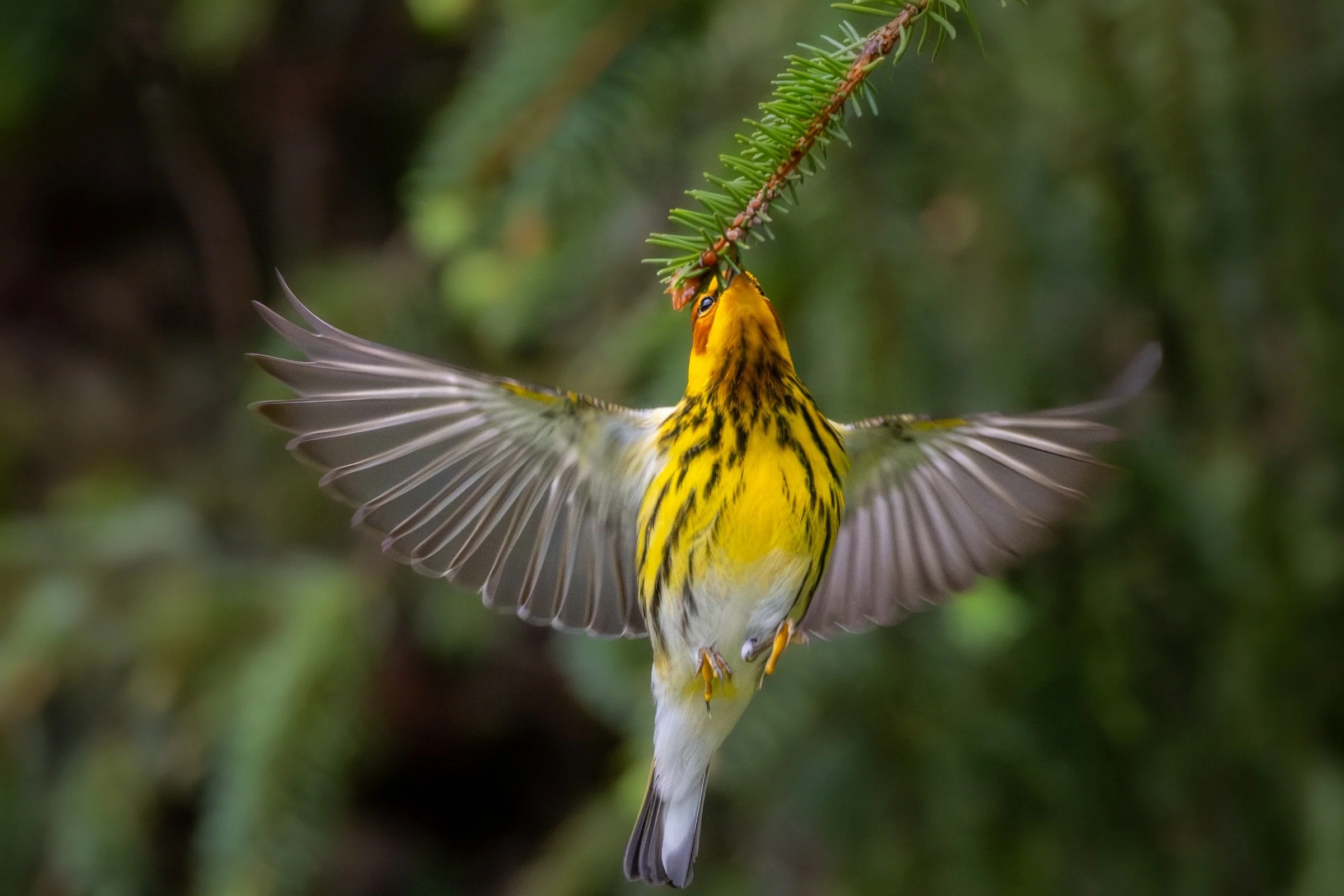
Cape May Warbler
Setophaga tigrinaOutstretched wings reveal delicate feather detail beneath an evergreen tip.
Did you know? Its curled, partly tubular tongue helps it collect nectar.
Species notes ↗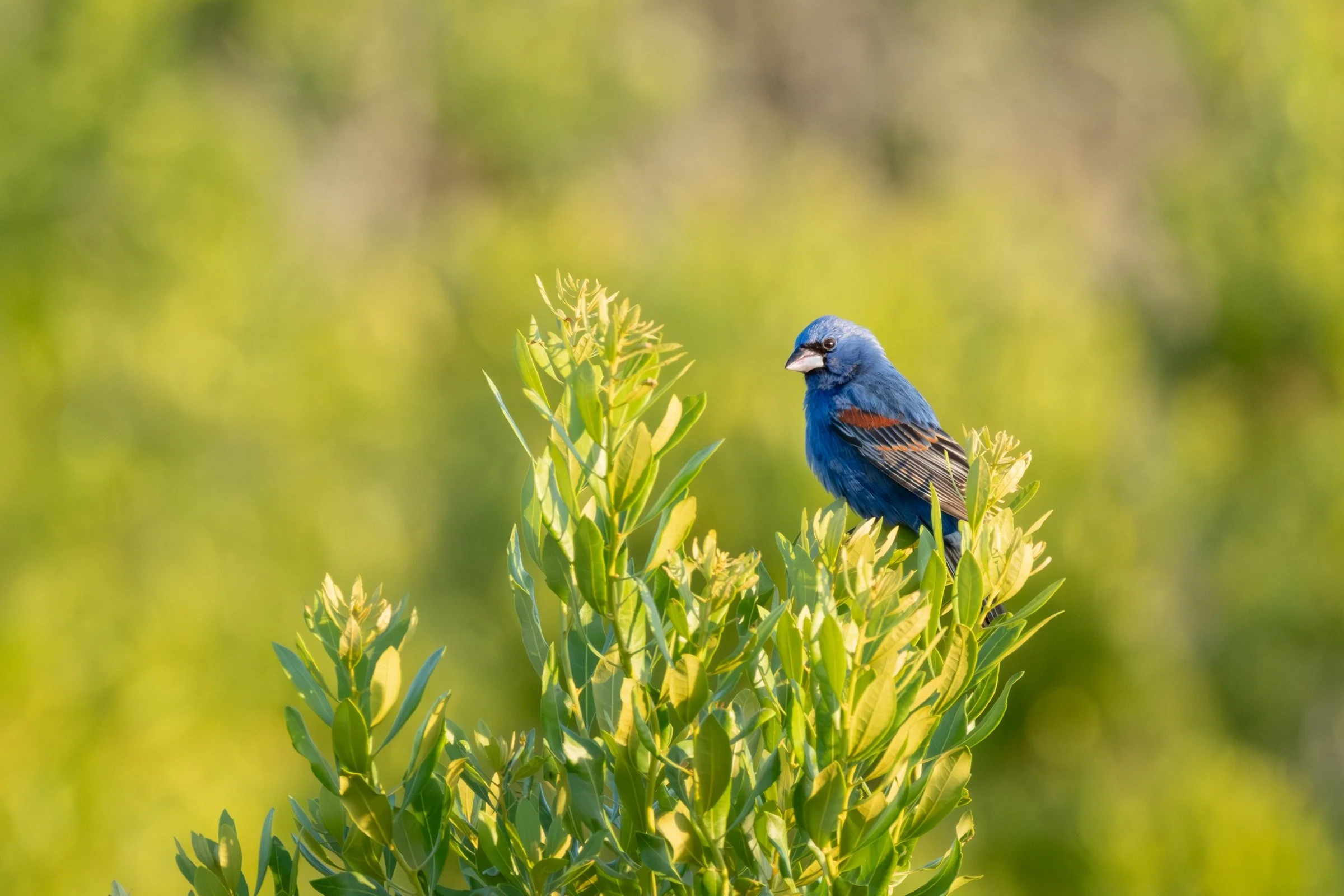
Blue Grosbeak
Passerina caeruleaRich blue plumage and chestnut wing bars rise above a sunlit sea of green.
Did you know? Genetic evidence identifies the Lazuli Bunting as its closest relative.
Species notes ↗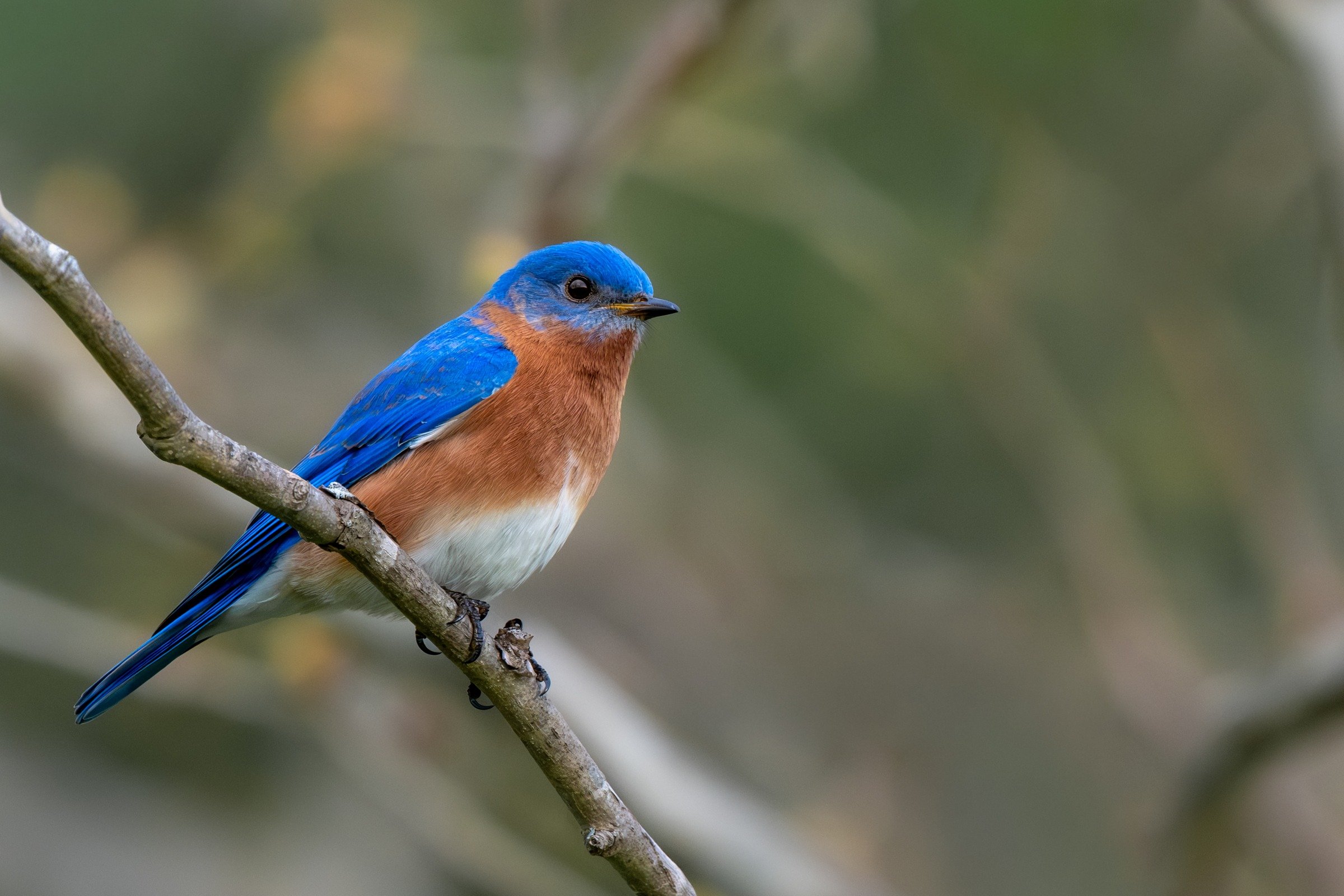
Eastern Bluebird
Sialia sialisA clean diagonal perch sets off brilliant blue feathers and a warm rust-colored breast.
Did you know? Young from late-season nests often stay with their parents through winter.
Species notes ↗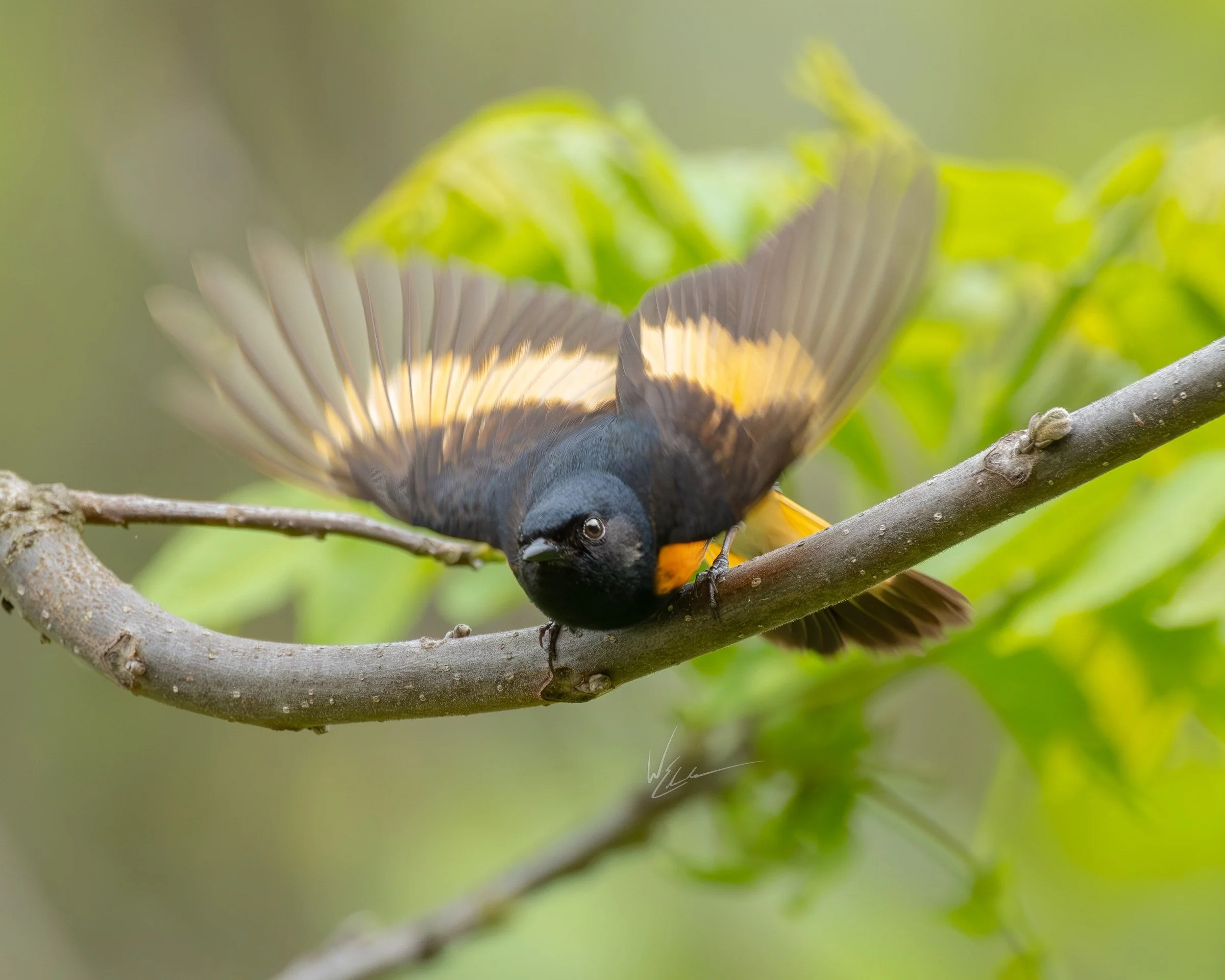
American Redstart
Setophaga ruticillaFanned wings reveal flashes of orange as a redstart leans into the foliage.
Did you know? It flashes bright wing and tail patches to startle insects into moving.
Species notes ↗